There is a small ruined church standing by itself on a rock near Manpara, high on the Nelliyampathy range. It has no roof. Nothing about it is maintained and there is no board at it explaining anything. It is the only building on any of the walking routes up here, and it is the clearest single statement of what happened to these hills.
Whose hills they were
The entire Nelliyampathy range belonged to the Vengunad Kovilakam of Kollengode — the family whose seat is down on the plain at the foot of the escarpment, the same escarpment the old footpath to Seetharkundu climbs. In 1889 tracts of that virgin forest were leased to two Britons, Arthur Hall and W. R. M. McKenzie, who opened the land for commercial cultivation. Seven years later, in 1896, they sold the leasehold on to a Finlays enterprise, the Amalgamated Tea Estates Company Ltd, formed by John Muir.
What got planted
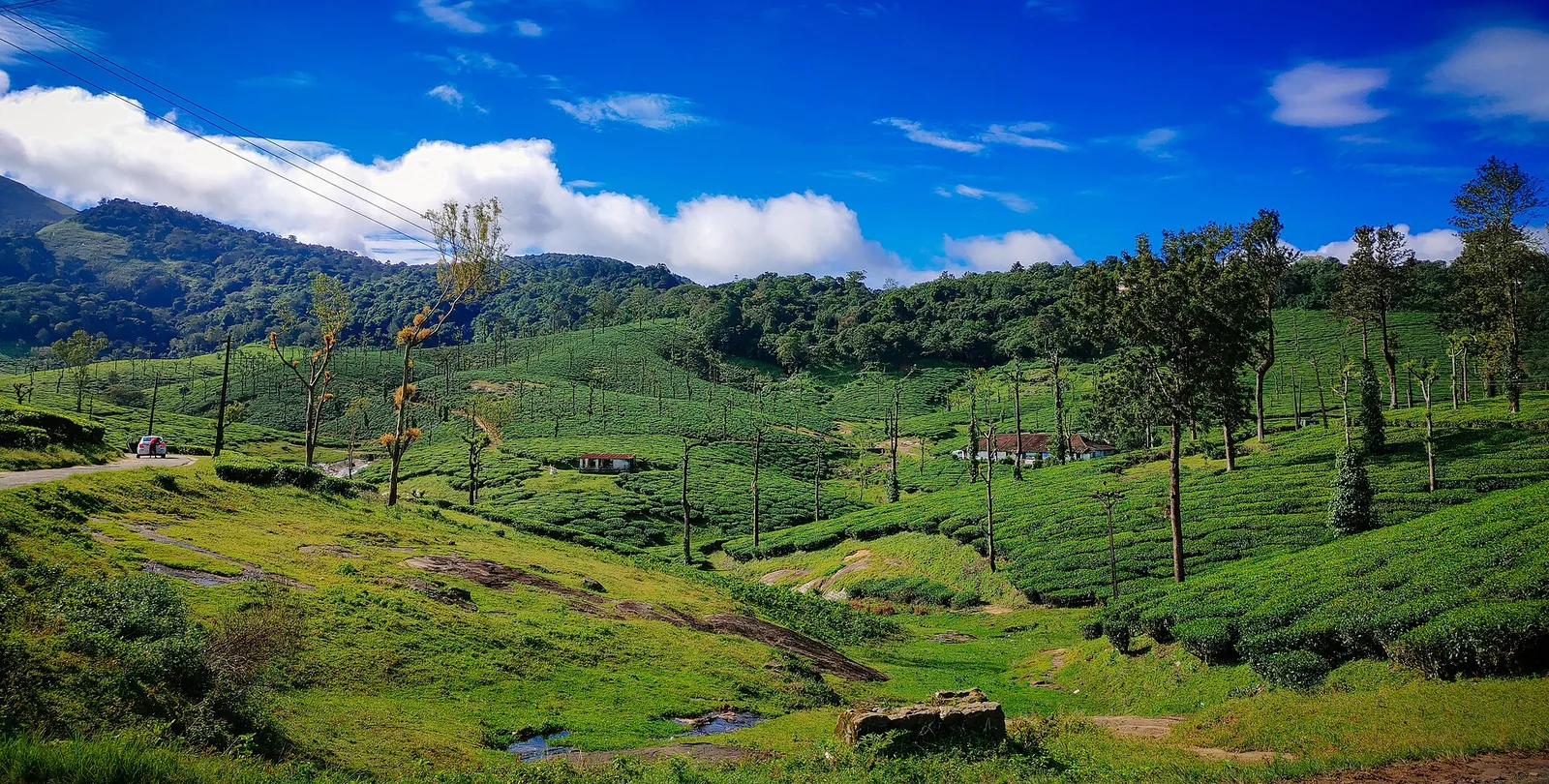
The estate first put down to arabica coffee, with cardamom grown between the rows, came to be called Seethargundu, after the viewpoint above it. So the name that carries a Ramayana legend also became the name of a coffee property, which is a fair summary of how these hills work. The estate passed through Karuna Plantations and then, in 1988, to the Poabs group, who found it derelict, replanted the coffee, cardamom and pepper with improved varietals, planted tea afresh, and from 2000 converted the whole thing to biodynamic practice.
Which means the tea and coffee a walker passes on the way to Kesavan Para is not old growth in any sense at all. It is a nineteenth-century lease, run down, and replanted in the twenty-first.
The half that was never cleared
The other half of the range went the other way entirely. The high forest was never opened, and it is now reserve forest under the Nemmara division, with the Kerala Forest Development Corporation holding plantations and running ecotourism on part of it. That is why a walk of an hour here crosses two regimes with two sets of rules, and why the answer to whether you may go up a particular track depends on which of them owns it.
And the church
Victoria Church belongs to the forty years the lease opened. It was built for the planters and the people who worked for them while the estates were being cut out of the forest, and it was left when they went. It is a roof gone and walls standing, on a rock, with hills around it and nothing else — and it is the last physical thing on the range from the period that made the range what it is.
Frequently asked questions
Who owned Nelliyampathy before the estates?
The Vengunad Kovilakam of Kollengode, whose seat is on the plain below the hills. They leased tracts of the forest to the British.
When were the estates opened?
1889, to Arthur Hall and W. R. M. McKenzie. The leasehold went to the Amalgamated Tea Estates Company Ltd, a Finlays enterprise, in 1896.
Can you visit Victoria Church?
It stands on a rock near Manpara, which is reached by a steep jungle path or by about two hours in a semi-open four-wheel-drive. There is no interpretation and nothing is maintained.