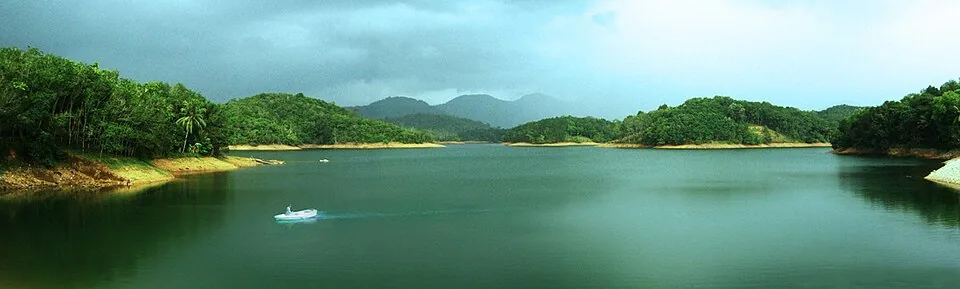
The entrance to Neyyar Wildlife Sanctuary is one of the odder pieces of land use in Kerala. Within a few hundred metres of each other: a dam, a boat jetty, a crocodile facility, a deer enclosure, an internationally known yoga ashram, and a lion safari park with no lions in it.
Visitors read this as a badly run nature reserve. It is more accurately read as a sequence of decisions, each of which made sense at the time, deposited on top of one another over sixty years.
The sequence
The dam was completed in 1958 and the sanctuary constituted in the same year — 128 square kilometres of the Neyyar’s catchment, protected because protecting a catchment protects a reservoir.
In 1959 Swami Vishnudevananda founded the Sivananda Yoga Vedanta Dhanwantari Ashram beside it, which grew into one of the better-known yoga teaching centres in India and brought an international clientele to a forest gate an hour from Thiruvananthapuram.
In 1977 a crocodile facility was established to breed and rehabilitate mugger crocodiles — a real conservation function, later named in honour of the naturalist Steve Irwin. And in 1985 the forest department opened a lion safari park on Marakunnam island in the reservoir: the first initiative of its kind in India, beginning with sixteen animals and reaching seventeen.
The enclosure is empty
That last one is the piece most listings have not caught up with. Reporting places the death of the last lion at Neyyar in 2021. The enclosure has stood empty since.
It is worth being fair about what the park was. Asiatic lions are not from here and never were — the only wild population is in Gujarat, most of a subcontinent north — so this was always an exhibit rather than a piece of habitat conservation. But it was a serious one in its time, and India’s first of its kind. What it is now is a fenced circuit with nothing in it, still appearing in tourism copy and on signage as a reason to visit.
The practical advice is two questions at the counter, not one: is the safari circuit running today, and are there any animals in it. The answers can differ.
Why gates end up like this
Because a protected forest cannot be monetised and its gate can. The sanctuary itself is a catchment under protection: it generates no ticket revenue, has no capacity for crowds, and is actively harmed by them. The strip of land at the entrance has none of those constraints.
So every attraction that a forest department, a tourism department or a private founder wanted to place “at Neyyar” went in at the gate, because that is the only place it could go. Sixty years of that produces exactly what is there: a themed frontage in front of a wild interior, with no single decision to blame for it.
Which is fine, if you know
The mistake is arriving expecting the gate to be the sanctuary, or expecting the sanctuary to be the gate. The families on the boat and the visitors doing the crocodile centre are having a perfectly good afternoon out and are not being short-changed, provided nobody sold them lions.
And ten minutes past all of it, on a guided walk into the trees, is a wet evergreen forest with elephant sign on the trails, running up towards a 1,868-metre peak. Both things are true about this place at once. The trick is to know which one you have bought a ticket for.
Frequently asked questions
Are there still lions at Neyyar?
No. The lion safari park opened in 1985 as the first of its kind in India, began with sixteen animals and peaked at seventeen; reporting places the death of the last lion in 2021, and the enclosure has stood empty since. Ask at the counter whether the circuit is running and whether there are any animals in it before paying.
What is at the entrance to Neyyar?
The dam and reservoir with a boat jetty, a crocodile rehabilitation centre dating from 1977, a deer enclosure, the empty lion safari enclosure on Marakunnam island, and the Sivananda Yoga Vedanta Dhanwantari Ashram founded in 1959 by Swami Vishnudevananda.
When was the sanctuary created?
1958, the same year the dam across the Neyyar was completed. It covers roughly 128 square kilometres of the river’s catchment, and its original purpose was catchment and wildlife protection rather than tourism.
Is the crocodile centre worth visiting?
It is a genuine rehabilitation and breeding facility for mugger crocodiles, established in 1977 and later named for the naturalist Steve Irwin, holding around twenty animals by the usual figure. It is one of the more dependable stops at the gate.
Can I swim in the reservoir?
No, and this is not a matter of etiquette. There are crocodiles in this system. Nobody swims here.
Is the forest itself any good?
Yes. Ten minutes past the gate on a guided walk the visitor infrastructure is gone entirely, and what replaces it is wet evergreen forest with elephant, gaur, sambar and sloth bear using the trails, running up towards the 1,868 m summit of Agasthyakoodam at the far end of the sanctuary.