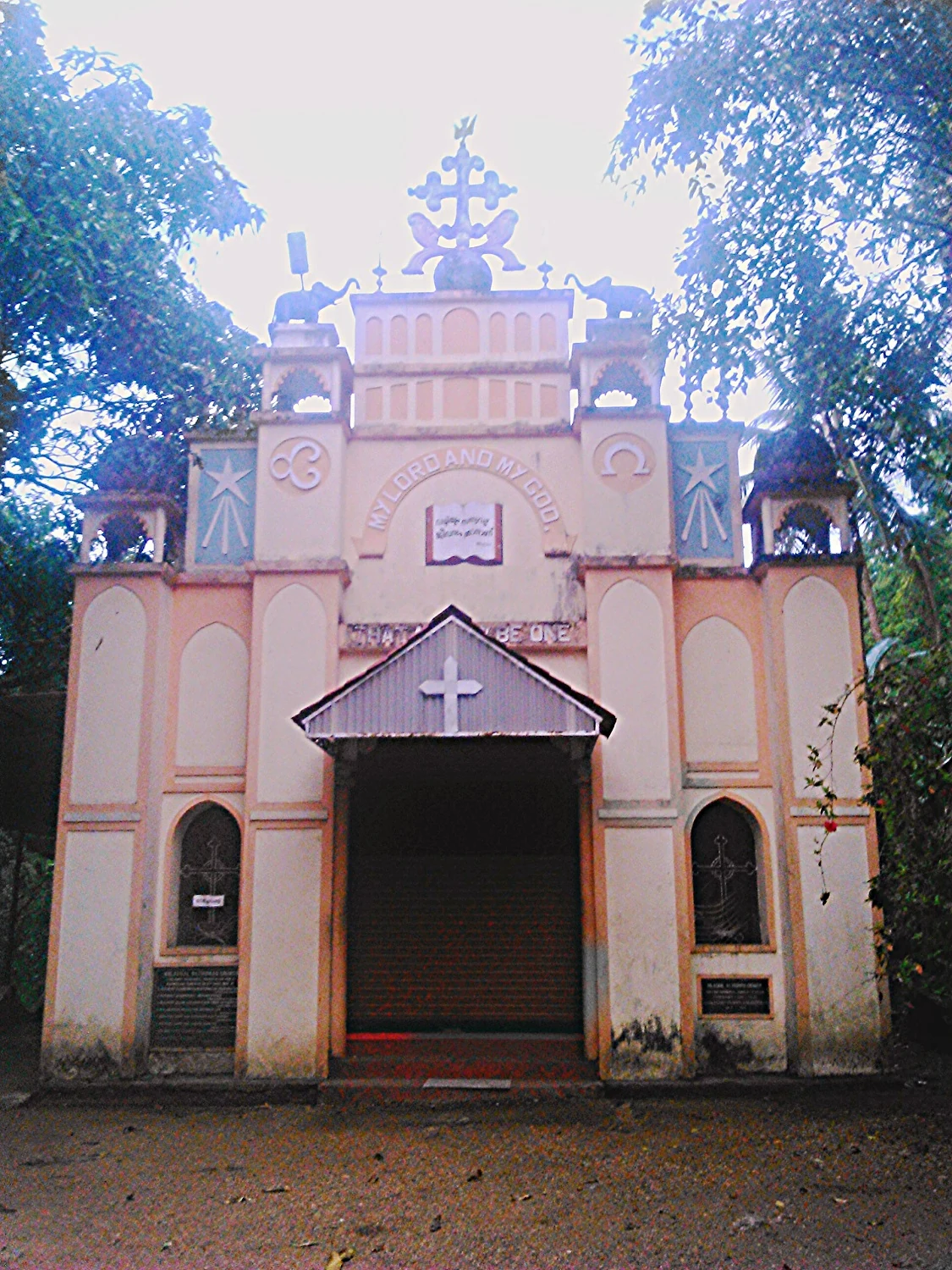
Nilackal appears in the St Thomas tradition under the name Chayal. For Christian pilgrims, the place recalls an early community associated with the apostle. The church visited today belongs to a much later history, and keeping those two layers distinct makes the site easier to understand.
A place remembered in sacred tradition
Kerala Tourism includes Nilackal among the seven churches traditionally associated with St Thomas in Kerala. The Thomasine Research Center presents an account of the apostle travelling from Niranam, preaching at Nilackal and establishing a Christian community. These are statements of the sacred tradition attached to the place.
They should not be used to date the visible building to the first century. A tradition can give a location continuing religious meaning without supplying archaeological proof for every event or structure described. For a visitor, the distinction respects both the community’s memory and the evidence available for the church now standing there.
The modern church has its own date
The Thomasine Research Center records the consecration of the modern St Thomas Ecumenical Church on 8 April 1984 by bishops of eight churches in the St Thomas tradition. The building was intended to maintain the apostle’s memory at Nilackal. Its modern origin is part of its significance, rather than a detail that diminishes the older tradition.
The 2015 photograph shows a cream-and-pink front with a cross above the central block and a canopy before the entrance. Partly visible English lettering refers to faith and unity. The image is a record of the church at that date; its blocky form belongs to a modern place of worship, not to a surviving apostolic-era structure.
Visit a church, not an imagined excavation
Accounts of older Nilackal also discuss an abandoned settlement and differing explanations for its decline. Those discussions do not establish a publicly accessible archaeological trail. The church is the identified worship destination; forest remains should not be turned into an informal excursion without an authorised route and clear evidence of what is being visited.
A quiet visit can concentrate on the present church and the meaning it holds for the participating communities. Allow services to take precedence over photography or a look inside. If a group wants an explanation of the site’s tradition, arrange it with the church rather than expecting an interpretive tour whenever the doors are open.
Nilackal’s Mahadeva temple and the Sabarimala base-camp functions belong to the wider locality but are separate destinations. Keep their approaches and worship arrangements distinct. The Christian tradition gives one important layer of this forest-edge place; it does not make every building or pilgrim service part of the same institution.
References: Thomasine Research Center: Nilakkal and the modern church and Kerala Tourism’s seven-church tradition.
Plan the visit: Nilackal.