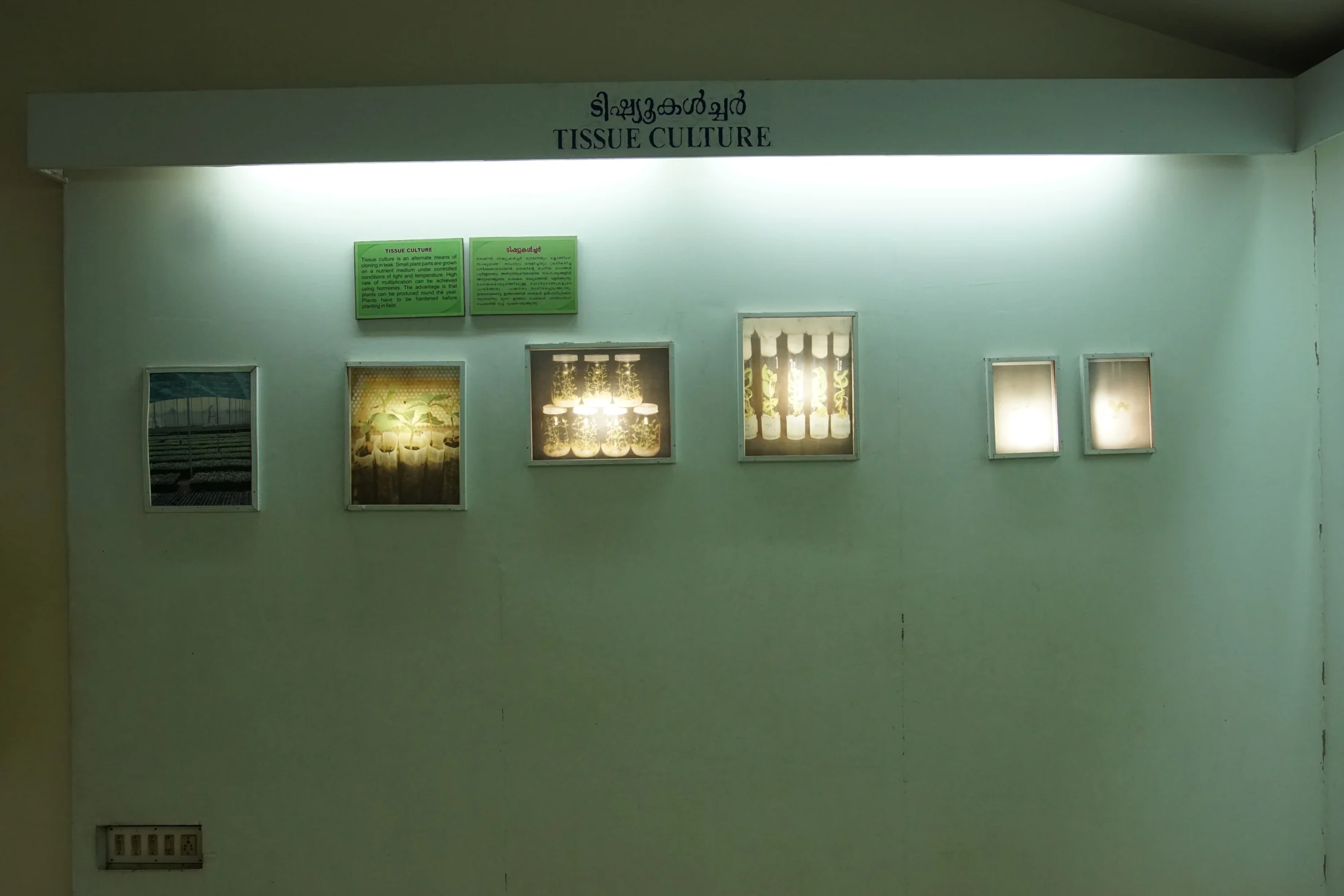
Upstairs at Nilambur Teak Museum, the subject becomes smaller before it becomes larger again. After roots and timber objects, the visitor encounters seeds, nursery methods and photographs of tiny plants in vessels. The change of scale explains something essential about plantation history: a supply of mature trees depends on successfully raising young ones.
The problem before the plantation
The museum’s account of teak cultivation includes seed grading and treatments before sowing. These displays belong to a practical question rather than a decorative botanical collection. Planting a future timber crop requires more than scattering seeds and waiting. The condition of the planting material and the way it is handled influence what can be established in the field.
This gives the museum a useful connection with Nilambur’s nineteenth-century planting history. The familiar names of Conolly and Chathu Menon sit within a story of practical cultivation. The scientific galleries make the work behind a plantation easier to imagine: producing plants, tending them and observing the results. The institution presents that history alongside later methods rather than allowing it to end with a commemorative portrait.
What the tissue-culture display shows
The display is headed “Tissue Culture” in English and Malayalam. Its photographs show plant material in vessels and young plants under controlled conditions. The accompanying explanation presents tissue culture as a method of cloning teak from small plant parts grown on a nutrient medium, with conditions such as light and temperature controlled.
For a casual visitor, the important distinction is the starting material. This method begins with part of a plant, whereas a seed-based method begins with a seed. The display provides a way to compare approaches without needing to turn a museum visit into a laboratory lesson. It also explains that plants need hardening before being put into the field; the vessel is one stage, not the final environment in which the tree will grow.
Growth includes setbacks
KFRI describes other scientific exhibits on insects, diseases and plantation management. They prevent the cultivation story from becoming an effortless progression from seed to valuable timber. Living plants can be damaged, and raising them requires observation and intervention. A photograph of a mature plantation shows the result at one moment; these exhibits introduce the processes and problems hidden behind that view.
The museum also contains information about flowering, fruiting and the different parts of teak. Together, these subjects give a visitor several ways into the science. Someone interested in gardening may begin with propagation; a child may start with the smallest plant pictured; a visitor interested in timber can work backwards from a log to the growing tree. The galleries do not need to be read in exactly the same depth by everyone.
Continue the observation outside
The Bioresources Nature Park broadens the subject beyond teak. KFRI describes collections including ferns, palms, orchids, aquatic plants and a taxonomic garden. Here the question changes from how to raise one species to how plants differ from one another. Labels can identify a family or a particular adaptation, giving a garden walk a purpose beyond following the path.
Choose one comparison to carry outdoors: a young plant beside a mature one, contrasting leaf shapes, or the difference between a shaded collection and a more exposed planted area. Keep to the open paths and leave specimens in place. The museum’s science is most useful when it sharpens observation, helping visitors see living collections as subjects to understand rather than objects to collect.
Sources: KFRI’s Teak Museum collection and the institute’s illustrated museum brochure.
Plan the visit: Nilambur Teak Museum.