An old Kozhikode heritage walk works best when it starts with water, because both ends of it are built around a pond. The first is the Mananchira tank, the 14th-century pond that Kerala Tourism credits to the Zamorin Mana Vikrama, which once supplied his palace. Walkers begin on its lawns in the morning, when the square is quiet, and they stand at the centre of the old royal ground before heading for the sea.
From the king's pond the walk turns towards the quarter where his trading partners lived. Kuttichira, also called Thekkepuram, is bounded by the Arabian Sea to the west and the Kallai River to the south, Kerala Tourism records, with Kozhikode town to its east. So walking from Mananchira to Kuttichira means walking from the court to the coast, which was exactly the direction the wealth of old Calicut travelled.
The quarter announces itself with its own pond, and that pond is where most walkers pause. Onmanorama describes the large 400-year-old pond at Kuttichira as a place where men sit and talk. Kerala Tourism notes the murals around it that tell the history of the Mappila Muslim community. The calm water in the middle of busy lanes gives the second half of the walk the same centre that Mananchira gave the first.
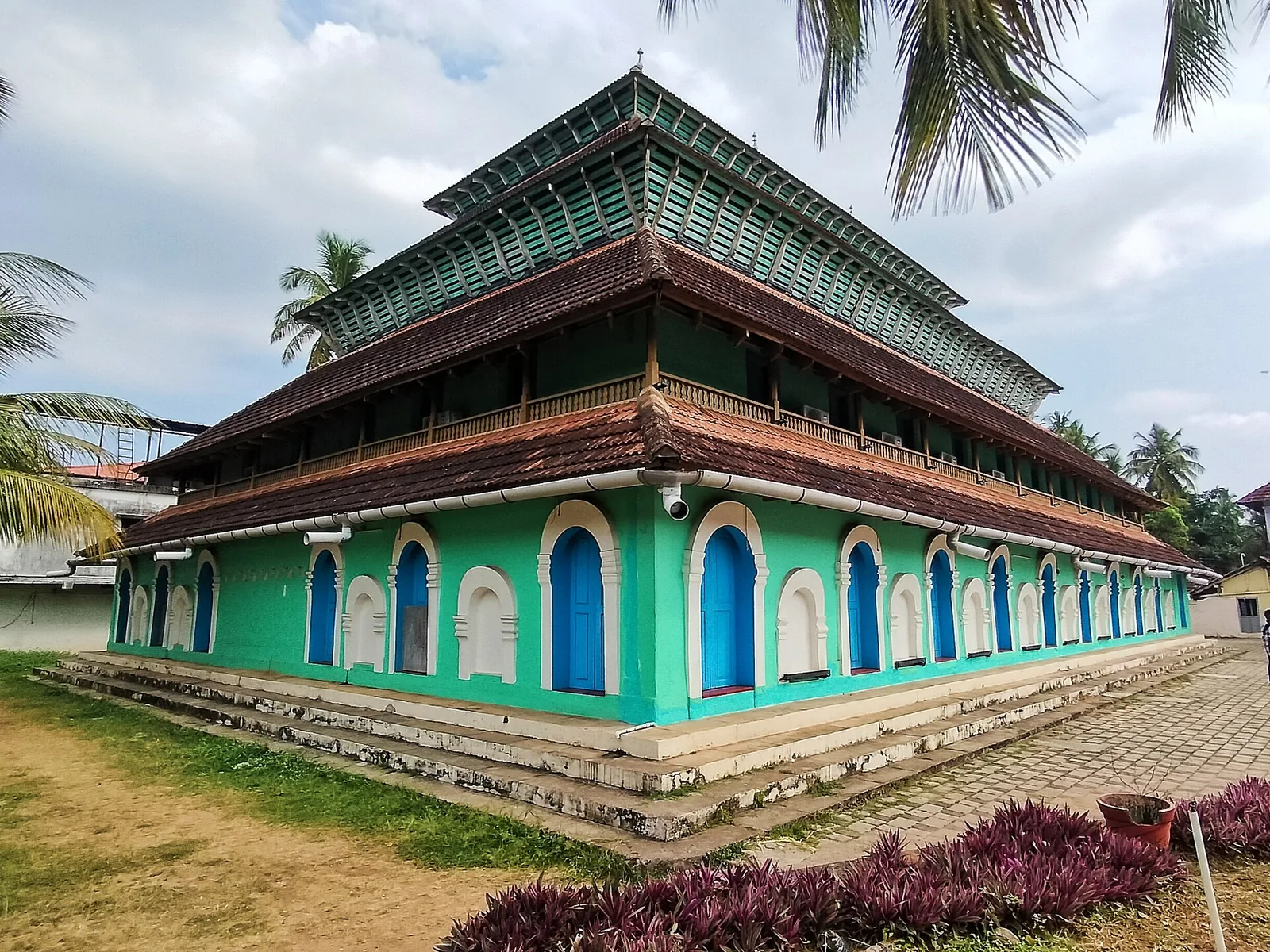
Around that pond stand the mosques that make Kuttichira famous, and each of them carries a different part of the story. The Mishkal Mosque, more than 650 years old and built by the Yemeni shipowner Nakhooda Mishkal, is a timber mosque in temple style. The Portuguese set it on fire in 1510, and the Zamorin repaired it. Close by, the 14th-century Jama Palli has the largest floor area of any mosque in Kerala, according to Kerala Tourism, and holds around 1,000 people. The Kuttichira Juma Masjid is the resting place of Qazi Muhammad, author of the Muhiyuddin Mala.
The oldest of the three takes the walk back to the king it started with. Kerala Tourism names Muchundi Palli as the oldest mosque in Kozhikode city, built in the 13th century on land the Zamorins donated. It records that a stone slab inside tells that story in the old Vattezhuthu script. A walker who began at the Zamorin's pond therefore ends at a stone that records the same royal house giving land to a mosque.
These are working mosques, so the walk follows their rhythm rather than a museum's. Muchundi itself shows the same temple-style building as Mishkal, standing on a 1.5-metre plinth under a double-tiered roof with floral wooden ceilings and engraved pillars. Visitors are welcomed at the door; Onmanorama's writer, dressed in a T-shirt and shorts, was waved into the Mishkal Mosque with a smile. Many end the walk back at the Kuttichira pond, where men in white sit and talk in the hour before sunset.
Frequently asked questions
Where does the old Kozhikode heritage walk start?
It starts at Mananchira Square, around the 14th-century tank built for the Zamorin Mana Vikrama.
Where is Kuttichira?
Kuttichira, also called Thekkepuram, lies between the Arabian Sea and Kozhikode town, with the Kallai River to its south.
Which mosques are on the walk?
The Mishkal Mosque, the Jama Palli, the Kuttichira Juma Masjid and Muchundi Palli, the oldest mosque in Kozhikode city.
What is at the Kuttichira pond?
A large 400-year-old pond ringed by murals of Mappila Muslim history, where local men gather to talk.