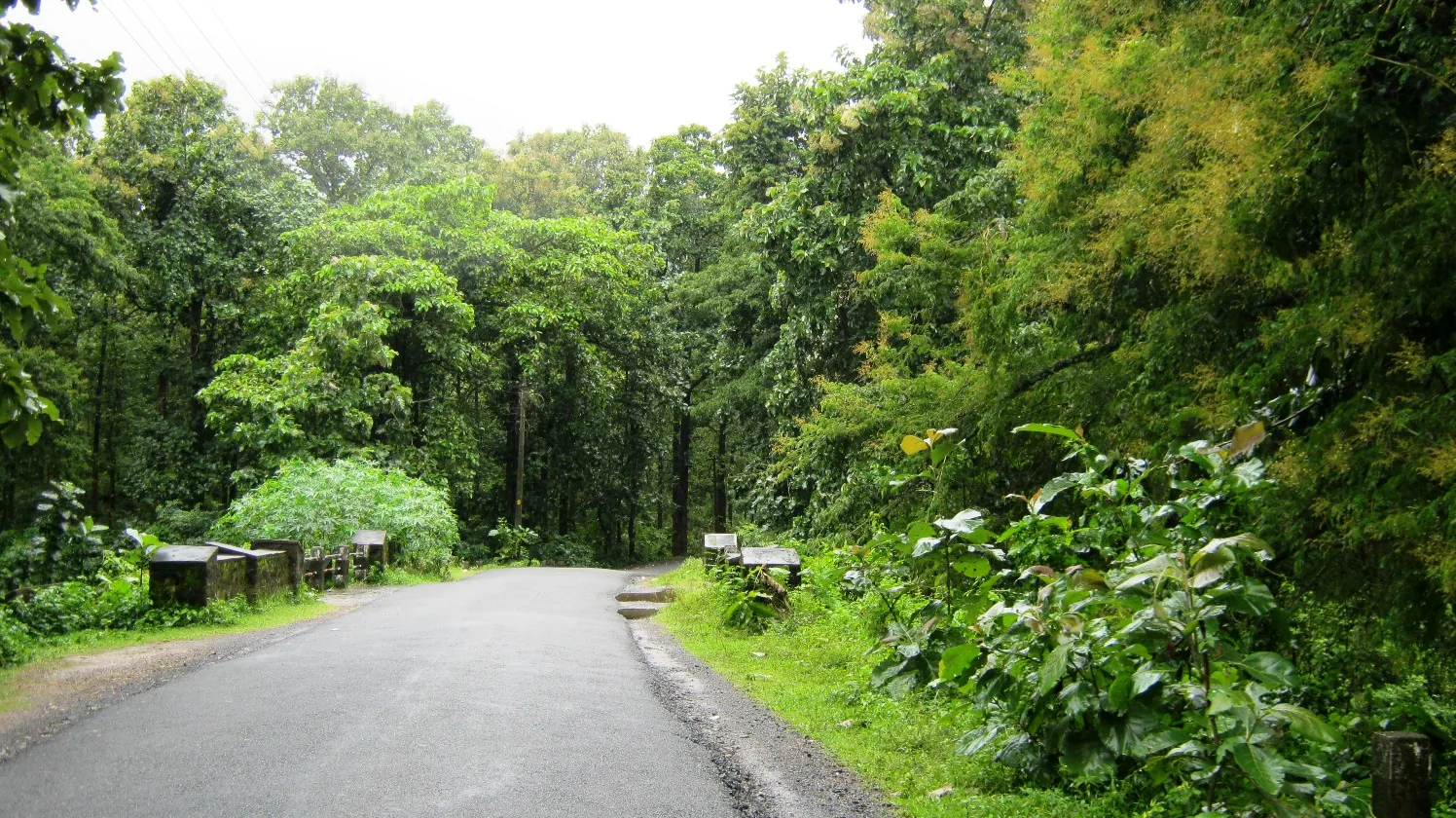
Almost every Kerala waterfall page, including several of ours, says the same thing about who is in charge: managed by the forest department. It is true and it is useless, because it tells you nothing about who you will actually meet.
At Palaruvi you can be specific. The person who sells you the ticket, the person driving the bus, the person watching the pool and the person cooking your lunch are all members of the same committee, and it has a name, a founding year and a membership roll.
Who runs it
The Palaruvi Vana Samrakshana Samithi — a forest-protection committee, the joint forest management unit for this stretch of the Aryankavu Range of Thenmala Forest Division. It operates under the Thenmala Forest Development Agency, with technical and financial support from the Thenmala ecotourism society. Administration, conservation of the falls and the visitor amenities are all its responsibility.
It was formed in 2003 and has roughly 210 members: forest-conservation volunteers, tour guides and women’s self-help units. It runs trekking into the evergreen and sandalwood-bearing forest, and it feeds people — the food is described, rather wonderfully, as typical Kerala cooking using the spices of the Ariankavu valley.
These particulars come from ecotourism listings rather than from a government gazette, so treat the exact membership number as reported rather than audited. The shape of the arrangement is not in doubt.
The four kilometres
The committee’s most consequential job is the one visitors notice least, because it looks like an inconvenience.
You cannot drive to Palaruvi. Private vehicles stop at the ticket counter on the highway at Palaruvi Junction, and a forest eco-tourism vehicle takes you the four kilometres in. The fleet is three: two 38-seat vans and a 25-seater, running in and out all day.
The result is the thing you came for. Four kilometres of forest with no private traffic in it, no roadside parking, no ad-hoc stalls and no cars idling at the falls. The road in the photograph at the top of this page is empty because it is allowed to be.
Fifty people and a dry season
The best single detail about this place comes from the local paper that reported the 2026 reopening, and it is worth quoting in substance.
The falls had closed on 15 February because the summer heat had reduced the water to nothing. Through those months, the report says, the forest paths in the area were cleaned and refreshed; rest facilities, sanitary amenities and bathing areas were renovated for visitor comfort; the vehicle parking ground was cleaned. Approximately fifty workers, including local residents and former forest conservation committee members, led the renovation effort.
Fifty people spent the dry months rebuilding a waterfall’s plumbing so that it could open the day the rain came back. The falls reopened on 25 May 2026, when the monsoon restored the flow.
The economics, plainly
Lay the numbers out and you see what kind of enterprise this is.
The ticket is ₹70 for an adult, ₹35 for a school child and ₹30 for a child, round trip, inclusive of GST. Parking runs from ₹25 for a two-wheeler to ₹200 for a bus. Roughly a lakh of visitors a year come through. There are three vehicles and about 210 members. And there is an annual shutdown — fourteen weeks of it in 2026 — during which the gate takes nothing at all.
That is a small, seasonal, weather-dependent business run by the people whose forest it is, and the ticket price is the mechanism by which a protected watershed pays for the households on its edge.
It is also why the fee figures floating around the internet matter. DTPC Kollam — the district’s own tourism council — still publishes ₹25 for an adult and ₹10 for a child. That is where our own out-of-date figures came from. Turning up expecting to pay ₹25 and grumbling at ₹70 is grumbling at the wrong thing.
What it means for how you behave
Not much, and that is rather the point — but a few things follow.
Eat there. The food is the committee’s, not a concession. Take the guided walk if it is offered. Treat the lifeguards’ instructions and the red boards on the rocks as instructions rather than decoration, because the people enforcing them are locals with an interest in nobody drowning at their waterfall. And note that capacity caps of a hundred visitors an hour are now in use at neighbouring falls in this belt, so a busy day may involve waiting rather than pushing.
The falls are the reason to come. The arrangement around them is the reason they are still worth coming to.
Frequently asked questions
Who runs Palaruvi?
The Palaruvi Vana Samrakshana Samithi, a joint forest management committee formed in 2003 with around 210 members — forest-protection volunteers, guides and women’s self-help units — under the Thenmala Forest Development Agency, with support from the Thenmala ecotourism society. Not Kerala Tourism, and not DTPC.
Why can’t I drive to the falls?
Private vehicles are not permitted beyond the gate. You park at the ticket counter on the highway and ride a forest eco-tourism vehicle the four kilometres in — two 38-seat vans and a 25-seater work the route. The result is four kilometres of forest with no private traffic in it.
What does it cost and where does the money go?
₹70 adult, ₹35 school child, ₹30 child for the round trip, inclusive of 18% GST, plus parking from ₹25. The site is administered by the local committee, so the gate revenue supports the households on the forest boundary. DTPC’s own page still shows the older ₹25/₹10.
What happened during the 2026 closure?
The falls shut on 15 February because summer heat had reduced the water, and about fifty people — local residents and former committee members — spent the closure cleaning the forest paths and renovating the rest facilities, sanitary blocks, bathing areas and parking ground. It reopened on 25 May when the monsoon returned.
Is there food at the falls?
Yes, cooked by the committee’s own units and described as typical Kerala food using the spices of the Aryankavu valley. It is not a concession stand — eating there is the most direct way to put money into the village that runs the site.