The banyan marks a threshold
Manikandan Aalthara is the small shrine around a sacred banyan beside the MC Road. The Pandalam royal family identifies it as the entrance landmark for the palace precincts. The tree is therefore both a practical point of orientation and part of the locality’s devotional life.
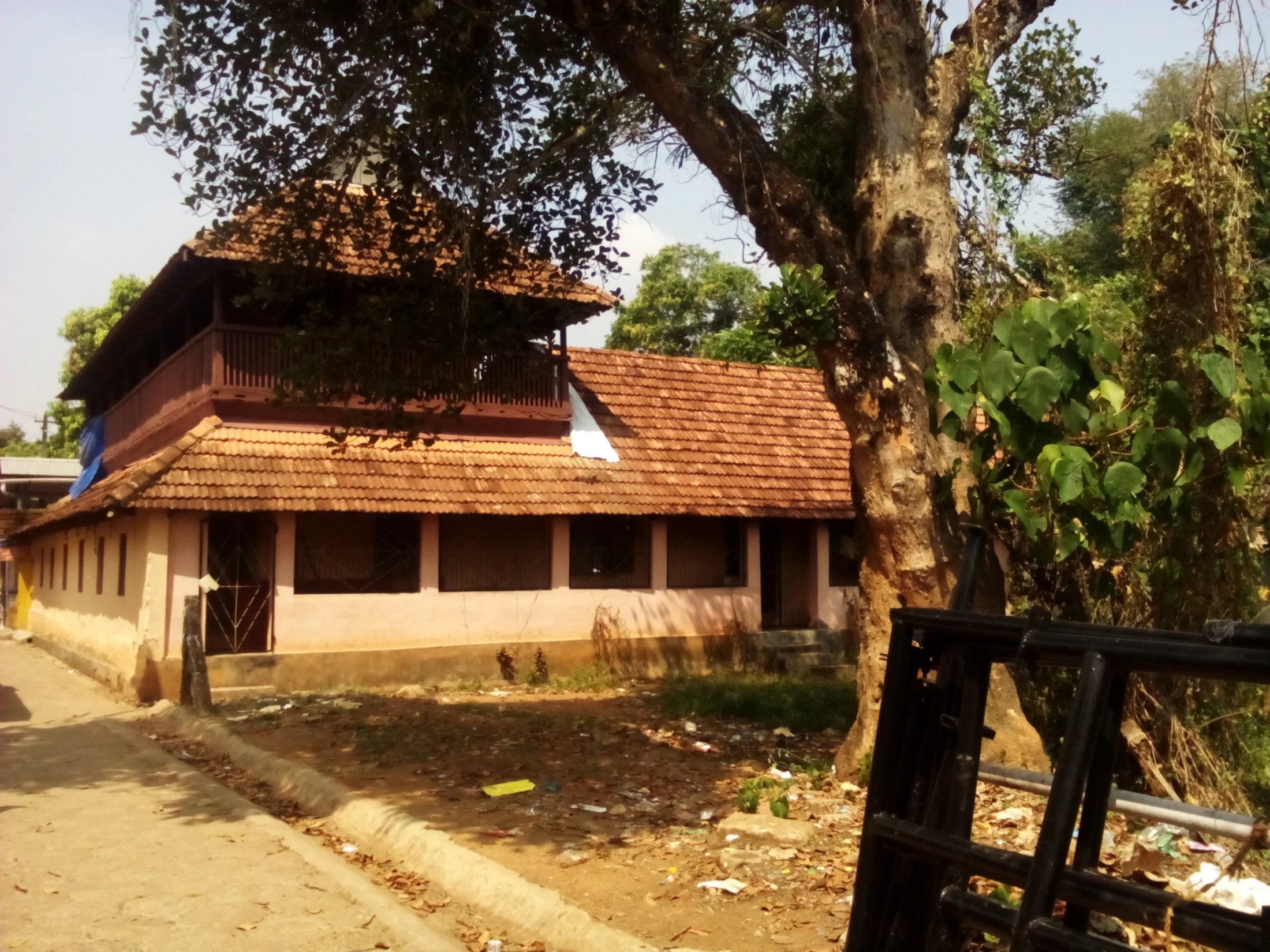
The palace photograph shows a large tree beside a tiled-roof building. Trees and rooflines give the precincts a domestic scale, while Manikandan Aalthara has its own devotional purpose at the road approach. Leave worshippers and traffic their space when using that shrine as a meeting landmark.
Ceremonial movement gives the approach another meaning
The family’s account describes processions from Valiya Koyikkal reaching the aalthara on particular observances before returning to the temple. This gives the route between temple and roadside shrine a ceremonial role in addition to its everyday use as an approach.
A visitor on an ordinary day may see no procession. The enduring relationship is still useful to understand: the road connects places used in worship, rather than simply leading past decorative buildings towards a single attraction.
Thevarapuras are prayer rooms
The royal family calls the prayer rooms of the Nalukettu and Vadakkekottaram thevarapuras. Its account describes continuing worship there and associates the presence of Madurai Meenakshi with the family’s remembered Madurai origins. That explanation belongs to the family’s interpretation of its own sacred spaces.
These rooms should retain their devotional identity. A visitor interested in the buildings can appreciate accessible exterior features without assuming the right to enter a prayer room, inspect an image closely or photograph an interior. Ask the responsible person before crossing a threshold.
Look at the buildings with their names intact
Pandalam’s surviving architecture includes tiled roofs, timber details and buildings of different scales. Retain the actual name on a sign or the identification given at the site. A nearby building should not acquire the name Srampickal, Nalukettu or Vadakkekottaram merely because it looks like an old palace structure.
The same care helps with directions. Use Manikandan Aalthara for the road arrival, then specify the shrine or building being visited. Agree a meeting point on the same side of the river so that members of a group do not end up using “palace” to mean different places.
The aalthara and prayer rooms reveal why Pandalam is best understood through relationships: tree and road, house and worship, family memory and temple procession. Paying attention to those relationships makes the modest surviving spaces more legible and the visit more respectful.
Sources: Pandalam royal family: Manikandan Aalthara, Thevarapuras and palace layout.
Plan the visit: Pandalam Palace.