The reason to go out to East Hill is not the colonial bungalow and not the coins. It is a set of very large, very blunt stones that represent one of the most distinctive burial traditions anywhere in South Asia, and which most visitors to Kerala never see at all.
What the megalithic period was
Across peninsular India, from roughly the first millennium BC into the early centuries AD, communities buried their dead beneath and within substantial stone constructions. Kerala’s versions of this practice are unusually varied and unusually strange, and the museum’s collection is built around them. The dates on the core holdings — about 1000 BC to 200 AD — bracket that whole world.
It is worth being clear about how far back this reaches. The Zamorins are fourteenth century. The Portuguese are fifteenth. The mosques of Kuttichira are medieval. The material in these rooms predates every single thing that Kozhikode is famous for by two to three thousand years, and it was already ancient when the first Arab trader tied up off this coast.
Umbrella stones
The signature form is the umbrella stone — a large dressed stone set over a burial, described in the museum’s own material as the tomb marker of a ruler. The shape is what gives the name: a broad capping stone carried above the ground on supports, so that the whole assembly reads, unmistakably, as a stone parasol standing over the dead.
Seen in a photograph they look almost cartoonish. Seen at full size they do not. These are heavy pieces of worked rock, cut and shaped and transported without metal tools of any consequence, by people who evidently thought it mattered a great deal that a particular individual should lie beneath a stone umbrella. That intention comes across the intervening three thousand years without any assistance from a label.
Cists and urns
Alongside them the collection holds dolmenoid cists — quadrangular burial chambers, walled and roofed with capstones, essentially a stone box built to house the dead — and burial urns, the enormous earthenware jars in which bodies or remains were interred and then buried.
The urns in particular repay attention because of what they imply about craft. Firing a ceramic vessel large enough to hold a human body, without it cracking or slumping, is a genuinely difficult technical problem, and it means these communities had potters operating at a serious level of skill. A burial tradition on this scale is not a marginal activity. It required specialists, organisation and a considerable investment of labour by the living on behalf of the dead.
A note on the names
You will meet several Malayalam terms attached to these monuments — kudakkallu, the umbrella stone, and topikkallu or thoppikkallu, the hat stone, among others — and you should treat the vocabulary with some caution. Published sources use these terms inconsistently, and descriptions that specialists would distinguish are frequently run together in general writing, including in a good deal of material about this museum. The objects are well established; the naming, in popular sources, is not always reliable.
What else is in the rooms
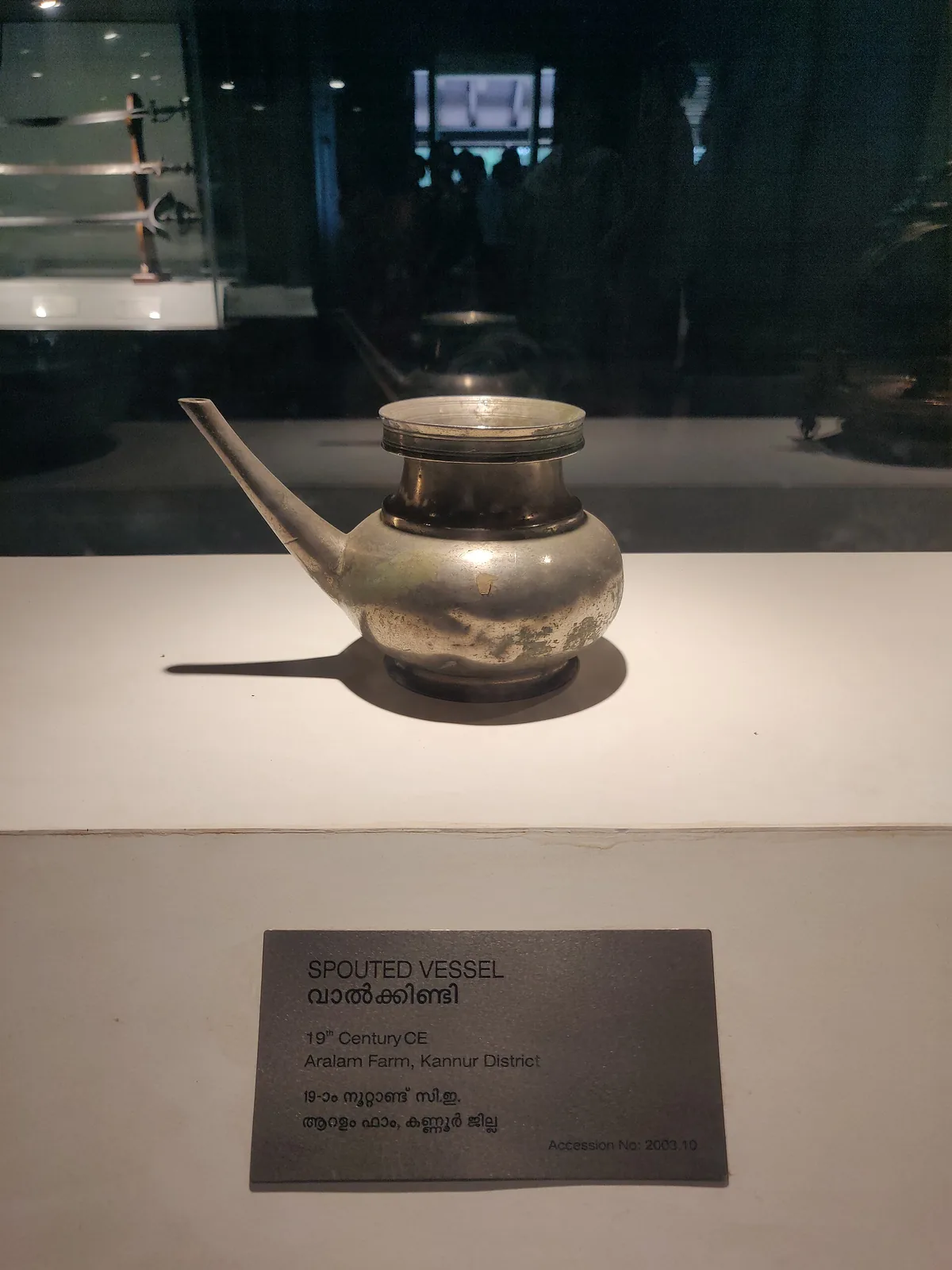
Around the stones sits the ordinary furniture of a long-inhabited coast: pottery, toys, stone and metal sculpture, coins, temple models. Panchaloha idols — cast in the traditional five-metal alloy — carry the later devotional tradition. Individually a fair number of these are modest objects, and the museum makes no attempt to oversell them. Collectively they do what a regional archaeological collection should, which is to make the sheer depth of local time feel like a fact rather than an abstraction.
How to visit
Allow an hour. It is a state department museum rather than a commercial attraction, so expect functional labelling, variable lighting and no interpretation to speak of — the compensation is that it is genuinely quiet, which almost nothing else in Kozhikode is. Confirm opening days and times before travelling out, since government museum hours change, and check photography rules at the desk rather than assuming. Entry is nominal. More of the city is on the Kozhikode hub.
Why so little of it is known
One reason these monuments come as a surprise is that South Indian megalithic culture has no comparable presence in popular history. There is no founding narrative attached to it, no named dynasty, no surviving literature and no continuous religious tradition claiming descent from it. The people who cut these stones left no writing that has been read, and everything known about them has been assembled from excavation.
That absence of story is precisely why a collection like this matters. Without the museum the material would exist only in site reports and academic journals, and the general picture of Kerala’s past would begin, as it usually does, with the spice trade and the Zamorins — leaving out several thousand years of settled, organised, technically capable society on the same ground.
What the burials imply
Look at the monuments as evidence rather than as objects and they start to say a good deal. Constructing them required quarrying, dressing and moving very heavy stone, which means organised labour beyond a single household. The consistency of the forms across a wide area implies shared convention, and therefore contact and communication between communities. And the fact that some burials are considerably more elaborate than others implies differences of status worth marking permanently in rock.
That last point is the one worth carrying round the room. A society that buries some people under worked stone umbrellas and others not at all is a society with hierarchy in it, and it was operating on this coast a thousand years before anyone recorded a king here by name.
Seeing them in the landscape
Museum display necessarily removes these monuments from their setting, and it is worth remembering that they were made to stand in the open, in specific places, visible to the living. Kerala and the neighbouring uplands hold megalithic sites in situ, and anyone whose interest is caught here would do well to seek them out afterwards; the experience of coming upon such a structure in a field or on a hillside is quite different from meeting it under a gallery ceiling.
Start here, though. The museum is the one place in Kozhikode where the material is gathered, labelled and safely accessible in an hour, and it gives you the vocabulary to recognise what you are looking at when you meet it later somewhere less convenient.