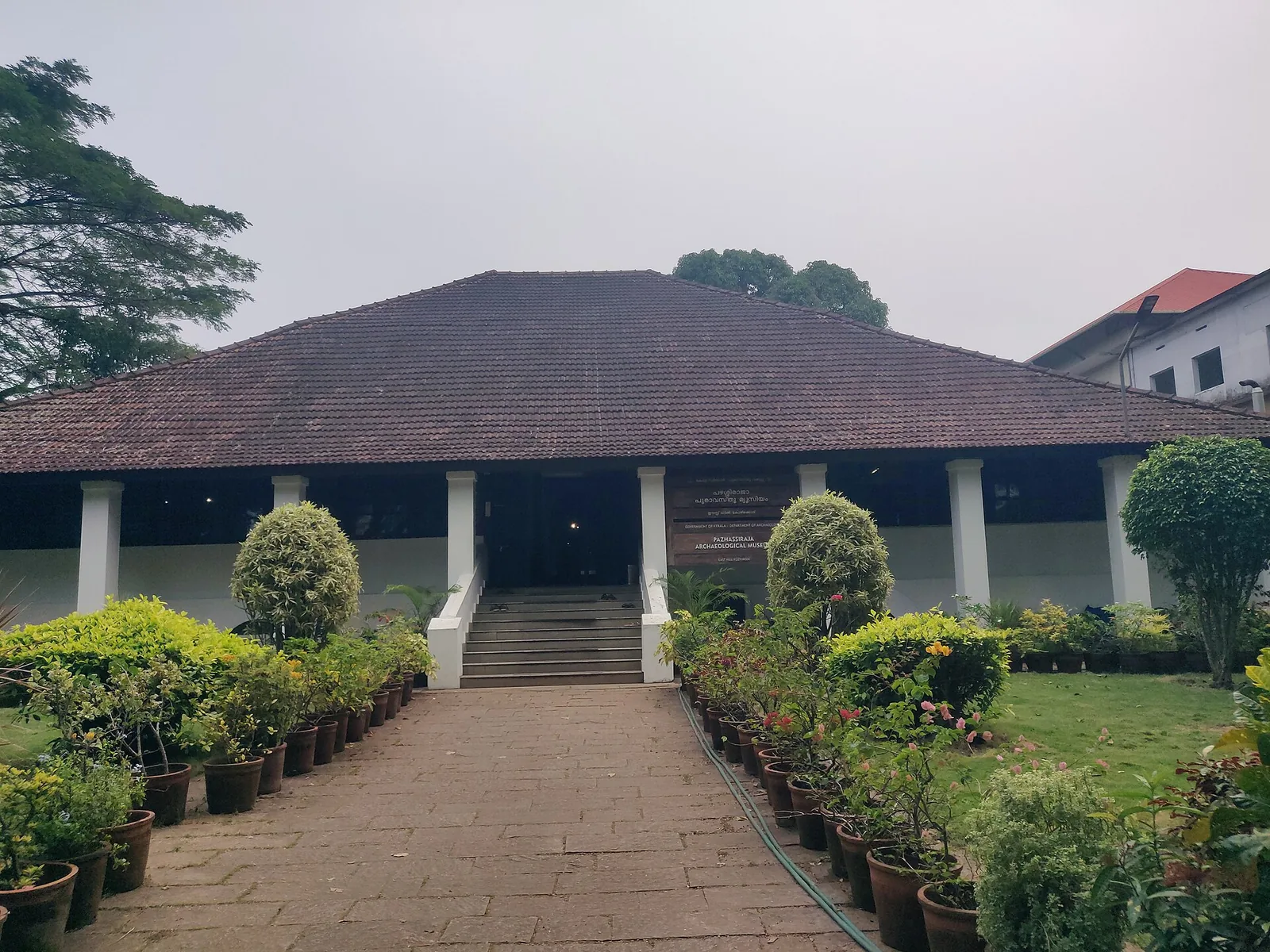
The Pazhassi Raja Archaeological Museum on East Hill in Kozhikode is named for the man who fought hardest against the British in Malabar. It is housed in a building the British put up. And Kerala Varma Pazhassi Raja never saw it, because he had been dead for seven years when the first stone went down.
None of this is a scandal, and none of it is hidden. It is simply not explained anywhere, and once you know it the museum becomes a considerably more interesting place to stand in.
The dates, in order
Pazhassi Raja led a prolonged resistance to the English East India Company in Malabar from the 1790s onward, fought largely as a guerrilla campaign out of the forested hills inland, and was killed in the field in 1805. He is remembered across Kerala as the Lion of Kerala and is among the most durable figures in the state’s popular memory of the colonial period.
The building on East Hill was constructed in 1812 — seven years after his death — and was known as the East Hill Bungalow. It belongs, unambiguously, to the settled colonial administration that followed the suppression of exactly the resistance he had led. Several accounts describe it as having served as the residence of the British Collectors of Kozhikode.
It became an archaeological museum in 1976, and was renamed the Pazhassi Raja Archaeological Museum in 1980 — a hundred and seventy-five years after the man died, and in a building he had no connection to whatsoever beyond its standing in the same region he fought over.
Why buildings get renamed
This is not an oversight and it is worth understanding rather than sniggering at. Renaming colonial structures after figures of the resistance is one of the most consistent practices of independent India, and it is deliberate. The point is not to claim that the honoured person lived there. The point is to state that the building has changed hands — that the architecture of an occupying power now houses an institution belonging to the people it occupied.
Read that way, an 1812 Company bungalow full of Kerala’s own prehistory, operating under the name of the man who fought the Company hardest, is not an awkward mismatch. It is a rather pointed piece of symbolism, and the fact that it is left entirely unstated makes it more effective, not less.
Why the collection is older than everything
The other thing that surprises visitors is that the museum is barely concerned with the colonial period at all. Its core holdings run from roughly 1000 BC to 200 AD — the megalithic and early historic cultures of this coast. The centre of gravity sits about three thousand years before Pazhassi Raja was born.
There is a logic to that placement. A state archaeology department has to put its regional collection somewhere, and a solid, dry, government-owned building on high ground is exactly what such a collection needs. The bungalow was available, suitable and already public property. Museums are frequently located by these unglamorous considerations rather than by any connection between the building and its contents.
The exhibits that close the loop
Among the collection are weapons taken from British soldiers, and official caps belonging to British and French troops — the residue of the European contest for this coast. They sit in cases inside a house the British built, in a museum named for the man who fought them, a few rooms away from burial urns three millennia older than any of it.
Nothing in the display comments on the arrangement. The objects sit there, the building sits around them, the name sits over the door, and the whole thing documents a transfer of ownership more eloquently than any label could.
If you came for the man
Then go inland. The campaign was fought in Wayanad and the old Kottayam country of northern Malabar, not on this coast, and the sites associated with him are up in the hills — a memorial and tomb at Mananthavady in Wayanad being the principal one, several hours away by road and up the ghats. The distance is itself the explanation for the war: he lasted as long as he did because he operated in country the Company’s army could barely campaign in, a long way from breezy bungalows above a port. The rest of Kozhikode is on the Kozhikode hub.
The bungalow as a building type
The house itself is worth reading as evidence. Colonial residential building in tropical India followed a consistent logic, and East Hill displays all of it: high ground away from the town, so as to catch moving air and escape what the period believed to be the disease-bearing atmosphere of dense settlement; deep verandahs and thick walls to keep interiors cool; and a clear physical separation from the population being administered. A Collector’s bungalow was a machine for governing at a comfortable distance.
That siting is not incidental to the story of the man on the door. The whole difficulty the Company faced with Pazhassi Raja was that he refused to fight in the places where its advantages applied. Its power was concentrated in coastal towns, garrisons, roads and residences like this one. His campaign was conducted in forest and hill country where none of that infrastructure reached, and where a European army could be worn down by terrain, disease and supply long before it was beaten in the field.
So the building and the name sit at opposite ends of the same conflict. One is the architecture of settled control; the other is the memory of the man who denied that control for over a decade by simply refusing to come down to where it worked.
What to do with this knowledge
Nothing, particularly, except to look more carefully. Notice the proportions of the rooms, which were designed for a household of a certain kind and are now filled with display cases they were never intended to hold. Notice that the windows and verandahs are doing climate work that no modern gallery design would attempt. And notice that a building erected to house the representative of a foreign administration is now a public museum of the region’s own deep past, open to anyone for a nominal fee — which is, when you set it out plainly, a reasonably complete account of what happened to India in the twentieth century, expressed as a change of use.