Almost every description of Peppara dam — this site's included — opens by telling you that Thiruvananthapuram's drinking water starts here. It is true in the way that matters and misleading in the way most visitors will take it.
Aruvikkara came first
The city's water is drawn and treated at Aruvikkara, on the Karamana well downstream of these hills. That is where the intake sits and where the treatment plants are, and it long predates Peppara.
Aruvikkara's problem was never the treatment. It was storage. The reservoir there is small — small enough that it could not hold anything like the volume needed to carry a growing city from one monsoon to the next.
So Peppara was added above it
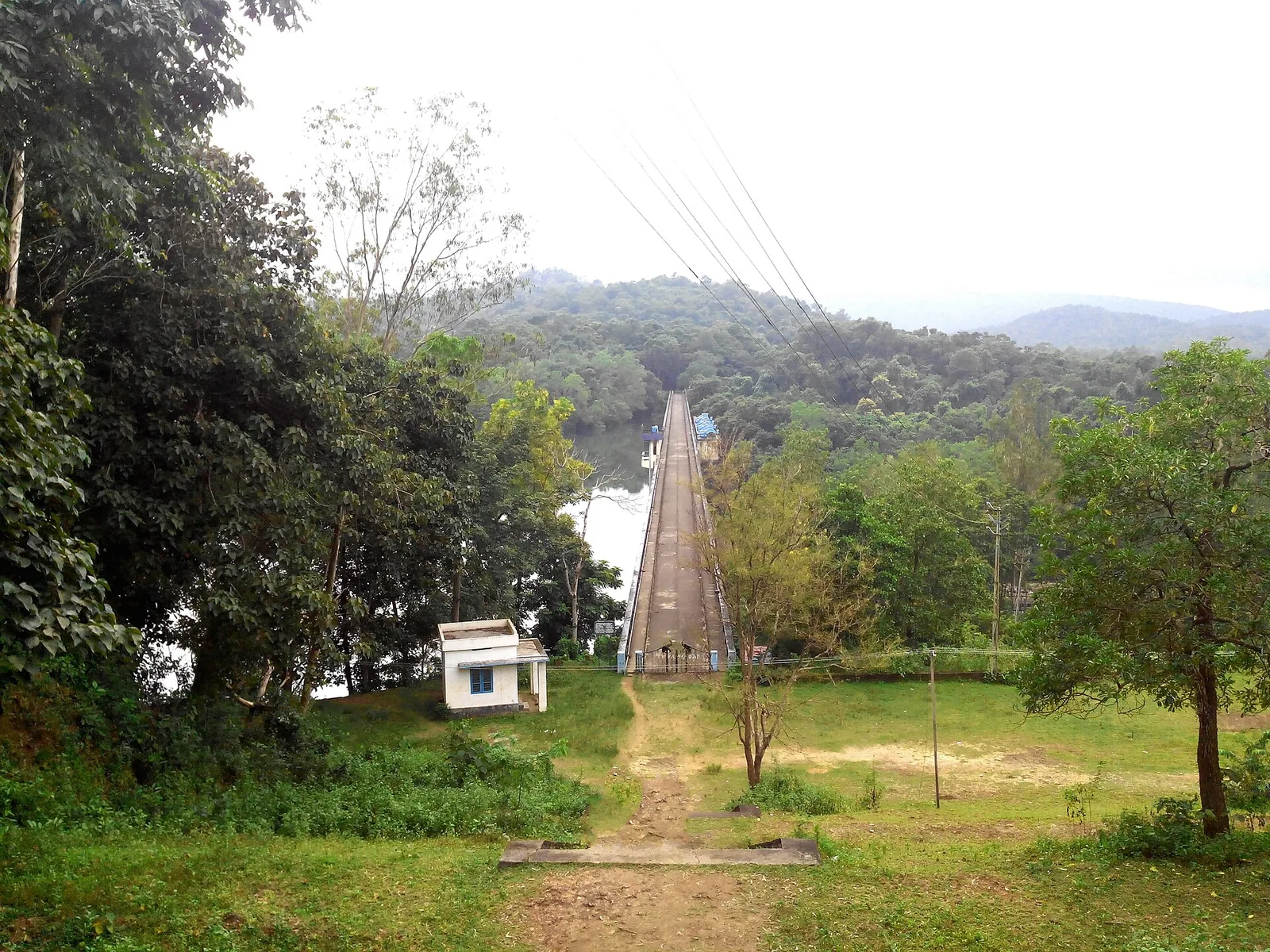
The Kerala Water Authority completed the dam at Peppara in 1983, 423 m of it across the Karamana in the Agasthyamala foothills, with a catchment of about 83 square kilometres behind it.
Its job is not to send water to the city. Its job is to catch a monsoon and then release it, through the dry months, down the river course to Aruvikkara, where the city takes what it needs. Peppara is the tank; Aruvikkara is the tap.
That is why the phrase two-stage system is worth carrying up here. Standing at Peppara you are not at the head of a pipeline. You are looking at a body of stored water whose route to a million people runs first through several tens of kilometres of the river you can see leaving below you.
Why the distinction is more than pedantry
It explains the landscape. If Peppara were an intake, what would matter is the dam. Because it is storage released down a live river, what matters is the whole length of the Karamana between here and Aruvikkara — and the condition of the catchment above, since anything entering the water here has a long way to travel before anyone treats it.
It also explains why the protection of this forest is not a sentimental add-on. A catchment that erodes fills the reservoir with silt and reduces the storage the whole arrangement exists to provide. Keeping the forest standing is the cheapest possible way of keeping the tank a tank.
The small print on the dam itself
One detail that most accounts of Peppara leave out: it carries a small hydroelectric station of around 3 MW. That is negligible beside its water role and it does not make this a power project, but it does account for infrastructure that puzzles people who have been told this is purely a drinking-water dam.
And one that is worth knowing before you plan a day: Peppara dam, Peppara reservoir and the Peppara Wildlife Sanctuary are one place under three descriptions, not three stops. Listings that separate them will have you budgeting time for a visit you have already made.
Frequently asked questions
Does Thiruvananthapuram draw its water directly from Peppara?
No. Peppara stores water and releases it down the Karamana to Aruvikkara, well downstream, where the city's intake and treatment plants are. Peppara is fairly called the source, but the pipes to the city do not start at this dam.
Why was Peppara built if Aruvikkara already existed?
Because Aruvikkara could treat water but could not store much of it. Its reservoir is small, far too small to carry a growing city from one monsoon through the following dry season. Peppara was added upstream in 1983 to provide the storage the system lacked.
Who built the dam and when?
The Kerala Water Authority, completed in 1983. It is 423 m long, across the Karamana river in the Agasthyamala foothills, with a catchment of roughly 83 square kilometres.
Does Peppara generate power?
A little — it carries a hydroelectric station of about 3 MW. That is trivial next to its water-supply function, but it explains machinery and structures that visitors expecting a purely drinking-water dam often find confusing.
Why does protecting the forest matter to the water supply?
Because a catchment that erodes silts up the reservoir and eats the storage the whole system depends on, and because water released here travels a long way down a live river before anyone treats it. Keeping the forest standing is the cheapest way of keeping the reservoir working.