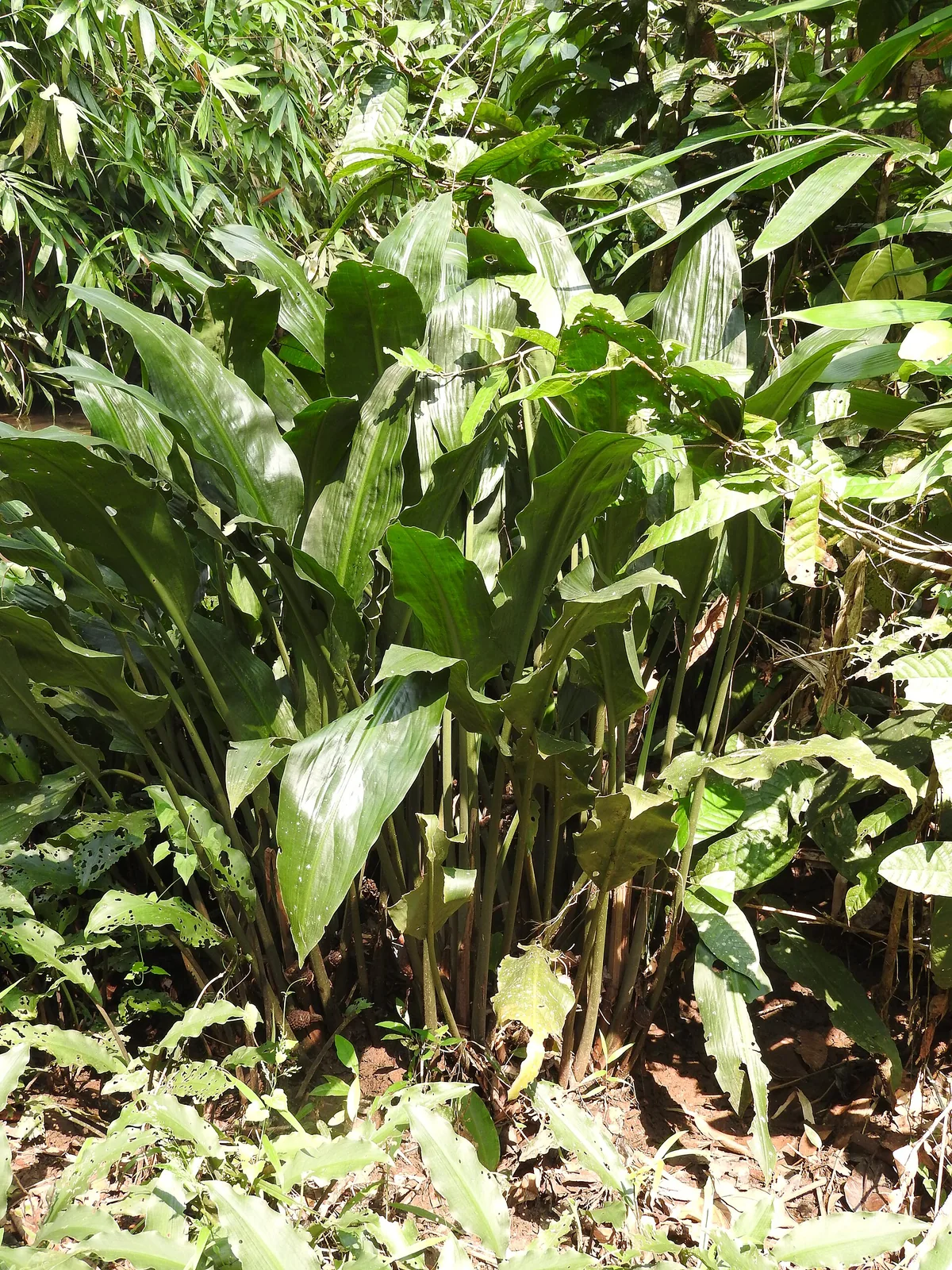
Arogyapacha grows in the southern Western Ghats, including the Peppara landscape. Its story in tourism writing often begins when researchers “discover” a useful plant. India’s own case study, hosted by the Convention on Biological Diversity, begins more carefully: Kani people already knew a use for it, and three community members shared that knowledge with scientists.
Knowledge existed before the research product
The government report describes the Tropical Botanic Garden and Research Institute studying the plant and developing a formulation called Jeevani. It also records a licence to a manufacturer and a trust intended to share benefits from commercial use. Those are stages in a research and business process. They should not be collapsed into a claim that an outside institution created the knowledge of the plant itself.
The report notes that within Kani practice certain medicinal knowledge was held by healers. That detail complicates the simple version in which a few people speak for an entire community. Who could share knowledge, who could agree to a licence and who would receive benefits were not automatically the same set of people.
An agreement did not end the argument
The case study records difficulties with the trust’s operation, involvement of relevant stakeholders and sustainable use of the plant. WIPO’s later discussion likewise treats the arrangement as a lesson in benefit sharing rather than a problem permanently solved by writing a contract. Those limits matter because the project is often cited as an example of fairness. It is more useful as a record of an attempt and the questions that followed.
A study of the plant’s distribution in Peppara and nearby southern forests puts the story back in habitat. Arogyapacha is not a trail snack, a souvenir to collect or a treatment recommended by this travel page. Its identity, use and conservation belong to the people and institutions working with it, not to a visitor’s experiment.
What a trekker can carry away
On a permitted Peppara forest route, a guide may speak about the landscape and its communities. Listen for knowledge that predates the commercial story. Ask whose account is being told and how benefits were meant to return, rather than seeking out a specimen to photograph or pick.
The lion-tailed macaque story asks a different conservation question about the same forest. Arogyapacha asks who is recognised when a plant becomes valuable outside it. The government record makes clear that the ending is not a simple “discovery,” but an unresolved test of sharing.