The departure begins before the landing
A Periyar boat reservation has a lake departure time, but the road arrival happens earlier and elsewhere. The official programme directs passengers to Anavachal before the boat departure and describes a reserve-bus transfer towards the landing. These stages are the reason a map pin at the water is not a sufficient arrival plan.
Anavachal is the useful road-side reporting base for the visitor journey. The landing is where boarding takes place inside the reserve arrangement. Treating them as separate locations prevents a driver and passengers from aiming for different gates under the same general “Thekkady boating” description.
Build the transfer into the plan
The operator’s published instructions call for arrival at Anavachal an hour before departure and at the landing thirty minutes before departure. Those are reporting requirements, not optional sightseeing time. The intervening transfer and checks need their place in the itinerary, even when the boat itself is already booked.
The programme describes the bus journey through the reserve as about four kilometres. That distance should not be converted into an assumed private-car shortcut or an invitation to walk independently to the landing. Use the transport and entry arrangement attached to the current booking.
The boat ticket, reserve entry and bus arrangement also need to be understood as distinct components where the operator treats them separately. The practical task is to read what the current reservation includes and retain the required identification, rather than discovering a missing stage at the last possible moment.
Boarding is part of a shared operation
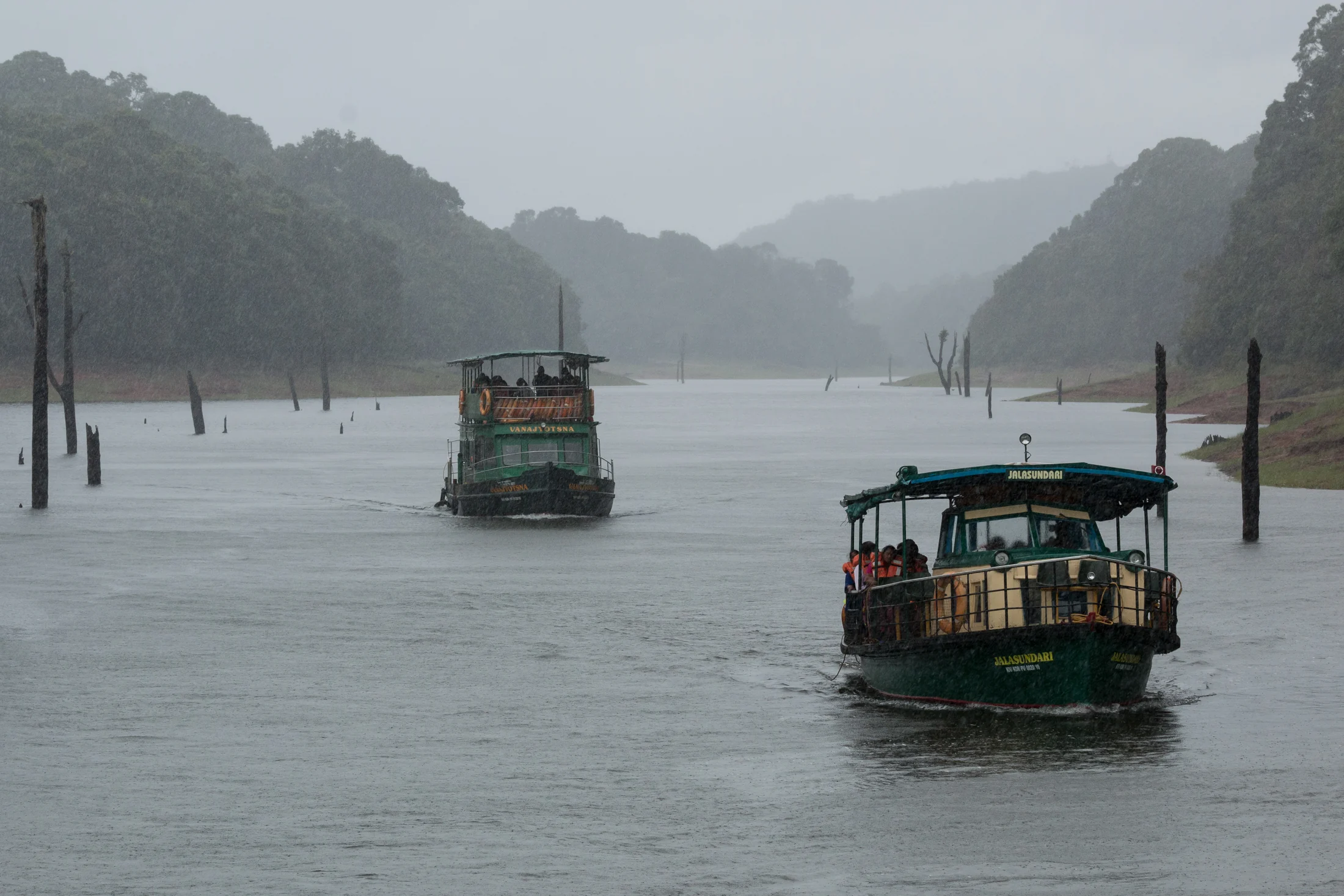
The photograph shows passengers beneath a covered boat roof, wearing orange lifejackets in wet weather. It captures two useful realities: weather can remain part of the experience, and the passenger-safety arrangement continues regardless of whether the view is sunny or dramatic.
Follow the crew’s boarding order and lifejacket instructions. A covered deck does not mean every seat has an identical photographic angle, and a booked departure should not be approached as a competition for a particular rail position. Keep movement within the boat’s operating rules.
The scheduled lake journey lasts about ninety minutes in the official programme. The whole visit is longer because the reporting, transfer, boarding and return happen around it. A restaurant reservation or onward road journey should allow for that complete sequence rather than using only the time spent afloat.
When the boat returns, the trip still has a landward stage. Follow the directed exit and reserve transport arrangement, then meet the driver at the agreed road-side base. Keeping that meeting point consistent makes the end of the visit easier, particularly for a group whose members have become separated while leaving the landing.
The result is a calmer start and finish: one named road arrival, one authorised transfer and one boat departure. Once those are understood, attention on the lake can stay with the landscape and wildlife rather than the worry of an unfinished transport plan.
Sources: Periyar Tiger Reserve official boating programme and booking instructions.
Plan the visit: Periyar Boat Safari.