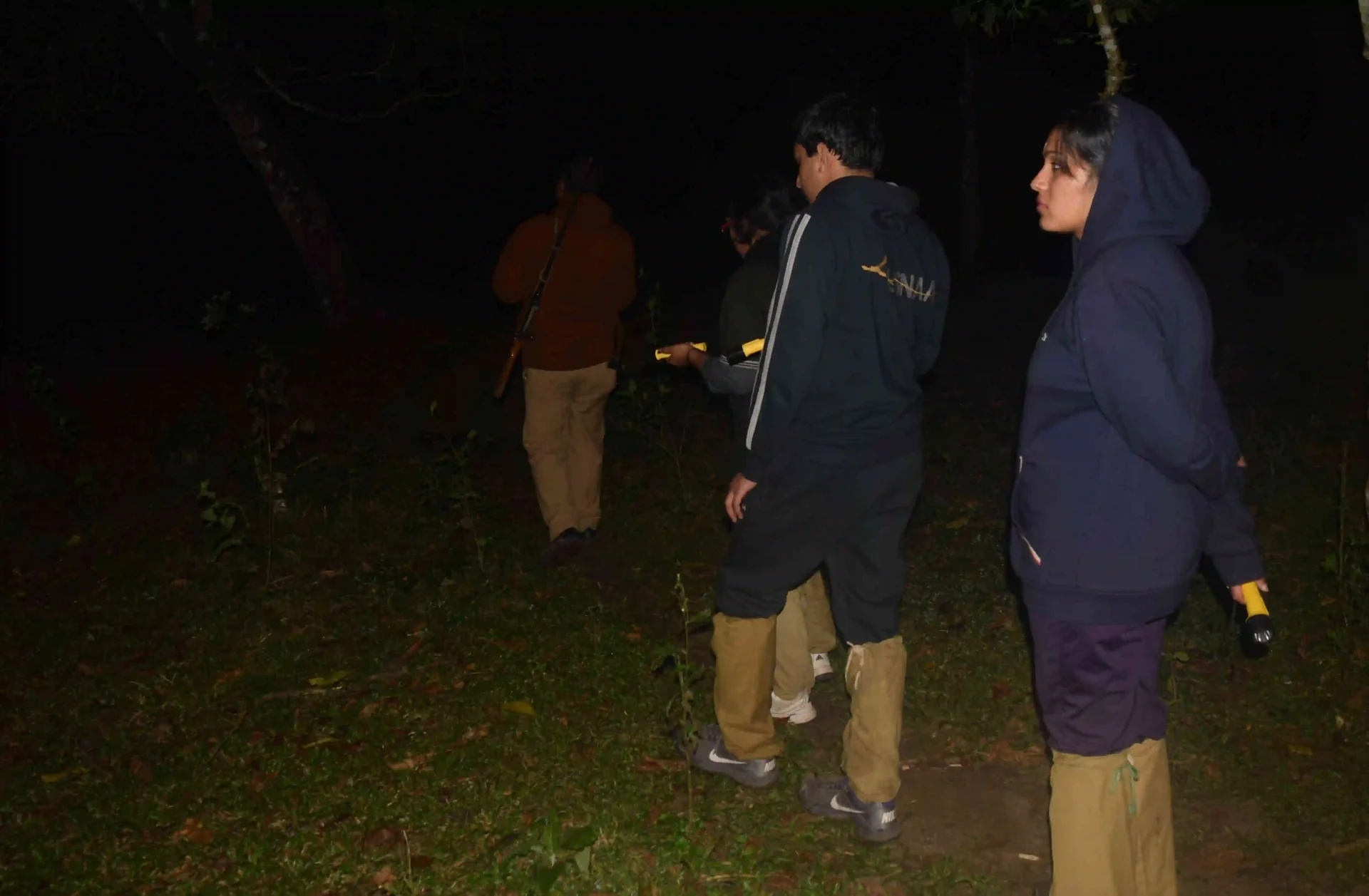
Periyar’s forest does not become an empty visitor attraction when the daytime boats finish. Protection and wildlife monitoring continue after dark. Jungle Scout, also known to visitors as Jungle Patrol, offers a small accompanied encounter with that working landscape. Understanding the distinction makes the outing more interesting than treating it as a search for animals illuminated by torches.
A working forest edge
The reserve places Jungle Scout on the fringes of its eco-development zone. That setting matters: a forest edge is where visitor movement and the responsibilities of a protected area meet. It is not an invitation to roam through the reserve’s interior. The booked walking line gives the group a defined place within a much larger landscape.
The National Tiger Conservation Authority’s Periyar profile identifies numerous entry points along a long interstate boundary as a protection challenge. It also describes fire and pressure from adjoining areas. These are reserve-wide responsibilities, not events promised during a tourist departure. A quiet night can be entirely consistent with successful protection.
Monitoring is different from sightseeing
The same profile places tiger observation and recording within routine patrol work and describes camera-trap monitoring by field staff. It mentions observation at vayals, the marshy grasslands used by wildlife. A visitor sees a brief portion of the forest; a monitoring programme builds knowledge through repeated observations across time and locations.
That difference explains why a night without a visible tiger says so little about the reserve’s tiger population. A camera may record an animal when visitors are elsewhere, while a person looking through a narrow torch beam may miss activity only a short distance away. The tourism group and the monitoring team are answering different questions.
Ask the guide about the meaning of an observation when there is a suitable pause. A track, a sound or a decision to wait may lead to an explanation of how forest knowledge is built. The answer can be valuable even when there is nothing suitable to photograph.
The visitor’s part is deliberately limited
Jungle Scout’s official description connects guided tourism with community livelihoods and conservation. Joining the organised programme supports that relationship through the work it creates. It does not give visitors authority to investigate a suspected offence, follow somebody or leave the group to inspect a light in the trees.
An armed guard and a community guide have professional roles; the visitor’s role is to follow the accompanied outing. Respecting a decision to move on recognises that distinction. There is no need to turn an ordinary patrol setting into a dramatic encounter for the walk to have meaning.
Read the NTCA Periyar profile for the wider protection setting and the current Jungle Scout description for the visitor programme. The lasting impression can be of a forest cared for through continuing work, much of which remains outside a tourist’s small circle of light.
Plan the visit: Periyar Jungle Patrol.