The lake is part of an engineered landscape
From the boat, Periyar Lake can look like a natural opening within the forest. Its modern form, however, is connected to the Mullaperiyar dam, completed in 1895. Kerala Tourism’s historical account explains how impounding the river created the reservoir and changed the valley’s landscape. The water and forest now seen together therefore have a history of physical transformation.
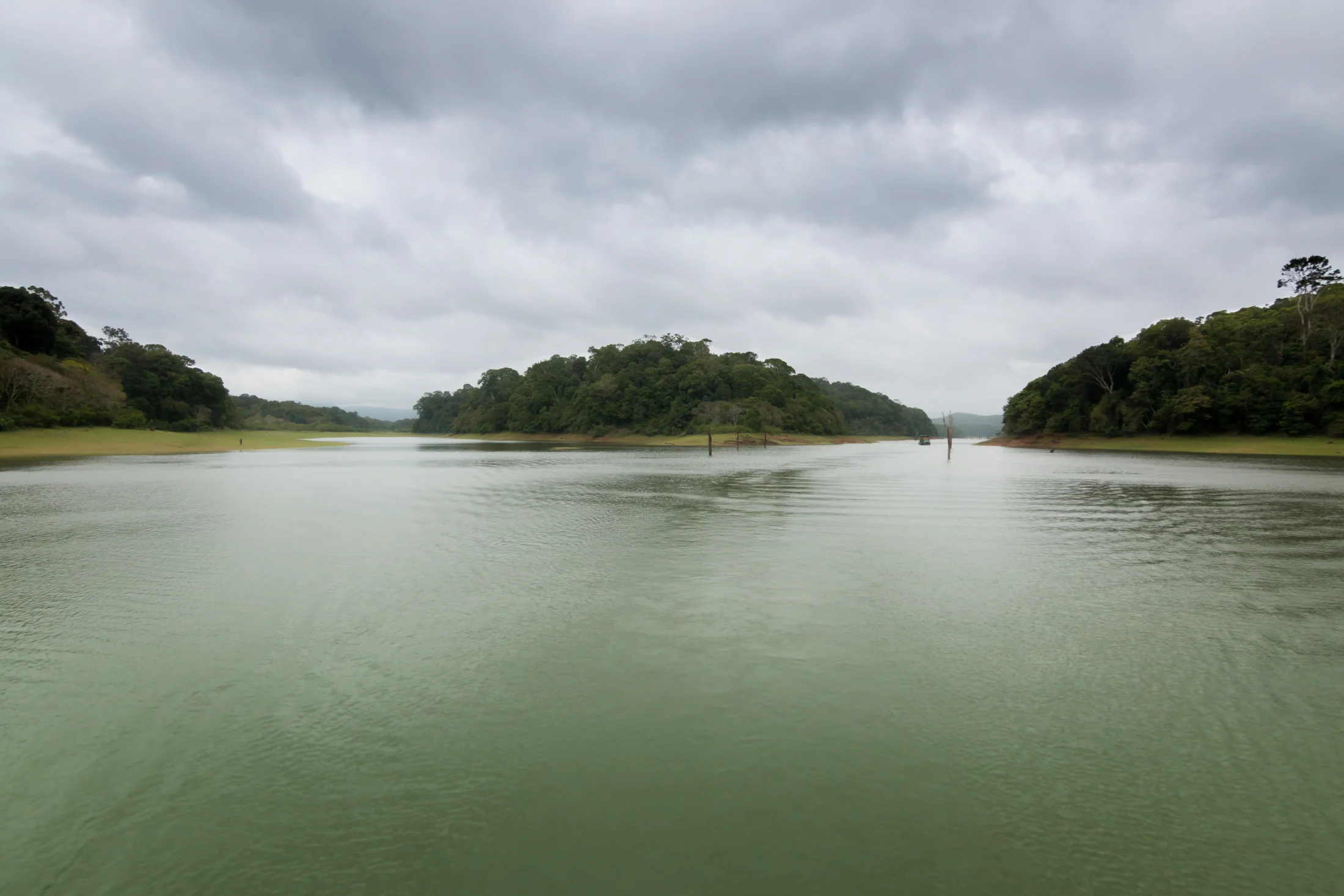
The photograph shows a branching water surface around a wooded slope. Bare trunks rise from the lake while living vegetation covers the higher ground. This contrast gives the reservoir a recognisable form: an earlier land surface is partly submerged, with surviving woody structures still visible above the water.
From submerged forest to nesting structure
A study by Periyar Tiger Conservation Foundation researchers examined Great Cormorant breeding in the lake during 2016–2017 and 2017–2018. It identifies standing dead trees as nesting structures, connecting the reservoir’s origin with a later ecological use. The trunks are therefore more than picturesque markers for a boat photograph.
The researchers recorded nests on tree tops and forked branches. Most of the nests they found lay outside the tourism zone. That last detail is particularly useful for a visitor: a published breeding record does not mean the passenger boat reaches every nesting area or that a nest will be visible on each trip.
The study is a dated account of particular seasons, not a current nest census. Its lasting interpretive value is the relationship it demonstrates between standing wood, open water and birds. Watch for actual behaviour when visible, but do not label a distant dark shape as a Great Cormorant solely because the species has been studied here.
Let the wider frame explain the place
A photograph that includes both wooded slopes and standing trunks tells more of this story than a tight crop of a single dead tree. The water level, the exposed wood and the living bank become readable in relation to one another. Different light and weather can emphasise different parts of that structure.
The official history also records the Periyar Lake Reserve designation in 1899. Later conservation arrangements changed over time, but the early reserve name itself shows how closely the protected landscape’s identity became tied to the lake. This history is separate from the present passenger-boat timetable.
For the visitor, the practical consequence is a richer way to spend the journey even when large animals remain out of sight. Follow the shapes of the reservoir arms, notice the difference between living bank and standing wood, and look for birds using the structures that are actually visible.
The boat trip then becomes more than a search for one dramatic sighting. It offers a view of an altered valley that has acquired important ecological functions, with its engineering history and wildlife habitat occupying the same frame.
Sources: Kerala Tourism: Periyar history and Sivakumar and colleagues, Great Cormorant breeding study.
Plan the visit: Periyar Boat Safari.