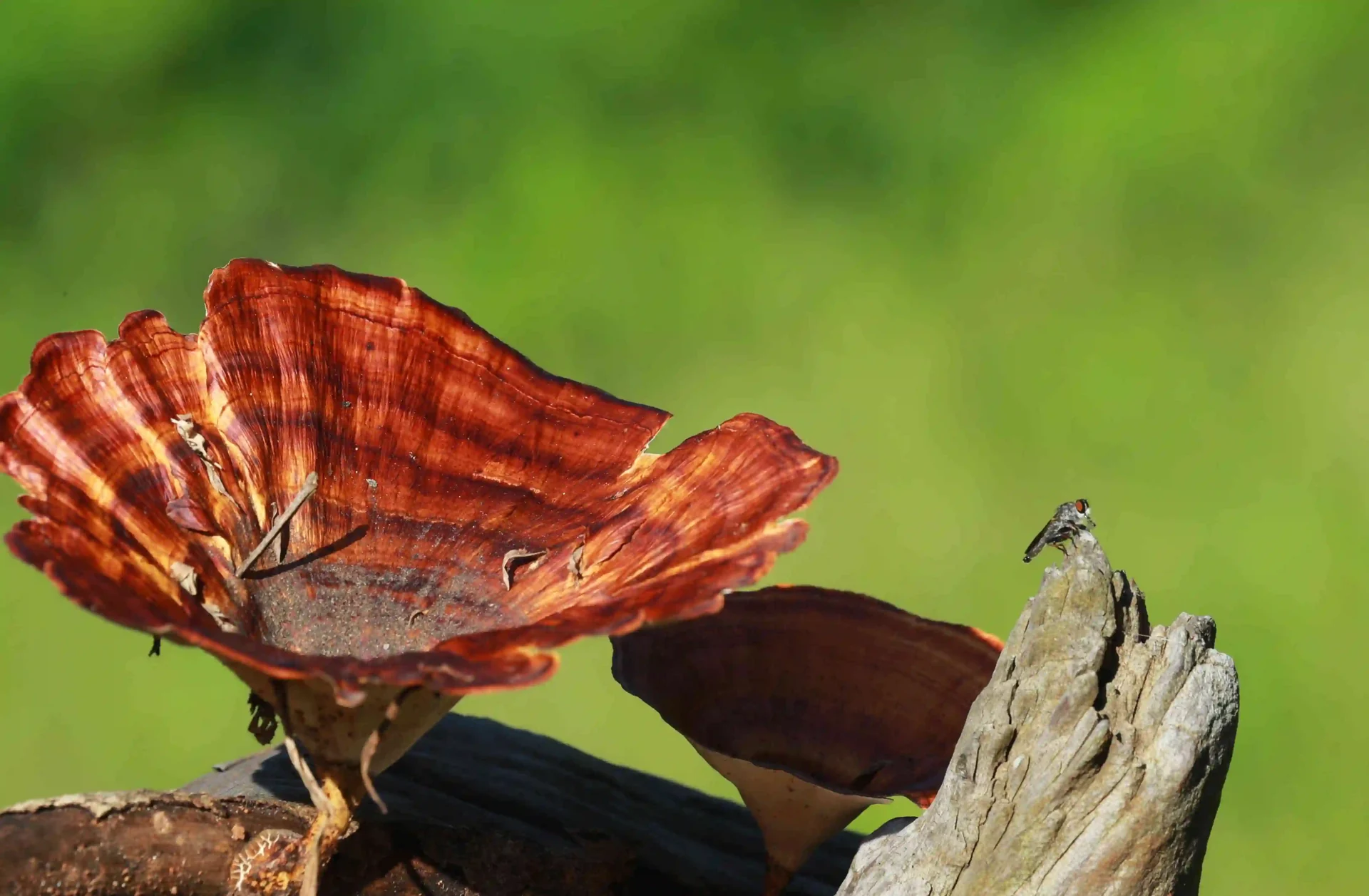
A rust-red bracket projects from a piece of dead wood, and a small fly rests near the pointed end of the wood beside it. The scale is modest enough to disappear in a general photograph of Periyar’s forest. On an interpreted walk, it can become a complete stop: a chance to ask what is visible, what remains hidden and why dead wood still belongs to a living landscape.
The forest does not end when a tree falls
A fallen trunk is not simply unused timber waiting to be cleared from view. It offers a different surface from the ground around it, with crevices, moisture and decaying material. Fungi participate in the breakdown of that wood. The brackets visible to a walker are only the outward structures, not the whole organism at work within the material.
That distinction changes how to look. Instead of treating a bracket as an isolated ornament, notice its attachment to the wood and the texture around it. A row of shelves along one log can show a different pattern from a single projecting growth. Colour, edge shape and arrangement are useful observations even when the guide does not name a species.
A confident species label is not required for a worthwhile encounter. Many fungi need details that a passing view does not reveal. Describing what is actually visible is a better start than borrowing a name from a superficially similar photograph.
Give the guide a chance to connect the detail
Periyar’s Nature Walk is designed for interpretation, which means the small subject can be related to the wider forest. Ask how the log changes as it decays, what signs of moisture can be seen or why the growth is concentrated on one part of the wood. A question tied to the actual object gives the guide something precise to explain.
Look beyond the bracket too. Moss, a small invertebrate or the broken fibres of the log may occupy the same frame. These details help show that the stop is about a patch of habitat rather than one collectible specimen. They also offer a different kind of satisfaction from trying to locate a distant animal through branches.
The group’s pace matters. If the first person immediately moves on after taking a photograph, others may lose the chance to hear the explanation. A short shared pause can make the scene available to everyone without turning it into a prolonged disturbance.
Observe without rearranging
Keep the wood and its growth where they are. Breaking a bracket, rolling a log or clearing the surrounding leaves changes the subject being observed. It can also disturb organisms hidden from view. The useful photograph records the relationship in place rather than manufacturing a tidier arrangement.
Stay on the permitted walking line and use the view the guide allows. A close detail does not become more important than the group’s route or another participant’s safe footing. If the angle is awkward, a remembered observation and a question can be enough.
The reserve’s Nature Walk description emphasises experiencing and interpreting the forest. A fallen-log stop fulfils that purpose directly: it turns a piece of apparent background into evidence of processes continuing around the visitor.
Plan the visit: Periyar Nature Walk.