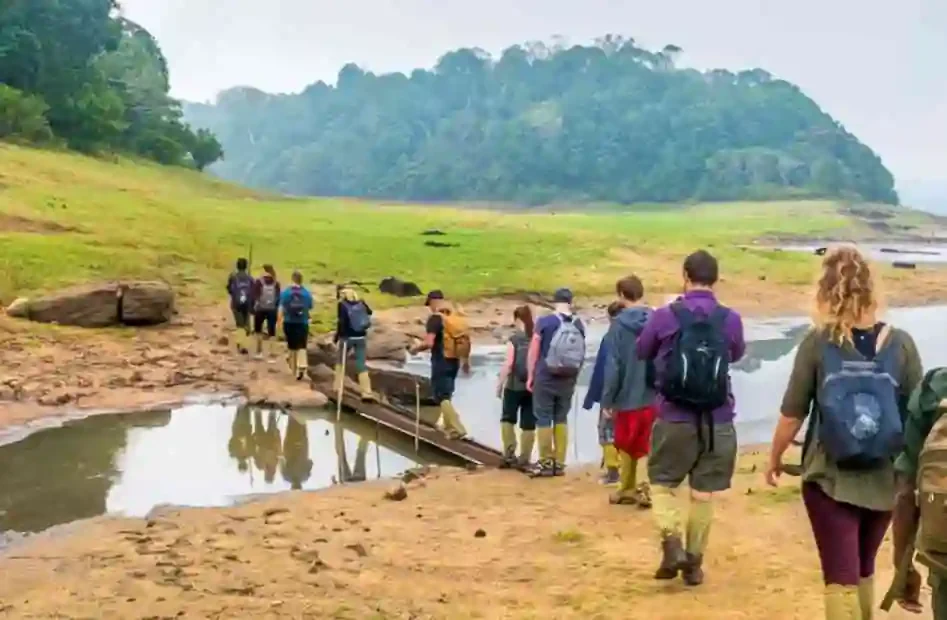
The reserve’s Tiger Trail photograph shows people negotiating a narrow plank crossing. The image is useful because it brings the outing down from the broad promise of forest adventure to a specific task: placing a foot carefully, waiting for space and following the person responsible for the route.
A photograph is not a route guarantee
The crossing records one programme scene. It does not mean every departure uses that same plank or that its condition remains unchanged. Forest routes respond to weather, water and the team’s decisions. What matters for a visitor is being willing to follow the current arrangement rather than expecting a photograph to function as a trail specification.
Ask about the physical demands before booking if balance, steep ground or carrying personal belongings may be difficult. A programme described as trekking and camping should be chosen through the participant’s actual abilities. The guiding team can explain the current outing more usefully than a distant image can.
Once at a crossing, let staff establish the order and the method. Do not crowd behind someone who is concentrating, and do not make an independent alternative because it appears quicker from one angle. The group’s safe movement depends on space as well as individual confidence.
Pace belongs to the whole party
A small group can still contain different walking speeds and levels of experience. Waiting at a difficult point is part of the journey, not time lost from it. The faster participant’s role is not to pull the group apart but to leave room for the shared pace.
Keep questions and requests clear. If a strap has loosened or a participant needs a pause, say so before it becomes a distraction on awkward ground. The most useful preparation is often a simple adjustment made while standing securely.
Photography should wait until footing and the team’s instructions are settled. A crossing can look dramatic through a lens, but the person crossing needs attention on the task. Never ask another participant to repeat a movement for a better picture.
The overnight format adds responsibility
Tiger Trail continues beyond the first walking leg into a camp and another day. Conserving effort and cooperating with the group therefore matter across the whole outing. A rushed start or an unnecessary detour can affect the later stages without improving the experience.
The reserve describes an accompanying team of guides and an armed official. Their presence supports an organised programme; it does not make every action a visitor might attempt safe. Stay within the instructions given for the actual terrain and camp.
Read the current Tiger Trail programme with that cooperative format in mind. A successful crossing is not a conquest of the forest. It is a small example of the group moving through it carefully, ready for the next stage of the walk.
Plan the visit: Periyar Tiger Trail.