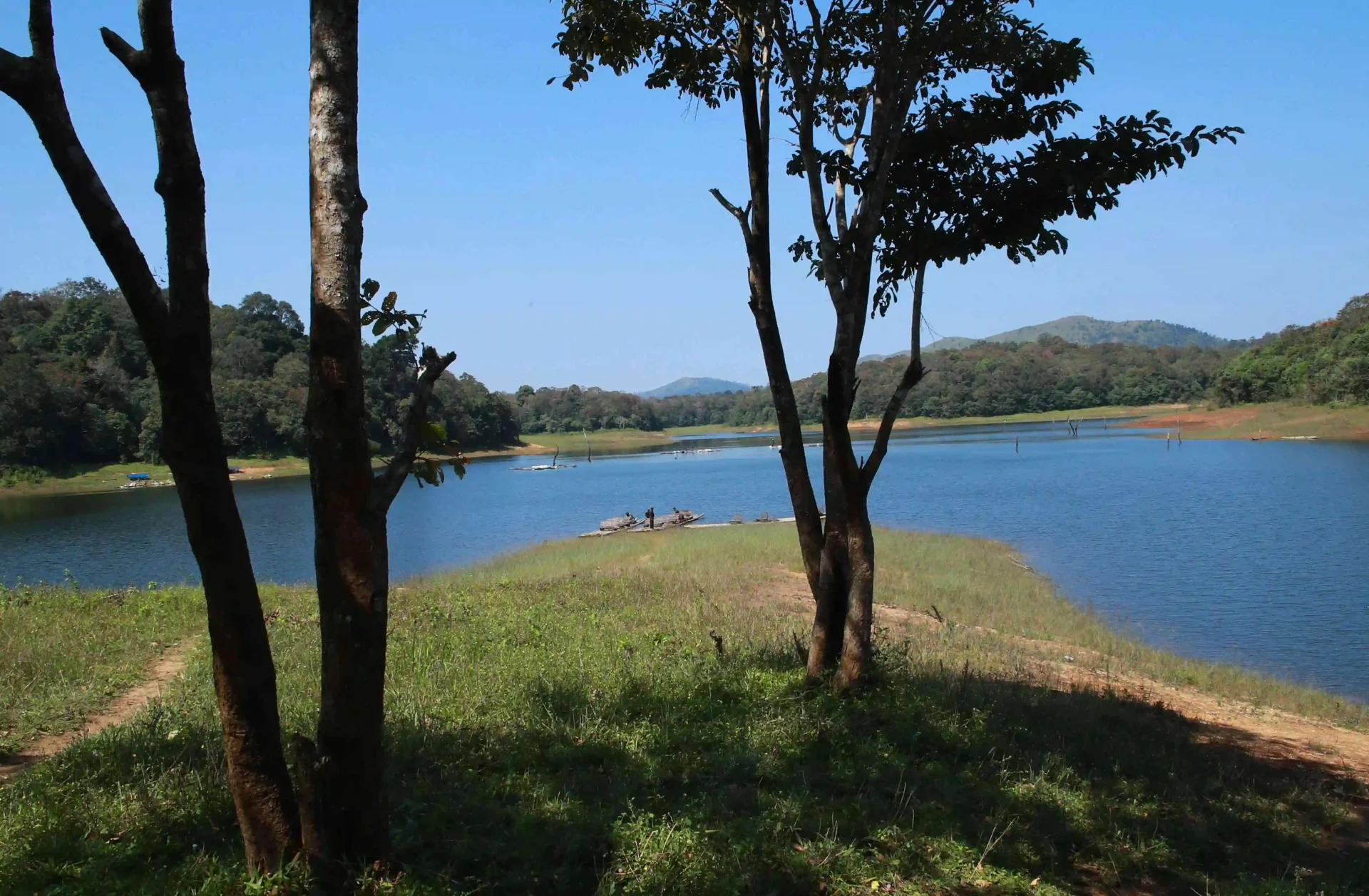
A wooded tongue of land extends into Periyar’s water in the programme photograph, with farther hills and lake margins beyond it. The scene is expansive, but an overnight visitor experiences it through smaller intervals: the walk, a pause, a meal and the changing light around camp. Tiger Trail gives those intervals more room than a short daytime outing.
Time changes the scale of attention
On a brief visit, much of the day is shaped by reaching a departure and returning from it. An overnight programme places the group in the forest for a longer continuous period. That does not guarantee more wildlife; it changes how the visitor encounters the assigned landscape.
A bank seen during the walk may look different later as its shadows lengthen. A distant line of trees can become a silhouette. The interest lies in observing a place through change rather than collecting a larger number of stops in the same afternoon.
The reserve offers one-night and two-night Tiger Trail products. Choose between them through the length of stay, physical commitment and current departure arrangement. An extra night is additional time in the organised programme, not a promise of a particular sighting or a fixed sequence of viewpoints.
Camp is an arrangement, not an independent base
The guiding team manages the visitor stay. Meals, tent arrangements and the permitted movements around camp belong to the programme, so a participant should follow the briefing rather than importing expectations from a serviced resort or an independent campsite.
The lake’s presence can make the setting look open and inviting. It does not create general permission to wander along the bank, enter the water or take a boat. A view of a shoreline is a landscape experience; access to that shoreline is a separate decision for the team.
Keep food and belongings as staff direct. In a forest camp, the practical arrangement affects more than personal convenience. The group needs shared routines that fit the setting, particularly as visibility decreases towards evening.
Leave room for an ordinary forest night
An overnight stay may contain long quiet periods without a dramatic event. That is not a failure of the itinerary. The absence of a scheduled spectacle is part of being in a place whose activity is not organised around visitor expectations.
Listen to the guide’s interpretation of what is present and allow the evening to remain modest if that is how it unfolds. The following morning can offer a different light and a renewed view of the surroundings without needing a rare animal to justify the stay.
The reserve’s Tiger Trail listing sets out the accompanied format. Use it to choose the commitment, then let the walk and camp determine the memories. The value of staying longer is time to notice, not control over what the forest will reveal.
Plan the visit: Periyar Tiger Trail.