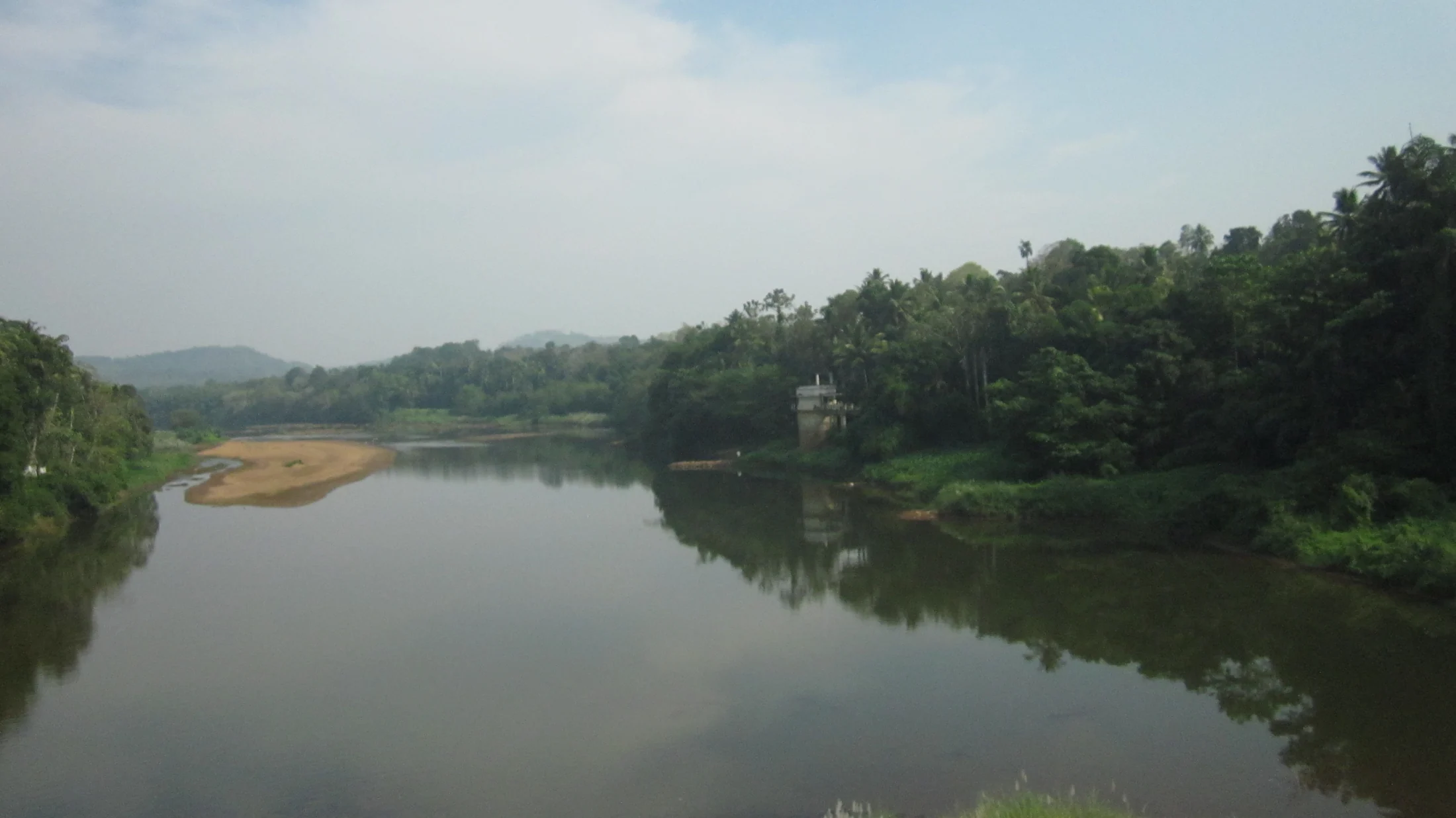
The river is the starting point
Perunthenaruvi is a waterfall on the Pamba in Pathanamthitta district. The river name matters because the view is more than a single isolated stream dropping from a ledge. Broad rock surfaces, channels and bends form the setting around the falling water.
The photograph with this story follows the river between exposed rock and wooded banks. It shows how much of the landscape lies beside and beyond the most dramatic white-water section. A visit becomes more rewarding when those surrounding forms receive attention too.
Several channels can share one rock bed
Across the views of Perunthenaruvi, the water occupies different grooves and chutes. Some frames emphasise closely grouped falls; others show a longer reach of exposed rock. The differences are partly a matter of where the photographer stands and partly of the water present at the time.
Look for the edges that divide one channel from another. A dark strip of rock between two white streams can explain the shape of the cascade more clearly than a tight image of foam. From a safe permitted position, a wider view keeps that relationship visible.
The rock also explains why a waterfall’s appearance cannot be reduced to a single height figure. The visitor sees a sequence of surfaces and changes in level. Their relationship with the river channel is useful even without attaching one dramatic measurement to the whole scene.
Flow changes what the view reveals
With less water, more of the channel’s underlying shape can become visible. With stronger flow, separate streams can appear more connected and the sound may dominate the visit. Neither appearance should be treated as a permanent condition.
Exposed rock is not an invitation to enter the riverbed. Follow the viewing boundaries and any closure directions. The same grooves that make an interesting photograph can carry water, and a clear-looking route across them should not be used as a pedestrian shortcut.
Read the banks as part of the visit
The wooded margins and the public approach sit beside a working river landscape that also contains hydel infrastructure. Keep the waterfall viewing area distinct from KSEB installations and from the water itself. A scenic river visit grants no access to a weir or powerhouse.
The mapped visitor base is at the top of the public approach steps on the northern bank. It gives the road journey a concrete destination above the water, where a group can assess the descent and current conditions before proceeding.
Perunthenaruvi’s character lies in that combination: a Pamba river reach, a broad rock bed and water dividing around the exposed forms. Let the whole setting, rather than only the strongest chute, shape the visit.
Sources: DTPC Pathanamthitta, Kerala Tourism and KSEB’s 2012 Perunthenaruvi small-hydel project consultation document.
Plan the visit: Perunthenaruvi Waterfalls.