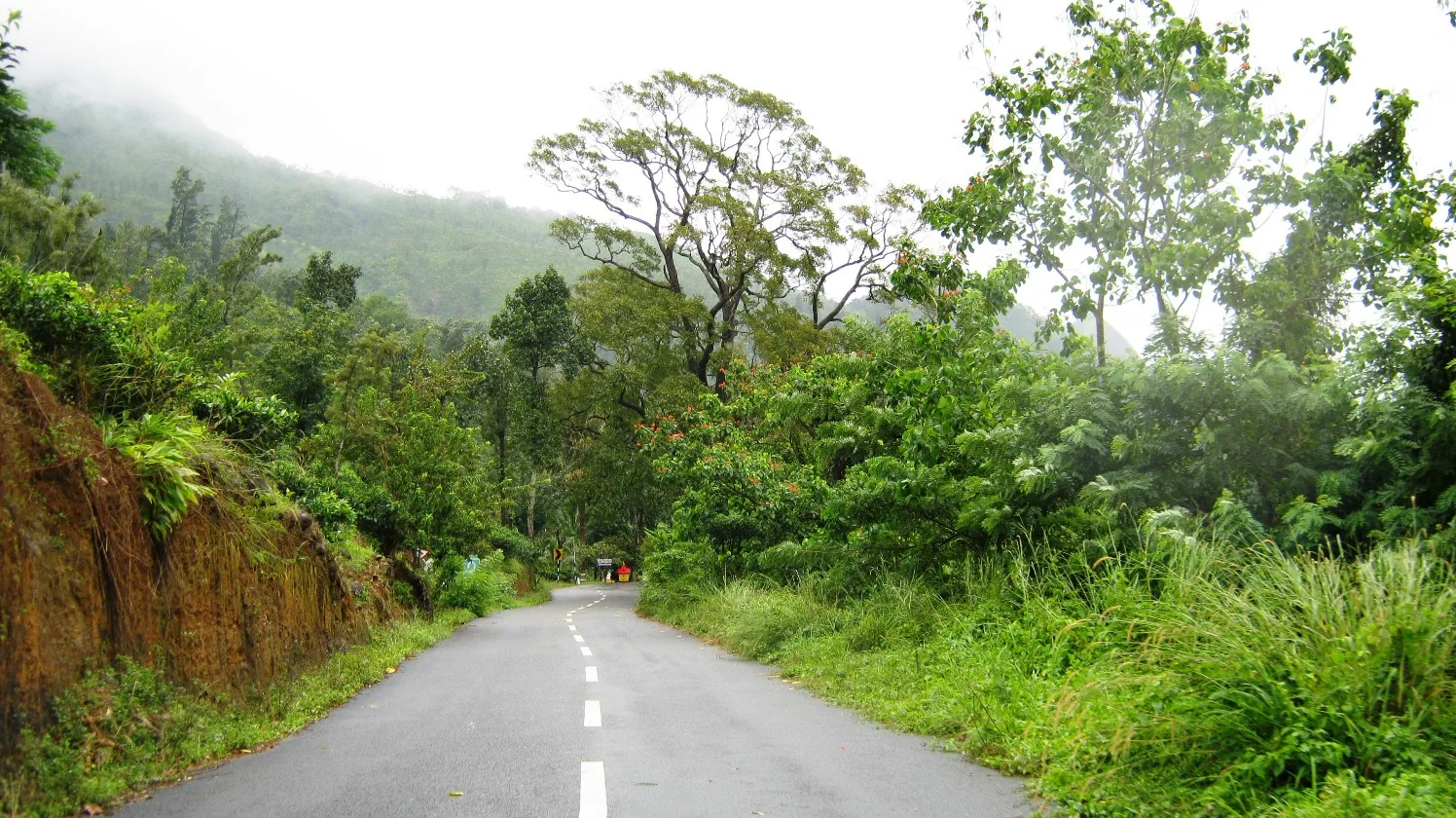
A visitor searching Ponmudi may encounter “Upper Sanatorium” and imagine a closed medical building on the hill. Kerala Tourism’s older material points elsewhere. A 2003 account says people enjoyed the view from the Upper Sanatorium. It uses the name as a place on a hill-station outing, without describing a hospital that a visitor should enter.
A viewpoint in the older visitor record
The 2003 account also mentions the road approach and trekking from the Kallar valley. Its language belongs to a particular moment in tourism writing: Ponmudi as a cool retreat for people escaping the heat of Thiruvananthapuram. “Upper Sanatorium” appears within that landscape of views and walks. The name may preserve an earlier use, but this short account does not date a medical institution or identify a surviving ward.
That distinction is worth making because place names can remain after the buildings or activities that produced them have changed. Reading “Sanatorium” literally would send a traveller after a facility the source never promised was open. The older article is evidence that the name was in visitor use, not a present-day guide to a particular doorway.
New plans, the same old name
In 2011, Kerala Tourism announced plans for visitor amenities in the Upper Sanatorium area and mentioned a proposed ropeway. A 2017 announcement concerned the Lower Sanatorium area, with a list of planned improvements. Each notice tells us what was proposed at its publication date. Neither is proof that every facility was built, remains open or belongs at the same point on the hill.
The contrast is the story: a name with the sound of an old institution kept appearing in plans for a modern recreational destination. An announcement can be useful historical evidence even when it is weak present-day advice. Ask the current operator what exists before travelling for a ropeway, tree house or amenity centre described years ago.
A hill still being remade
Kerala Tourism reported a new government guest house opening in 2025. That gives the timeline another chapter, but it should not be confused with a proof that the Upper or Lower Sanatorium was converted into that guest house. The public records cited here do not establish such a direct succession. They show Ponmudi repeatedly reconsidered as a place to stay and visit.
For the present outing, use the Ponmudi viewpoint page and current Forest Department access information. Let “Upper Sanatorium” be a prompt to read the older maps and tourism notices, while planning from today’s open paths, accommodation listings and rules. The name is a piece of the hill’s visitor history, not a promise of a hospital or attraction waiting behind a gate.