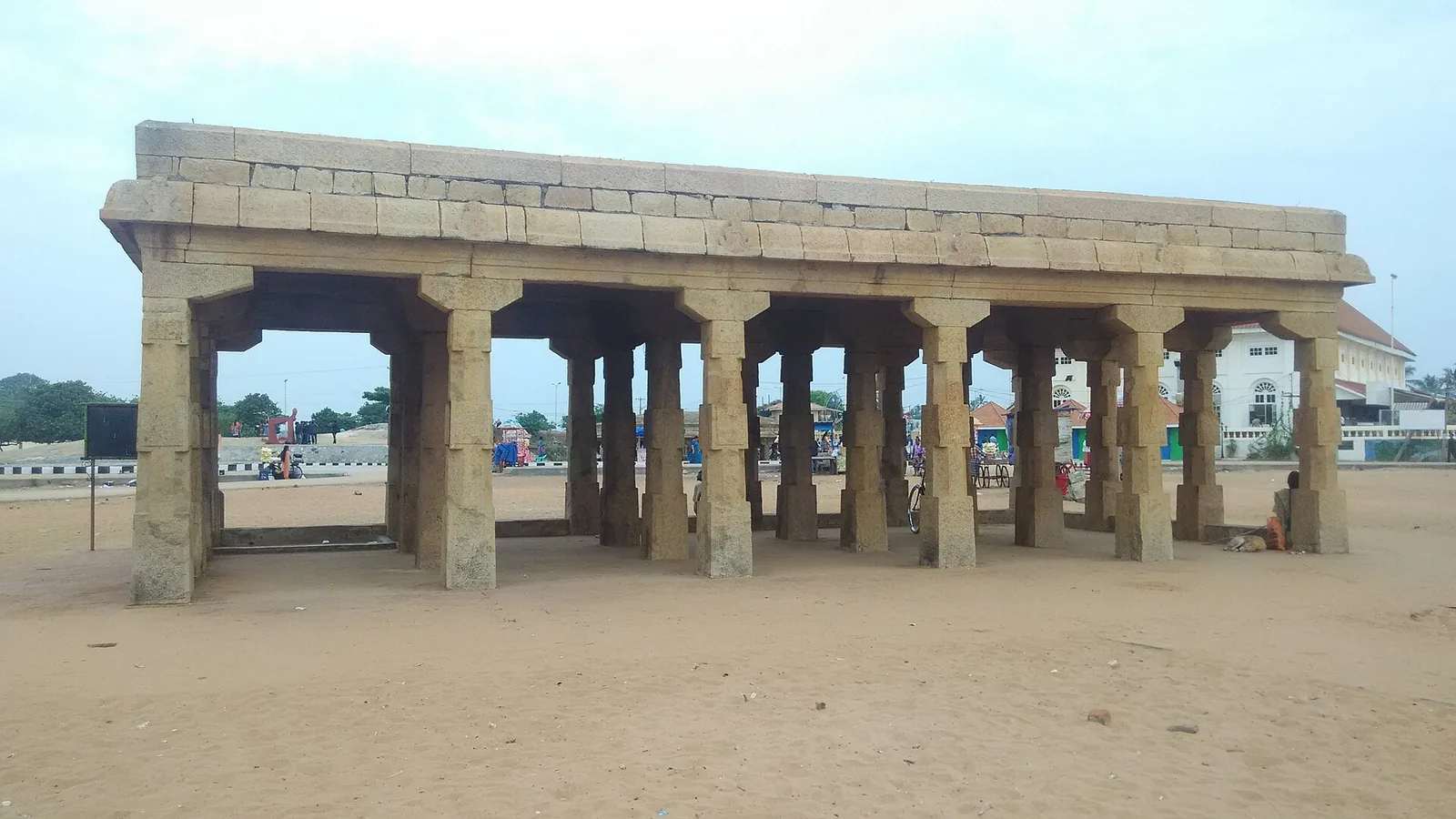
The stone Arattu Mandapam on Shanghumukham Beach can look like an ordinary pavilion when it is empty. Its meaning becomes clear when the Sree Padmanabhaswamy Temple procession reaches the sea. Between the temple and this shore lies Thiruvananthapuram airport’s runway. On festival days, the path of a deity and the path of aircraft must take turns.
The destination was the shore
Kerala Tourism describes the Arattu Mandapam as the pavilion used when the temple deities come to the sea for a ritual bath. Its Alpashi festival account describes the royal-family head leading the procession, with ceremonial participants and devotees, to the beach. It also says the Arattu is performed for the Painkuni festival. The structure stands as a marker of a recurring route, not simply as beach furniture.
Then the airport grew across the route
The airport operator’s 2026 account says the runway dates to 1932 and crosses the established processional path. It describes a scheduled NOTAM and a temporary halt to flight movements while the procession passes, followed by runway clearance before operations resume. That documented sequence is more useful than claiming a permanent right of way with legal terms the source does not establish.
For one dated example, Adani reported a halt on 30 October 2025 from 16:45 to 21:00 for the Alpashi Arattu. The operator says the Painkuni procession also crossed on 2 April 2026. Those dates show the practice; they do not give the closure window for a future festival. Travellers should check airline and airport notices for their own day.
The pavilion after the runway reopens
Once the procession has returned and flights resume, the pavilion is again a quiet landmark on a public beach. Knowing what happens here changes what the empty structure means. It is the end point of a temple story that remains part of the city’s operating calendar. Festival dates follow local practice, so confirm them with temple and airport notices rather than planning from last year’s timetable.
A route older than aviation
The airport closure makes news because it reverses the usual priority of a modern city. For a short time, aircraft schedules make way for a ritual journey to the sea. The beach pavilion marks the coastal end of that route, while the runway is the later piece of infrastructure across it. That sequence explains why the crossing is more than an unusual operational pause.
The event has a specific date and managed route each time, so a previous year’s flight notice is evidence of what happened then, not a timetable for the next Arattu. The airport operator and temple authorities should be checked for current arrangements. Ordinary beach visitors should keep clear of the procession path and avoid assuming access to the runway.
After the flight operations resume, the Arattu Mandapam still stands at the shore. It gives a quiet everyday reminder that the city’s road, runway and ritual calendar occupy the same coastal space.
Frequently asked questions
Why are flights paused for the Arattu?
The temple procession crosses Thiruvananthapuram airport’s runway on its way to Shanghumukham Beach. The operator issues a NOTAM and pauses movements until the procession clears the airfield.
Does this happen every year?
The airport operator describes processions during Painkuni and Alpashi festival periods. Exact dates and flight restrictions must be confirmed for each year.
What is the Arattu Mandapam?
Kerala Tourism identifies it as the beach pavilion used for the Sree Padmanabhaswamy Temple’s ritual sea bath at the end of the procession.