Most protected areas are presented as finished inventories: so many mammals, so many birds, a number for the plants. Shendurney’s numbers are unusually precise — 1,256 flowering plants, 268 birds, 35 mammals, 36 reptiles, 29 amphibians, 42 fishes, 257 butterflies — and they are also unfinished.
Things are still coming out of this forest that nobody had named.
Two spiders, February 2025
The freshest example is a year old. Two jumping spiders new to science were described from Shendurney Wildlife Sanctuary in February 2025: Epidelaxia falciformis and Epidelaxia palustris, published in Zootaxa by a team from the University of Kerala, Saveetha Medical College in Chennai and the Centre for Arachnology Research at Bharata Mata College in Kochi.
The genus is the point. Epidelaxia was previously believed endemic to Sri Lanka. These are the first records of it in India, which extends the genus across the Palk Strait — the kind of biogeographical result that reframes a distribution map rather than just adding a row to a checklist.
The females carry a prominent yellow triangular mark on the prosoma; the males a brown carapace with a yellow-brown stripe. One of the names, palustris, means "of the marsh" — and Shendurney does have documented swamps, which we will come to. We have not verified that the type locality is one of them, so we are not going to say it is.
Twenty hectares, in six pieces
The swamps are the rarest thing here and the least visited, and the department has mapped every one of them.
Myristica swamps are relict freshwater swamp forest — among the rarest habitats in the Western Ghats — dominated by the Myristicaceae. The plan singles out Gymnacranthera farquhariana and Myristica fatua var. magnifica as not common under other conditions, alongside Myristica dactyloides, M. malabarica and Knema attenuata.
The whole resource inside Shendurney is twenty hectares, in six fragments, each with a GPS fix in the plan: Mankuthu at 6 ha, Onnam Mile at 3, Choodal Bit at 5, and Paappamkuzhy, Vilakkumaram and Onnam Janda at 2 hectares each. All six sit within a patch roughly 2.5 km by 2 km.
Twenty hectares out of 171 square kilometres is about one tenth of one per cent of the sanctuary. In 2007–08 the department protected the Vilakkumaram–Mankuthu swamp with four thousand units of works.
A genus named in 2016, growing at Rosemala
The botanical example is stranger, because it involves a plant being promoted.
Sanjappa cynometroides is a small legume tree, narrowly endemic to Kerala, and it is the only species in its genus. It was first described in 1873 by Richard Henry Beddome as Calliandra cynometroides. In 2016 it was moved into a newly erected genus, Sanjappa, honouring Dr M. Sanjappa, a former Director of the Botanical Survey of India. The type locality is given as the hills of South Travancore at three to four thousand feet, and a known extant locality is Rosemala — inside this sanctuary.
A hundred and forty-three years between the description and the genus. The tree did not change; the understanding of where it belonged did.
The name on everything
Read the sanctuary’s endemics list and one surname keeps recurring. The management plan names its signature endemics as Gluta travancorica, Cynometra bourdilonii and Palaquium bourdillonii. The great eared nightjar recorded here is the subspecies bourdilloni.
That is T. F. Bourdillon, Conservator of Forests in Travancore, whose survey work in these hills seeded the region’s botany a century before anyone thought of declaring a sanctuary. Two trees and a nightjar carry his name in one forest. (There is a second colonial surveyor threaded through this page too: the Beddome who described Calliandra cynometroides in 1873 also has the kangaroo lizard of these forests, Otocryptis beddomii, named for him.)
It is worth noticing what that means. The endemism of this landscape was documented by the forest service of a princely state in the nineteenth century, on foot, and the sanctuary declared in 1984 is in a real sense a legal fence built around a botanical survey.
The nightjar, correctly this time
A distinctive nightjar is often said to have been first documented in these hills, which reads as though the species was described from here. It was not.
What happened is more specific: a brood of the great eared nightjar was found during the sanctuary’s annual bird survey — the first record of the bird in Kollam district, the previous southern record being from the Siruvani foothills in Tamil Nadu in May 1995. A first district record found on a volunteer survey is a smaller claim than the one we made and a much better story, because it is the kind of thing that happens here regularly.
The rest of the unfinished list
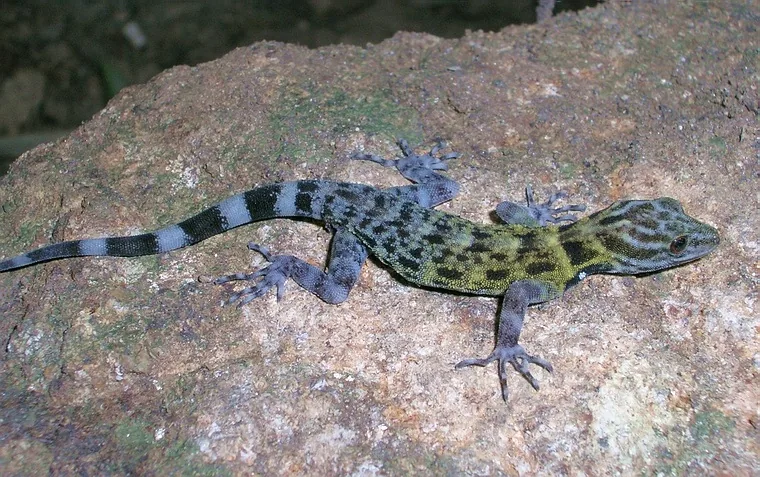
Other things with a Shendurney tie, for anyone who likes this sort of catalogue: Cnemaspis day geckos from the Dharbhakulam range in the core zone; a dendrotelme-breeding dragonfly whose species name has itself been revised since the photographs were taken, which breeds in pools of water trapped in tree forks; and 257 butterfly species including 25 Western Ghats endemics, which the plan calls one of the richest butterfly-diverse areas in the whole of the Western Ghats.
None of this is visible on a boat ride. That is rather the point of saying it: what makes this sanctuary matter is mostly small, mostly in six two-hectare swamps and under leaf litter, and mostly still being counted.
Frequently asked questions
Have new species been found in Shendurney recently?
Yes. Two jumping spiders, Epidelaxia falciformis and Epidelaxia palustris, were described from the sanctuary in Zootaxa in February 2025 — the first records of the genus Epidelaxia in India, which was previously believed endemic to Sri Lanka.
What are the Myristica swamps?
Relict freshwater swamp forests, among the rarest habitats in the Western Ghats, dominated by the Myristicaceae. Shendurney has twenty hectares in six mapped fragments — Mankuthu, Onnam Mile, Choodal Bit, Paappamkuzhy, Vilakkumaram and Onnam Janda — all within about a 2.5 by 2 km patch, and together about a tenth of one per cent of the sanctuary.
What is Sanjappa cynometroides?
A small legume tree, the only species in its genus, narrowly endemic to Kerala. Beddome described it in 1873 as Calliandra cynometroides; in 2016 it was moved into the newly erected genus Sanjappa, honouring a former Director of the Botanical Survey of India. A known locality is Rosemala, inside the sanctuary.
Who was Bourdillon?
T. F. Bourdillon, Conservator of Forests in Travancore, whose surveys in these hills predate the sanctuary by about a century. Two of Shendurney’s signature endemic trees — Cynometra bourdilonii and Palaquium bourdillonii — and the local great eared nightjar subspecies all carry his name.
Was a nightjar first discovered at Shendurney?
No, whatever the usual accounts imply. What happened is that a brood of the great eared nightjar was found during the sanctuary’s annual bird survey — the first record of the bird in Kollam district, the previous southern record being from the Siruvani foothills in Tamil Nadu in May 1995.