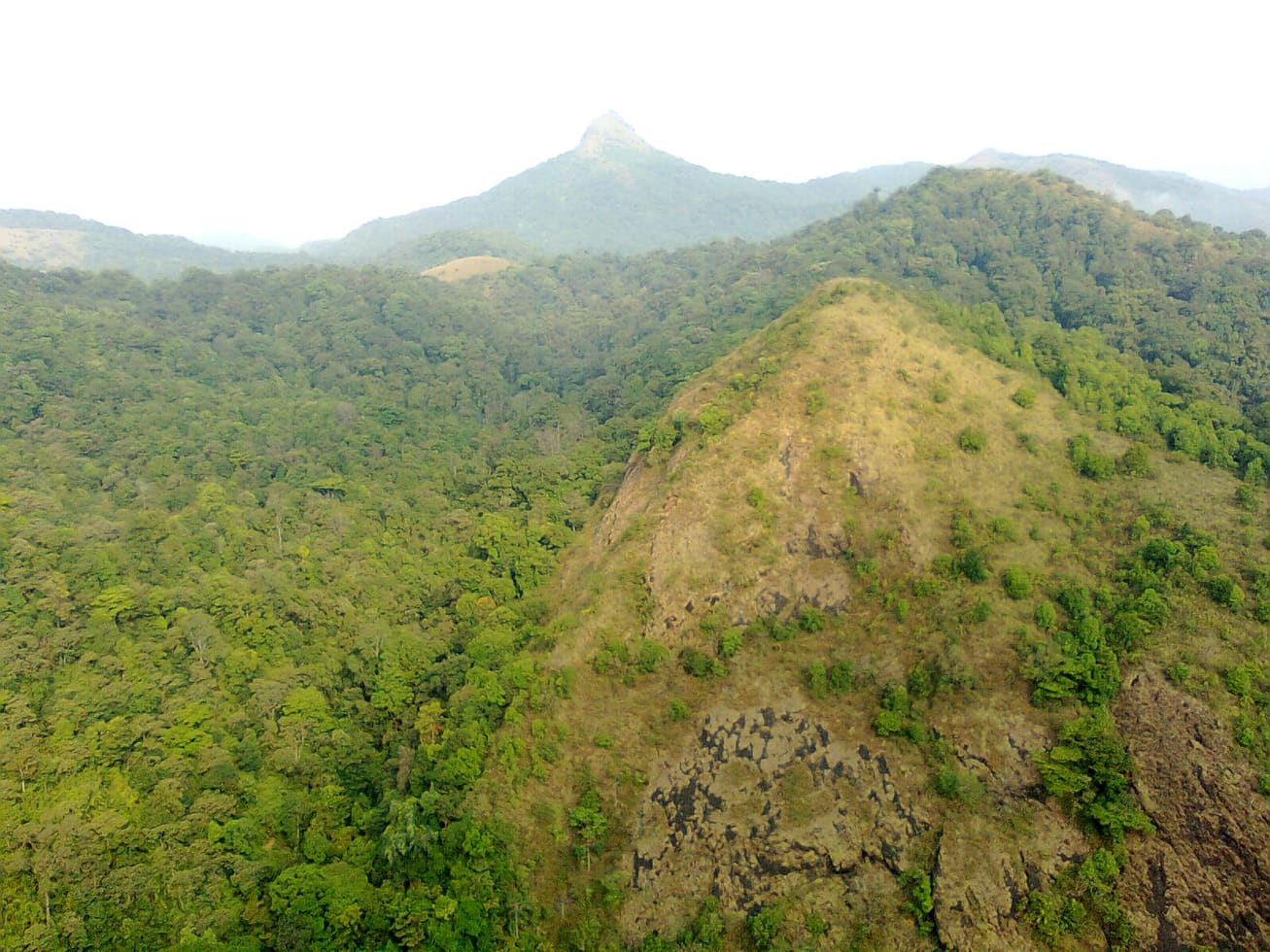
Palakkad’s eastern and northern edges rise into some of the finest surviving rainforest in the Western Ghats. Two protected areas stand out: Silent Valley National Park, one of the last untouched tropical rainforests in India, and the larger Parambikulam Tiger Reserve. Both are strictly managed, so a visit takes a little planning — but that is exactly why they remain so wild.
Silent Valley National Park
Silent Valley became a national park on 26 December 1984, but its real fame is the fight that saved it. In the 1970s a proposed hydroelectric dam would have submerged a stretch of this rainforest; the “Save Silent Valley” movement, one of India’s landmark environmental campaigns, stopped the project. The park protects the largest population of the endangered lion-tailed macaque, along with the Kunthipuzha river that threads through it. Visits are tightly regulated: the usual approach is via Mukkali, where you arrange the forest permit and a guided jeep trip up to the Sairandhri viewpoint, rather than wandering in on your own.
Parambikulam Tiger Reserve
Parambikulam, straddling the Palakkad–Thrissur border, was declared a tiger reserve in 2010, built on a wildlife sanctuary dating from the 1970s. It shelters tigers, elephants, gaur and lion-tailed macaques, and is famous for the Kannimara teak — a giant tree estimated at around 450 years old and often called the oldest teak in Asia. The reserve is a model of community ecotourism, run with guides from the Kadar, Malasar and other tribal communities who live within it. Note that road access is often via the Anamalai/Pollachi side in Tamil Nadu.
Visiting responsibly
Both forests cap visitor numbers and require permits or pre-booked programmes, so arrange your visit before you turn up. Book directly through the reserves’ own channels — Parambikulam runs an official booking portal for its safaris and stays — carry out all your waste, and keep to the guided programmes. These are living ecosystems and, in Parambikulam’s case, inhabited homelands, not open-access parks.
- Silent Valley: access via Mukkali; arrange the forest permit and guided jeep to Sairandhri ahead of time.
- Parambikulam: pre-book safaris/stays through the reserve’s official portal; road access is often from the Tamil Nadu (Pollachi) side.
- Both cap daily visitors — don’t rely on walk-up entry, especially in peak season.
- Go with the official guides, carry out all waste, and keep noise down — this is prime wildlife habitat.
Frequently asked questions
Why is Silent Valley famous?
It’s one of India’s last undisturbed tropical rainforests and the subject of the landmark “Save Silent Valley” movement, which in the 1970s–80s stopped a hydroelectric dam that would have flooded it. It became a national park in 1984 and protects the largest population of lion-tailed macaques.
How do you visit Silent Valley National Park?
Access is regulated and usually via Mukkali, where you arrange a forest permit and a guided jeep trip up to the Sairandhri viewpoint. It’s not a drive-in-yourself park, so plan the permit ahead.
What is the Kannimara teak in Parambikulam?
A giant teak tree in the Parambikulam Tiger Reserve estimated at around 450 years old and often described as the oldest teak in Asia — one of the reserve’s best-known natural landmarks.