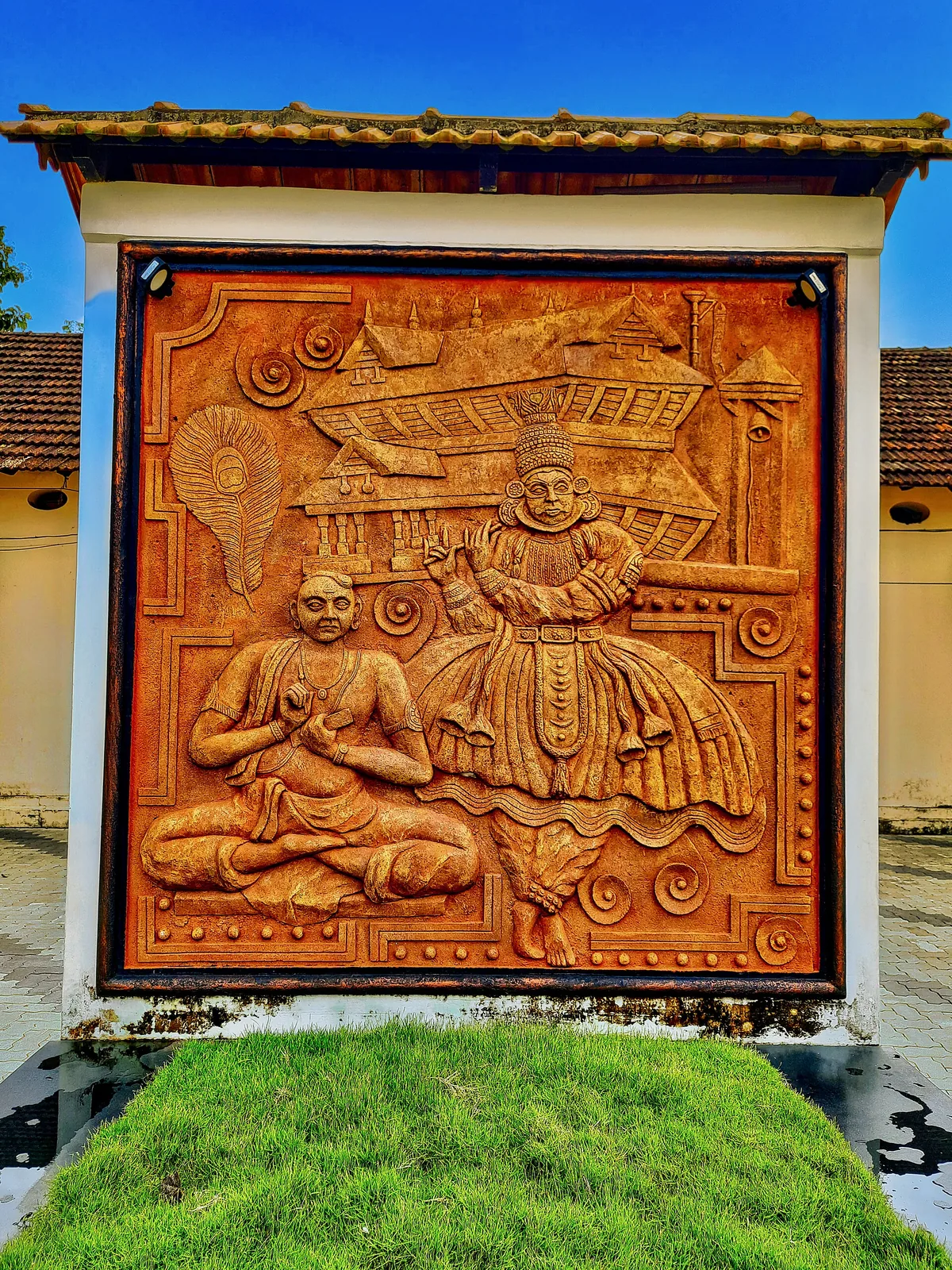
In the middle of busy Kozhikode, hidden behind its old streets, is the temple that was once the private shrine of the most powerful rulers on the Malabar coast: the Thali Temple, dedicated to Shiva as Uma Maheswara, built by the Zamorins of Calicut. And every year it hosts one of the most unusual festivals in India — not a procession of elephants, but a contest of minds. Behind that contest lies a story of guilt.
The Zamorin’s temple
The Thali temple was raised in the fourteenth century by the Zamorin of Calicut — the Samoothiri, whose port would soon draw ships from Arabia, China and, later, Vasco da Gama’s Portugal. As the Zamorins rose from chieftains of Eranad to overlords of much of northern Kerala, the Thali became their household temple, the Shaiva heart of a maritime empire. But the Calicut chronicles remember that the rise was not gentle.
A sin that needed washing
According to the Calicut Grandhavari, the old chronicle of the kingdom, the Zamorin — while still only the chieftain of Eranad — seized the Thali temple and drove out its sixty Saivite Brahmin trustees; some who resisted were put to death. The killing of Brahmins, Brahmanahatya, was held to be among the gravest of sins, a stain that could ruin a dynasty. And so, tradition says, the Revathi Pattathanam was born — not as a celebration but as a prayaschitta, an act of penance, a way for a guilt-haunted king to make amends by honouring learning itself.
The battle of scholars
Whatever its origin, what grew from it is remarkable. For roughly six centuries the Revathi Pattathanam has gathered the finest Sanskrit scholars of the land at the Thali temple to compete across the four great fields of traditional knowledge — tarka (logic), vyakarana (grammar), mimamsa (ritual philosophy) and vedanta (metaphysics). Held over seven days and beginning on the Revathi star, the assembly was patronised for generations by the Zamorin in person. Its highest honour is the title of Bhatta, conferred on the victors along with a panakizhi, a ceremonial purse of coins. It is, in effect, a living examination hall from the medieval world, still sitting each year.
Why it moves you
There is something quietly astonishing in the idea that a king’s answer to a massacre was to endow an intellectual tournament that has outlived his dynasty, his port and his power by centuries. Stand in the Thali courtyard during the Pattathanam, listening to scholars debate points of grammar and logic exactly as their predecessors did six hundred years ago, and you are watching penance turned into one of the longest-running celebrations of the mind on earth.
Visiting Thali
The Thali temple sits in the heart of Kozhikode city, an easy walk from its old bazaars and the seafront. Come during the Revathi Pattathanam (usually around October–November, on the Revathi star) for the scholars’ assembly, or on any day to find the calm Shaiva shrine tucked into the busy town. Details are on the Thali place page; more of the district is on the Kozhikode hub.
Frequently asked questions
What is the Revathi Pattathanam?
It is an annual assembly of Sanskrit scholars held at the Thali temple in Kozhikode since about the fourteenth century, competing in four fields of traditional knowledge — tarka, vyakarana, mimamsa and vedanta. Winners receive the title Bhatta and a ceremonial purse (panakizhi). It runs for seven days, beginning on the Revathi star, and was patronised by the Zamorin of Calicut.
Why was the Revathi Pattathanam started?
According to the Calicut Grandhavari chronicle, the Zamorin seized the Thali temple and killed some of its Brahmin trustees; tradition holds that the Revathi Pattathanam was instituted as a prayaschitta (act of penance) for that sin, honouring scholarship as atonement.
Who built the Thali temple?
It was built in the fourteenth century by the Zamorin of Calicut and became the household temple of the Zamorins. It is dedicated to Shiva in the form of Uma Maheswara.