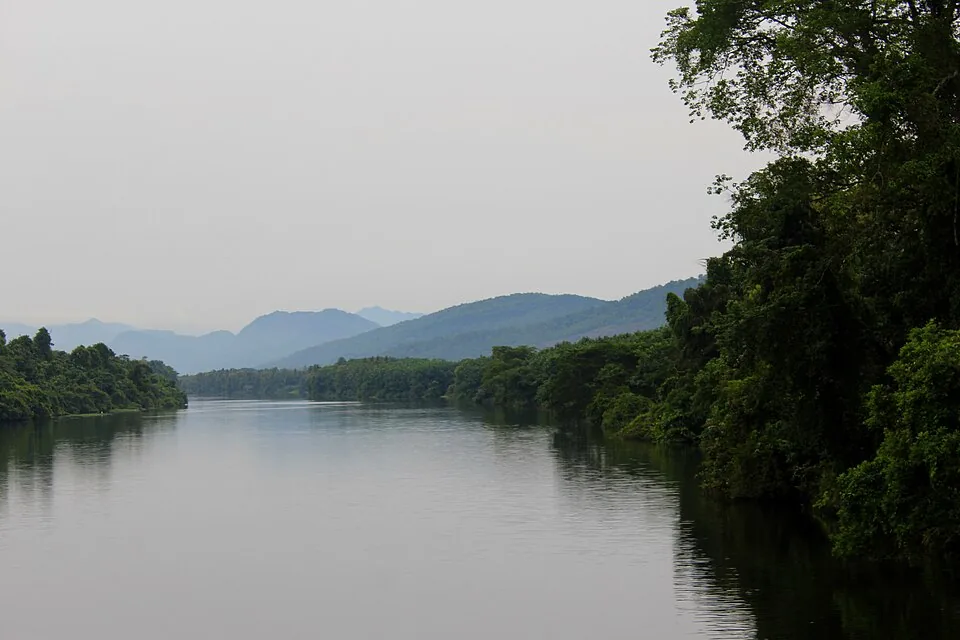
The Thattekkad Bird Sanctuary is not large. It is about 25 square kilometres of low evergreen and semi-evergreen forest in a bend of the Periyar, between roughly 35 and 520 metres of elevation, and you can walk a useful amount of it in a morning. Its reputation is out of all proportion to its size, and the reason is a survey carried out here in 1933.
What Salim Ali found
Salim Ali is the reason most Indians know the word ornithologist. In 1933 he surveyed the birds of the Travancore and Cochin states, and this patch of forest on the Periyar was part of the ground he covered. His verdict on it has been quoted ever since: that it was the richest bird habitat in peninsular India — the best he had seen anywhere south of the Himalaya.
That is a striking thing to say about a small, unremarkable-looking piece of lowland forest next to a river, and it is worth understanding why he said it. Thattekkad sits where several things meet. It is low, it is wet, it is evergreen, and it is riverine, and it has both dense canopy and open water within a short distance. Habitats that would normally be separated by tens of kilometres are stacked here within walking distance of each other, and the bird list stacks with them.
And then nothing happened for fifty years
The sanctuary was notified in 1983. Salim Ali surveyed it in 1933. That is a gap of half a century between the best-qualified person in the country identifying a place as exceptional and the state getting round to protecting it.
Nothing dramatic fills the gap. It is the ordinary story: a small forest with no large mammal to argue for it, in a state with more pressing land questions, next to a river that was being dammed and irrigated for other purposes entirely. Protection tends to follow charisma and crisis. Thattekkad had neither. It had warblers.
When it did come, the notification made Thattekkad the first bird sanctuary in Kerala — a first that reads oddly for a state with this much wetland and this much forest, and which says more about how late bird habitat entered Indian conservation thinking than about Kerala.
- 1933 — Salim Ali surveys the birds of Travancore and Cochin and singles out Thattekkad.
- 1983 — the sanctuary is notified: Kerala’s first bird sanctuary, about 25 sq km.
- The sanctuary carries his name, and the main walking route is signposted as the Salim Ali Bird Trail.
- One stretch of the forest is known locally as Cuckoo Paradise, which is a genuine local name and not a tourism department invention.
What the fifty years cost, and did not
It would be neat to say the delay was a disaster. It mostly was not, and that is the more interesting outcome. The forest was not cleared in the interval, largely because it was awkward ground of no great commercial value in a corner that development went round rather than through. Thattekkad survived by not being wanted, which is the same mechanism that saved the mangrove at Mangalavanam in the middle of Kochi.
That is not a conservation strategy, though. It is luck, and it is worth naming as luck. The list of Indian habitats that were identified as exceptional, waited fifty years for protection, and were still there at the end of it is not a long one.
Why any of this matters when you are standing in it
Because it changes what you are looking at on the trail. The arch at the trailhead has Salim Ali’s name on it, and it is easy to read that as ordinary commemoration — a famous naturalist, a nice gesture. It is not that. He is the reason there is a gate here at all. He walked this ground, wrote down what was in it, and the note he made in 1933 was still doing work in 1983.
Go early, go slowly, and take a guide who knows the calls; the bird list here is long and most of it is heard before it is seen. And when you pass under the arch, register that the fifty years between the survey and the sign were the risky part, and that they went the right way more or less by accident.
Frequently asked questions
When did Salim Ali survey Thattekkad?
In 1933, as part of his survey of the birds of the Travancore and Cochin states. He described it as the richest bird habitat in peninsular India.
When was Thattekkad declared a sanctuary?
In 1983 — fifty years after Salim Ali’s survey. It was the first bird sanctuary notified in Kerala.
How big is Thattekkad Bird Sanctuary?
About 25 square kilometres, at elevations of roughly 35 to 520 metres, in a bend of the Periyar river in eastern Ernakulam.
Why is such a small forest so good for birds?
Because it stacks habitats. Low evergreen and semi-evergreen forest, riverine edge, open water and dense canopy all sit within a short distance of one another, so species that would normally be separated by tens of kilometres overlap here.
Why did it take fifty years to protect it?
There is no dramatic answer. It was a small forest with no charismatic large mammal to argue its case, in a state with competing demands on land, beside a river being developed for irrigation. Protection usually follows charisma or crisis, and Thattekkad had neither.
Is the Salim Ali Bird Trail named after him?
Yes. The main walking route through the sanctuary is signposted as the Salim Ali Bird Trail, and the sanctuary itself carries his name — because his 1933 survey is the reason it exists.