The lion-tailed macaque is one of the animals for which Thiruvananthapuram Zoo has a conservation breeding role. In the zoo’s 2023–24 annual report, that promising line leads to an awkward admission: breeding was stalled. The zoo did not have suitable pairs. Behind the public exhibits was a harder question than how many animals visitors could see: what does a breeding programme mean when its essential pair is missing?
The obstacle behind the programme
The report records that the breeding plan needed review. The zoo said it had discussed a breeding loan with Mysore and Vandalur zoos, but neither had produced a loan at the time of reporting. Being named in a conservation programme matters, yet it does not mean a birth followed. This is a dated account of a specific obstacle, not evidence that the programme remains stalled today.
That is the first turn in the story. A zoo can be assigned responsibility for breeding a species and still depend on cooperation with other institutions before the work can start. In 2023–24, the report could name possible partners and explain the missing pair; it could not report success. The distinction is useful whenever a visitor sees the phrase “conservation breeding” beside an exhibit: it describes a programme and an intention, not a guarantee of offspring.
What a visitor cannot see from the path
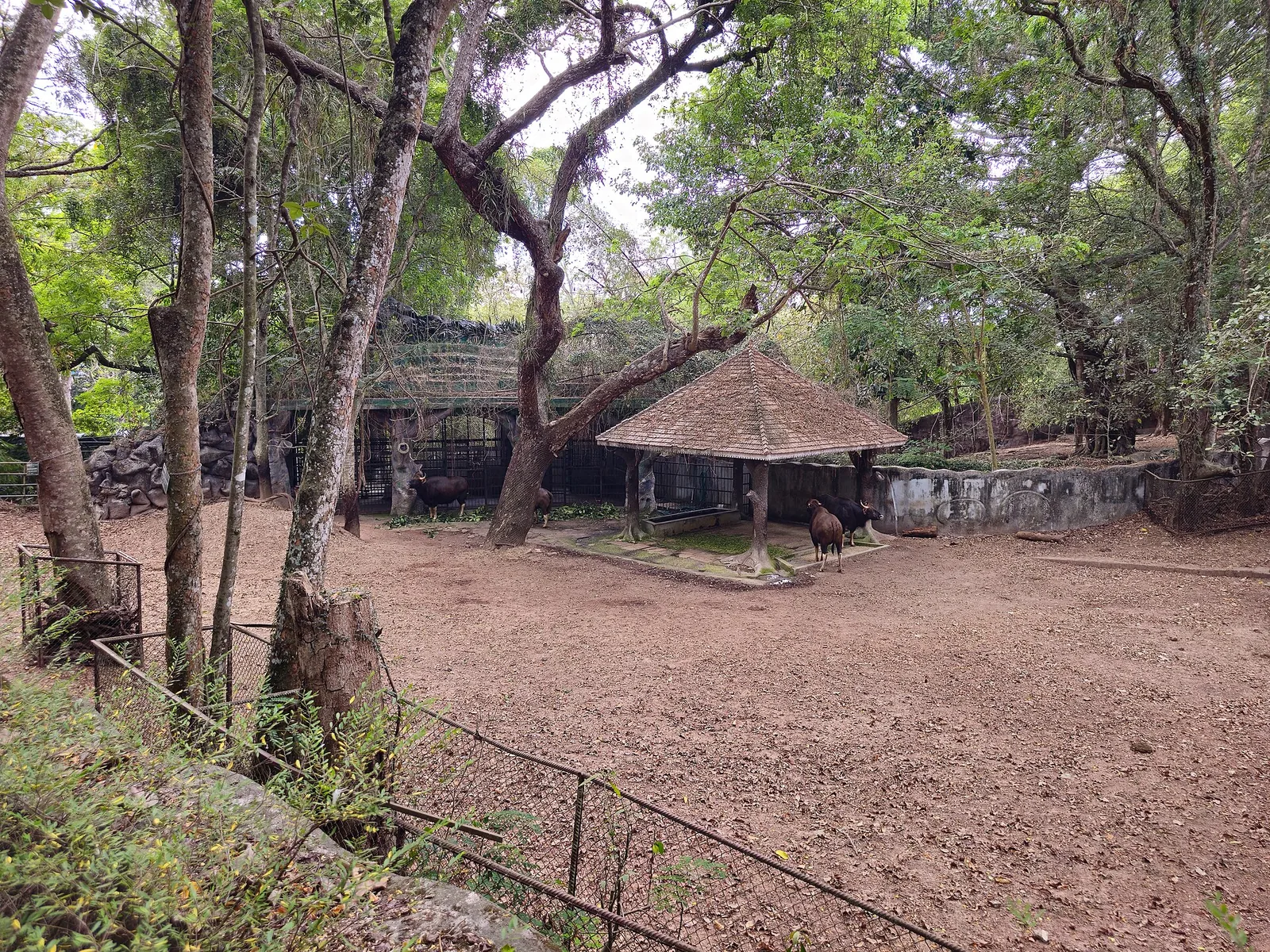
The report says the porcupine and leopard enclosures were repaired during the year. It also lists work on lion, bear and primate moats, the tiger house, reptile house and bird exhibits as ongoing. These are different statuses: a completed repair does not prove that every planned improvement was finished. If a particular exhibit matters to your visit, ask the zoo which areas are open before travelling.
The annual report sets those building works beside sections on daily feed, vaccination, deworming, staff and animal health. A visitor sees the result of some of that work, but not the schedules and records that make animal care possible. The document does not prove that every procedure was perfect. It does show why a judgement about a zoo cannot rest on a single photograph of an enclosure or a single species count.
The number on the sign
The department’s zoo overview displays 1,025 animals across 98 species, but does not give a census date beside that figure. The 2023–24 report gives a dated inventory and describes 92 species in its history section. The two figures should not be merged into a claim about what is on exhibit now. Animals move, are born and die; individual exhibits may close for care or repairs.
Even within one publication, “species described in the history” and “animals listed in an annual inventory” answer different questions. The year attached to an inventory is essential. It marks a count at a particular reporting point, while the website figure has no visible census date. If a visit is being planned around a named animal, ask the zoo about that animal and its enclosure directly. Neither total is a live promise.
The next chapter belongs to the zoo
The annual report cannot tell us what happened after 2023–24, or let us judge today’s animal care from a distance. It does leave a meaningful question for the next visit or the next report: did suitable macaque pairs arrive, and which unfinished exhibits were completed? For hours and admission, use the department’s visiting page; for the neighbouring institutions, see the museum-park day guide. The story of this zoo is more revealing when a conservation label is followed to the work required to make it real.
Frequently asked questions
How many animals are at Thiruvananthapuram Zoo now?
The department’s public overview says 1,025 animals and 98 species, without a census date. The Central Zoo Authority hosts a dated 2023–24 annual inventory. Neither source guarantees the current number or which animals will be visible on your visit.
Does the zoo breed lion-tailed macaques?
It is a participant in the conservation breeding programme. Its 2023–24 report says the breeding effort was stalled at that time because suitable pairs were unavailable. Ask the zoo for any later update.
Which enclosures were repaired?
The 2023–24 annual report lists completed porcupine and leopard enclosure repairs. It separately lists work on several moats and animal houses as ongoing during that year.