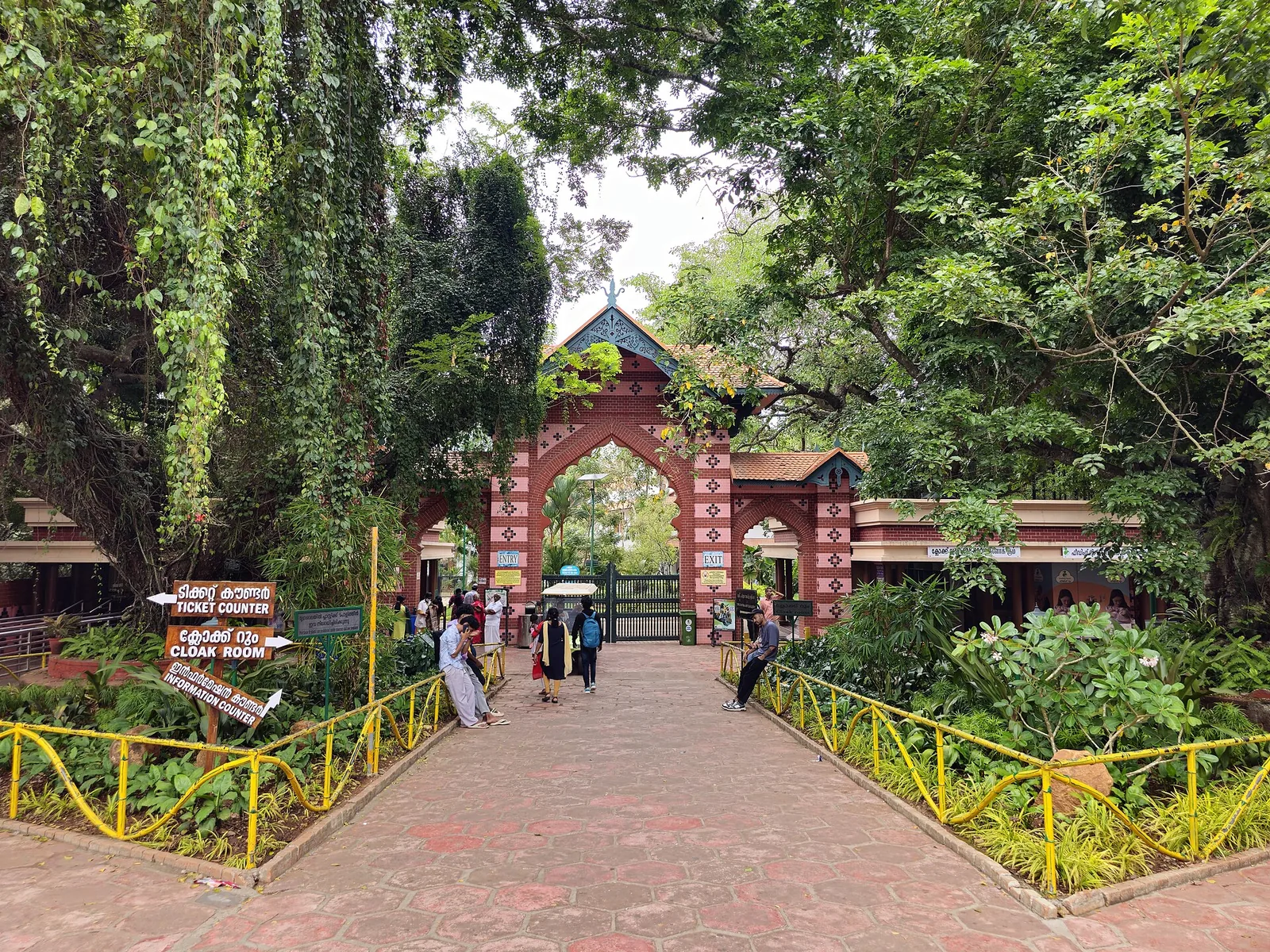
Before Thiruvananthapuram Zoo became a familiar family outing, it answered a practical problem: the new public museum was not drawing enough visitors. Animals and a garden changed the invitation.
A museum in search of visitors
The Department of Museums and Zoos traces the institution to a committee formed in 1855 under the Maharaja of Travancore. General Cullen was its president; the observatory director and museum organisers were part of the effort. The museum opened to the public in September 1857. Opening the doors, however, did not by itself bring the crowd its founders wanted.
The department’s history gives the next step plainly: a zoo and a park, known as the public gardens, were started in 1859 because the museum alone had not attracted enough people. The three institutions were therefore connected from the beginning. The zoo was a new reason to enter a cultural landscape already taking shape.
The building now associated with the Napier Museum came later. A new design by Robert Chisholm was completed in 1880, and the collections moved into it. A walk between museum and zoo passes through institutions whose familiar present forms belong to different moments.
The second beginning, in 1891
A founding date cannot explain every path or terrace. The botanical-garden account credits Allen J. Braun with the project begun in 1859, then singles out a later superintendent: Mr Ingleby, trained at Kew in London, appointed in 1891. Over six years, he organised the garden labour and laid out planting across roughly fifty acres of changing ground.
The department describes an ascent from the lake at the lower level to an ornamental terrace around the museum. Paths, lawns, shrubberies and flowerbeds threaded between the animal runs and cages. Golden bamboo and trees marked the grassy slopes toward the water. The garden supplied a route through the collection rather than merely a border around it.
That is the small historical puzzle to carry on a visit: the zoo began in 1859, but the garden’s documented layout kept developing. A tree standing beside an enclosure today does not acquire an 1859 planting date just because the institution did.
A changing idea of a zoo
The zoo’s own institutional account describes another change: older barred cages with cement floors were progressively renovated or replaced with more spacious, open-moated enclosures. The public attraction that helped bring people to a museum came to take on a different conservation and educational role. The account also says some older structures survive as a legacy of the past.
Its thirty-acre description of the zoo and the garden history’s fifty-acre layout describe different things. Neither figure needs to be forced into a single boundary claim. The more useful thread is how museum, garden and animal collection grew together, then changed at different speeds.
For a present-day visit, use the Thiruvananthapuram Zoo visitor guide and confirm arrangements with the department. This history offers a different way to read the grounds: the animals brought visitors in, while successive gardeners and architects gave those visitors a landscape to move through.