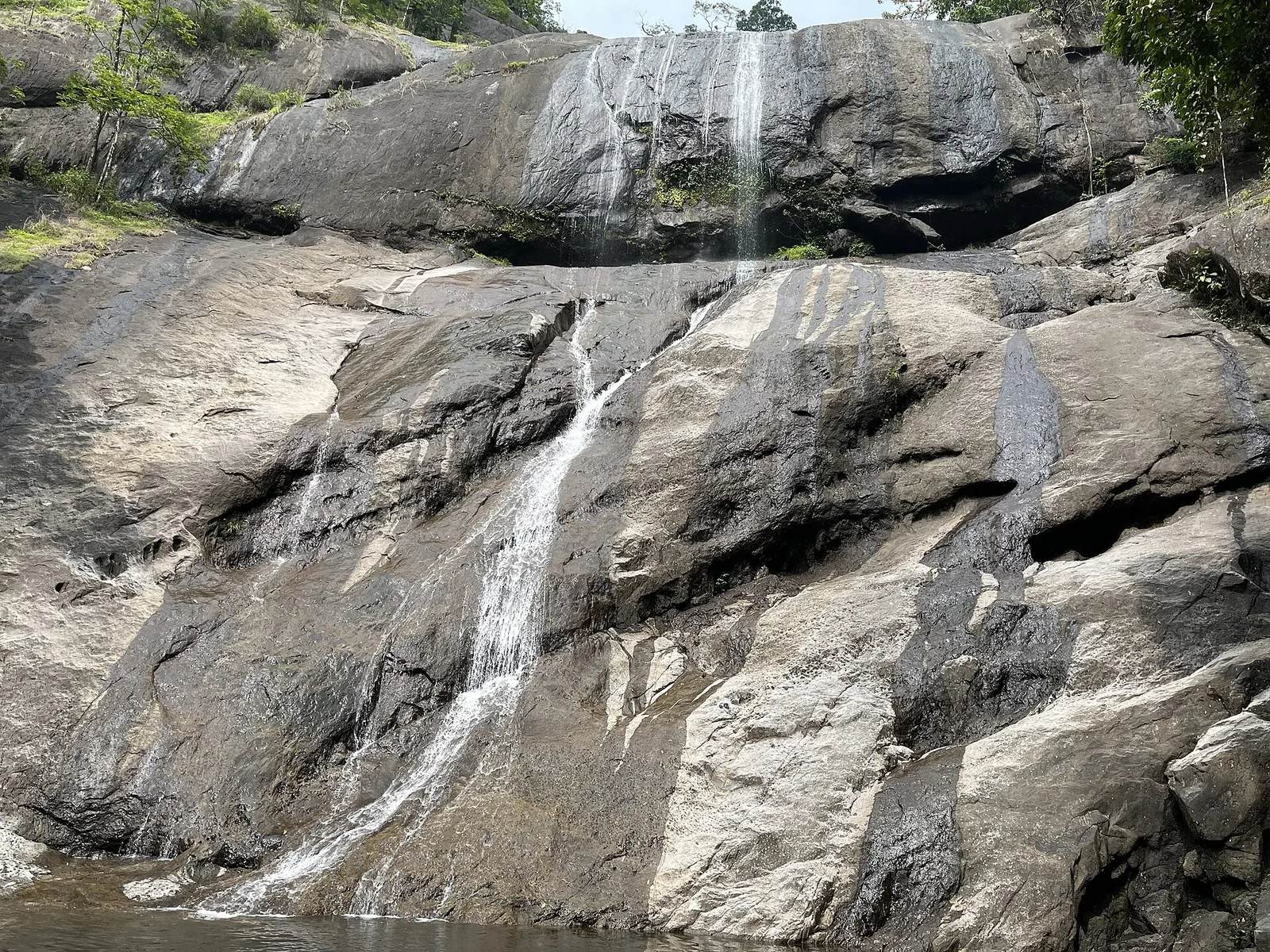
The road from Kozhikode runs about 50 kilometres before the land folds up into the Western Ghats, and at Kodenchery it reaches a hill wrapped in spray. This is Thusharagiri Falls, and Kerala Tourism says that the very name comes from the mist that clings to the peak. Its Malabar pages call it the place of "mist-capped peaks", because the falling water forms a silvery crown near the top. So the name was never about snow, and anyone who arrives on a damp morning sees exactly what it describes.
That mist rises from not one fall but three. Kerala Tourism lists them as Erattumukku, Mazhavil Chattam and Thumbithullumpara, and it says that they lie close together, within about 100 to 500 metres of one another. Because they are so near, a single walk links them, and the walk is why Kerala Tourism calls Thusharagiri a trekker's delight. The path winds through thick green forest, and it soon reaches a hanging bridge, from which walkers see the first fall, Erattumukku, spilling down its rock face.
The forest along that path holds its own landmark before the water does. Kerala Tourism describes the Thanni Muthassi, the "Grandmother Thanni", a bedda nut tree that is believed to be 400 years old and is so hollow that three people fit inside at once. Its story is told in the grandmother tree at Thusharagiri. From Erattumukku the trail climbs about 400 metres to Mazhavil Chattam, the Rainbow Falls, where sunlight breaks into colours in the spray, and about 500 metres beyond that lies Thumbithullumpara.
The hills around the forest tell a working story too, because Thusharagiri is not wild all the way down. Kerala Tourism notes the rubber, arecanut and spice plantations that cover the slopes on the drive in, and the evergreen forest begins above them, criss-crossed by streams. Near the falls, at Chalippuzha, stands the Thusharagiri bridge, which Kerala Tourism counts among the tallest arch bridges in Kerala.
The season changes the falls a great deal, and Kerala Tourism is plain about it. The nature of the waterfalls changes in the monsoon, and the tourism department says that the peak of the monsoon is not the time to come. When the weather settles, the falls become, in its words, a paradise for tourists, with only the splash of water and the calls of birds breaking the quiet. That is why most families plan their trip for the calmer months.
Getting here is simple, because Kozhikode does most of the work. The nearest railway station is Kozhikode, about 50 kilometres away, and Calicut International Airport lies about 23 kilometres from Kozhikode town. Most people therefore spend a night in Kozhikode city and drive up in the morning, so that they reach the trail before the day grows hot.
Thusharagiri also opens the door to the rest of the highlands. Kerala Tourism suggests that visitors carry on to the nearby Arippara Waterfalls and on towards Wayanad, while the steeper Vellarimala trek rises from the same hills. For the walk itself, the Thusharagiri Waterfalls Trek page covers the route, and the Thusharagiri hub gathers the stays and other sights nearby.
Frequently asked questions
Where are Thusharagiri Falls?
They are at Kodenchery in Kozhikode district, about 50 kilometres from Kozhikode town in the Western Ghats.
What does the name Thusharagiri mean?
Kerala Tourism says the name comes from the mist around the peak, and calls it the hill of mist-capped peaks.
How many waterfalls are there?
There are three: Erattumukku, Mazhavil Chattam and Thumbithullumpara, all within about 100 to 500 metres of one another.
When should people avoid Thusharagiri?
Kerala Tourism advises against visiting at the peak of the monsoon, when the falls change in character.