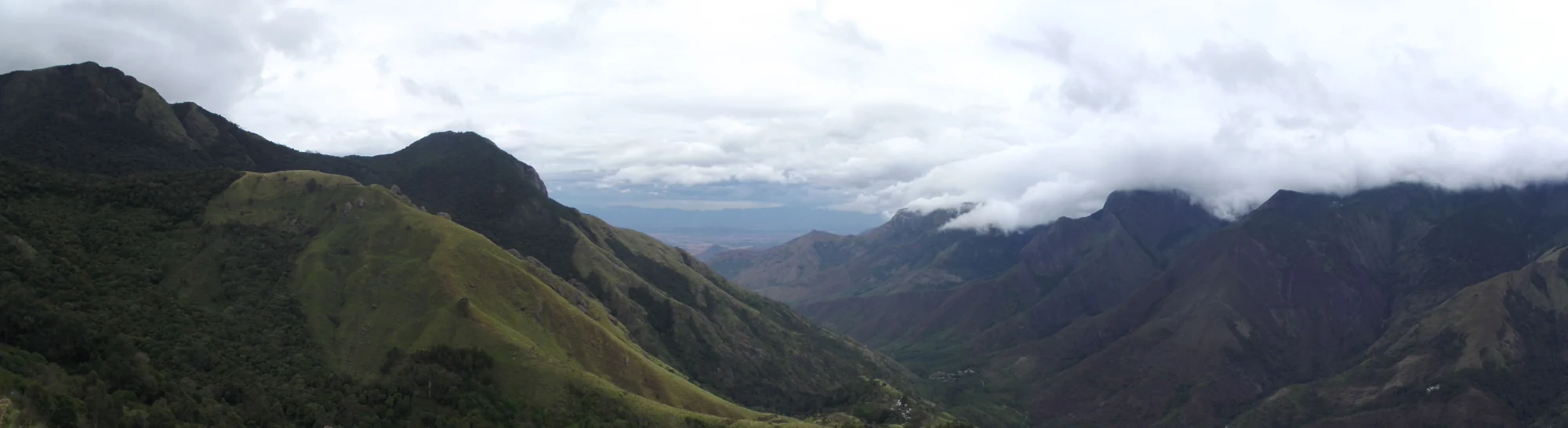
At Top Station the land simply stops, and the view drops away towards the plains of Tamil Nadu far below. Most visitors take the name for a description of the height, but Top Station Munnar is named for a machine. It was the upper end of a ropeway, and the big pillars that anchored it still stand on the hill, as Onmanorama's writer found when he went looking for them. To understand why anyone hung a rope off this cliff, the story has to start with tea.
By the 1920s the company that owned the Munnar hills ran around 16 tea factories, and Kerala Tourism records that a major share of the tea went to Britain through the port of Tuticorin in Tamil Nadu. The trouble was getting it there, because Munnar sits high in the hills and the port lies on the far coast beyond the plains. So the company needed a fast way off the mountain, and the shortest one ran east, straight over the edge at Top Station.
The first answer was a track. Onmanorama's Ajay Kamalakaran writes that a cart road was cut in 1902 and that India's first monorail was built on it. Kerala Tourism credits the company's general manager with laying the monorail line from Munnar through Mattupetty to Top Station. The monorail lasted only six years, and in 1908 it gave way to a light railway, the Kundala Valley Railway, with stations at Mattupetty and Palaar on the way up.
The railway brought the tea to the top, and from there the rope took over. Kerala Tourism explains that at Top Station, where the line ended, the chests were loaded onto a ropeway that carried them down to Kottagudi, also called the Bottom Station. From Kottagudi the tea went on through the lower country to Tuticorin, packed in what Onmanorama calls "Imperial chests", and was shipped to Britain. A travel writer for Onmanorama traces the same descent through a Middle Station six kilometres below Top Station, towards the Kurangani hill another six kilometres further down.
Then the water came. In 1924, the Malayalam year 1099, Munnar was hit by the worst flood the area had ever seen, and the light railway was washed away along most of its length. Kerala Tourism says rebuilding it was unthinkable, so the line was never restored. Instead the company turned to ropeways for the whole run between Munnar and Top Station, which meant the rope that once only finished the journey now carried most of it.
The ropes did not last forever either, and today only fragments remain. Onmanorama notes that the railway's relics had been dismantled by the end of the Second World War. Kerala Tourism says remains of both the railway and the ropeway still lie along the Kundala to Top Station route, and the building in Munnar where the ropeway began is now a Tata Tea store. In the Tea Museum a rail engine wheel from that first and only Munnar railway is on display.
Most people reach Top Station on the same road the railway followed, past Mattupetty Dam and Kundala Lake. At the top a board reminds visitors that part of Top Station lies in Tamil Nadu, and the forest beyond runs on towards Vattavada. Standing among the old pillars, it is easy to picture the chests sliding out over the trees and dropping slowly out of sight.
Frequently asked questions
Why is it called Top Station?
It was the top end of the ropeway that carried Munnar's tea down to Kottagudi, the Bottom Station.
Where did the Top Station ropeway go?
It ran down to Kottagudi. From there the tea travelled through the lower country to Tuticorin port and was shipped to Britain.
What happened to the Munnar railway?
The 1924 flood washed away most of the light railway, and it was never rebuilt. Ropeways took over the route to Top Station.
Can you still see the ropeway at Top Station?
Yes, the big pillars that anchored the ropeway still stand at Top Station. Other remains lie along the Kundala to Top Station route.