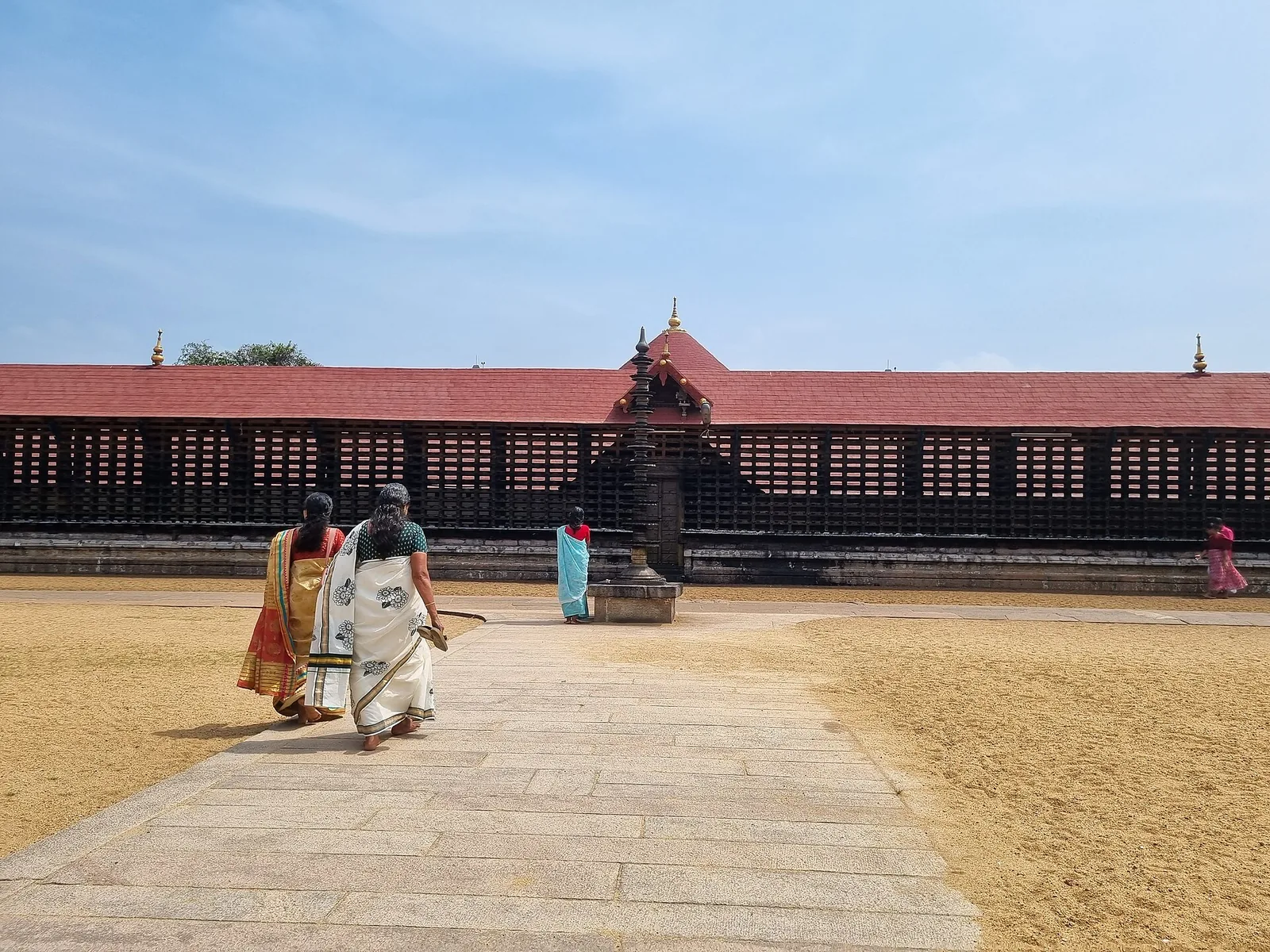
Kottayam is best known for its backwaters and churches, but the district also holds two of Kerala’s greatest Shiva temples. Both are living pilgrimage centres with deep histories, and together they make a rewarding temple-town day in the northern part of the district.
Vaikom — faith and reform
The Vaikom Sree Mahadeva Temple, in the north of the district near the Vembanad backwaters, is one of the oldest and most important Shiva temples in Kerala, the western point of a sacred trio with Ettumanoor and Kaduthuruthy. It is also a landmark in Indian social history: the roads around it were the focus of the Vaikom Satyagraha of 1924–25, a peaceful movement — supported by Gandhi and led by Kerala reformers — to win lower-caste communities the right to use the temple’s approach roads.
Ettumanoor — gold and murals
About 12 km north of Kottayam town, the Ettumanoor Mahadeva Temple is celebrated for its art: a gilded flagstaff, the “Ezharaponnana” — seven and a half golden elephants displayed at the February festival — and 16th-century murals, including a famous, fierce depiction of the dancing Shiva (Nataraja). It is one of the finest surviving showcases of the Kerala mural tradition.
- Both are active temples with strict dress codes; the inner shrines are for Hindus, but the architecture and grounds reward any visitor.
- Vaikom is about 40 km north of Kottayam town near the Vembanad backwaters; Ettumanoor is about 12 km north on the MC Road.
- Ettumanoor’s murals and the golden elephants are the art highlight; the elephants are displayed at the annual festival.
- Pair them with Vaikom’s backwater setting or continue to the temple town of Kaduthuruthy to complete the sacred trio.
Frequently asked questions
What is the Vaikom Satyagraha?
A peaceful 1924–25 movement at the Vaikom temple to win lower-caste communities the right to use the roads around it — an early landmark of social reform in India, supported by Gandhi.
What is Ettumanoor temple famous for?
Its golden flagstaff, the “Ezharaponnana” seven-and-a-half golden elephants shown at the February festival, and celebrated 16th-century Kerala murals including a dancing Shiva.
Can non-Hindus enter these temples?
The inner shrines are for Hindus and a strict dress code applies, but the temple architecture, gateways and grounds can be appreciated by all visitors.