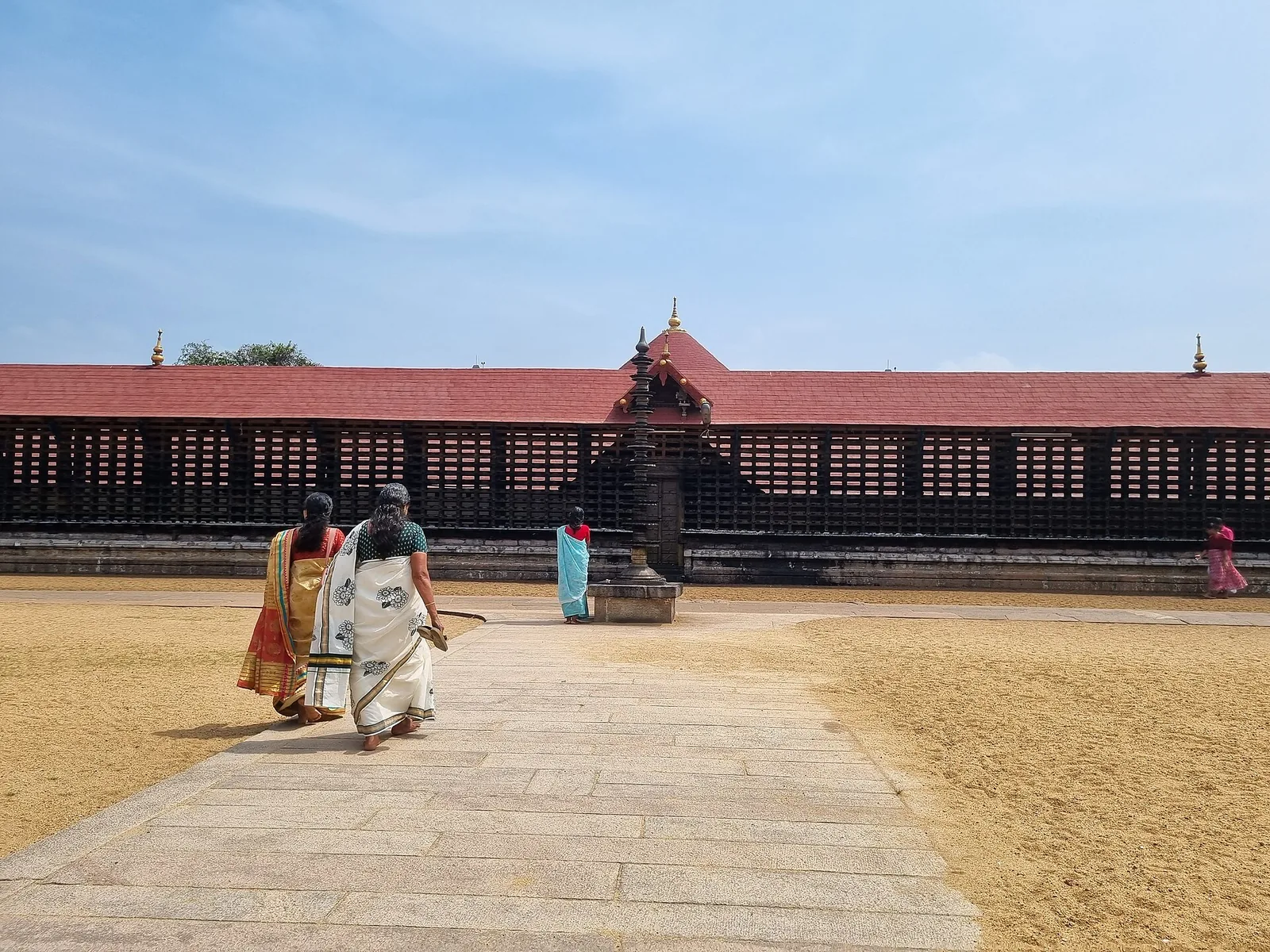
The Vaikom Mahadeva temple in Kottayam is one of Kerala’s great Shiva shrines — but its largest place in history was won not inside its walls but on the public roads around it. Between 1924 and 1925, those roads were the stage for the Vaikom Satyagraha, a landmark nonviolent movement against caste discrimination.
A road barred by caste
In old Travancore, people of the “lower” and “untouchable” castes were forbidden even to walk on the public roads that ran past the Vaikom temple. In March 1924 reformers launched a satyagraha — a disciplined, nonviolent protest — to open those roads to everyone. Volunteers courted arrest by simply walking where they were forbidden to walk.
The leaders
The movement was conceived by the Ezhava leader T. K. Madhavan and organised by figures including K. Kelappan, K. P. Kesava Menon, the Christian lawyer George Joseph and the Nair leader Mannath Padmanabhan — a coalition across communities. Mahatma Gandhi came to Vaikom in 1925 to help negotiate. And E. V. Ramasamy — Periyar — travelled from Tamil Nadu, was imprisoned twice for the cause, and earned the lasting title “Hero of Vaikom”.
What it won
By late 1925, three of the four roads around the temple were opened to all. Full entry into Kerala’s temples for everyone would take longer — it came with the Temple Entry Proclamation of 1936 — but Vaikom had lit the way. It brought the method of mass nonviolent protest firmly to Kerala and made the temple town a byword for the fight against untouchability.
- The Vaikom Mahadeva temple is an active place of worship; the satyagraha history is commemorated in and around the town.
- The temple follows the usual customs and dress codes — visit respectfully.
- Vaikom is an easy trip from Kottayam or Kumarakom.
- The movement’s legacy is honoured across Kerala and Tamil Nadu, especially Periyar’s role as the “Hero of Vaikom”.
Frequently asked questions
What was the Vaikom Satyagraha?
A nonviolent movement of 1924–25 at the Vaikom Mahadeva temple in Travancore (now Kottayam district) demanding the right of lower-caste and “untouchable” people to use the public roads around the temple, from which they had been barred.
Who led the Vaikom Satyagraha?
It was conceived by T. K. Madhavan and organised by leaders including K. Kelappan, K. P. Kesava Menon, George Joseph and Mannath Padmanabhan. Mahatma Gandhi helped negotiate in 1925, and Periyar (E. V. Ramasamy), jailed twice, became known as the “Hero of Vaikom”.
What did the Vaikom Satyagraha achieve?
By late 1925 three of the four roads around the temple were opened to all castes. Full temple entry followed later, with the 1936 Temple Entry Proclamation. Vaikom brought mass nonviolent protest to Kerala and became a landmark in the fight against untouchability.