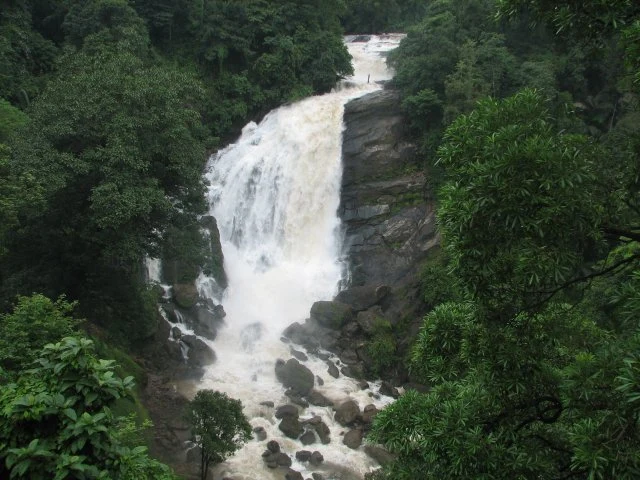
Valara’s cascade is visible within a forested slope beside the Neriamangalam–Adimali road. The white water draws attention quickly, but the roadside setting needs to be understood before anyone steps out of a vehicle. A visible waterfall is not automatically a managed bathing place, and a gap in traffic is not a parking area.
First read the road
The highway serves through traffic as well as visitors travelling towards Munnar. Before stopping, the driver needs a lawful position where the vehicle clears the carriageway and passengers can get out safely. If that is unavailable, the visit should wait or be omitted. A photograph is not worth turning a moving road into an improvised viewing platform.
The place-page pin marks the mapped highway reach opposite Valara as an arrival reference. It does not certify a parking bay or identify a path down to the pool. Keep that distinction in mind when following navigation: the last few metres of a road journey still require an actual stopping decision.
Then read the cascade
In a stronger-flow photograph, white water spreads broadly over the dark face. In another, narrower streams reveal more of the layered rock and the boulders below. Both can show Valara. The changing width of the water is part of the waterfall’s appearance, not evidence that one photograph must depict a different place.
Look at stable features as well as flow: the main rock face, the surrounding trees and the relationship between the upper drop and lower cascade. These help identify the scene when rain, spray or a dry interval changes its overall brightness. A long exposure can also make water appear smoother than it looks to the eye.
The base is a separate access question
From a roadside view, a lower pool or rock shelf may seem close. The intervening slope, wet surfaces and route may be difficult to judge. Visibility alone does not establish a maintained path, safe footing or permission to descend. Stay with the roadside viewing visit unless a responsible authority provides a specifically authorised route.
Swimming cannot be inferred from the presence of water at the base. Falling water, slippery rock and changing flow create hazards even when a photograph looks calm. Neither an old visitor image nor a generic description of a combined waterfall destination establishes a safe bathing arrangement at Valara.
Rain changes the decision, not just the picture
Kerala Tourism describes stronger monsoon and post-monsoon flow, with reduced water in drier periods. Heavy rain also affects the road and the slope, so the period of greatest visual force is not automatically the best moment for a stop. Follow current road and weather instructions, and keep the option of continuing without stopping.
On a clear interval after rain, the view may show the cascade well while allowing more visibility on the road. That is still a day-specific judgement. No seasonal label guarantees a safe shoulder, a clear view or access beyond the roadside.
Make the short visit attentive
Once safely positioned, a few deliberate observations give the stop substance: follow the water from the top of the visible face, notice where it divides around rock, and compare the lower boulders with the trees that frame them. These details explain the waterfall more accurately than a promise of permanent heavy flow.
Keep children beside an adult, avoid stepping backward to widen a camera frame and return to the vehicle without crossing unpredictably. Valara can be a rewarding brief encounter with the forested river landscape. It does not need to become a scramble to the base to count as a worthwhile visit.