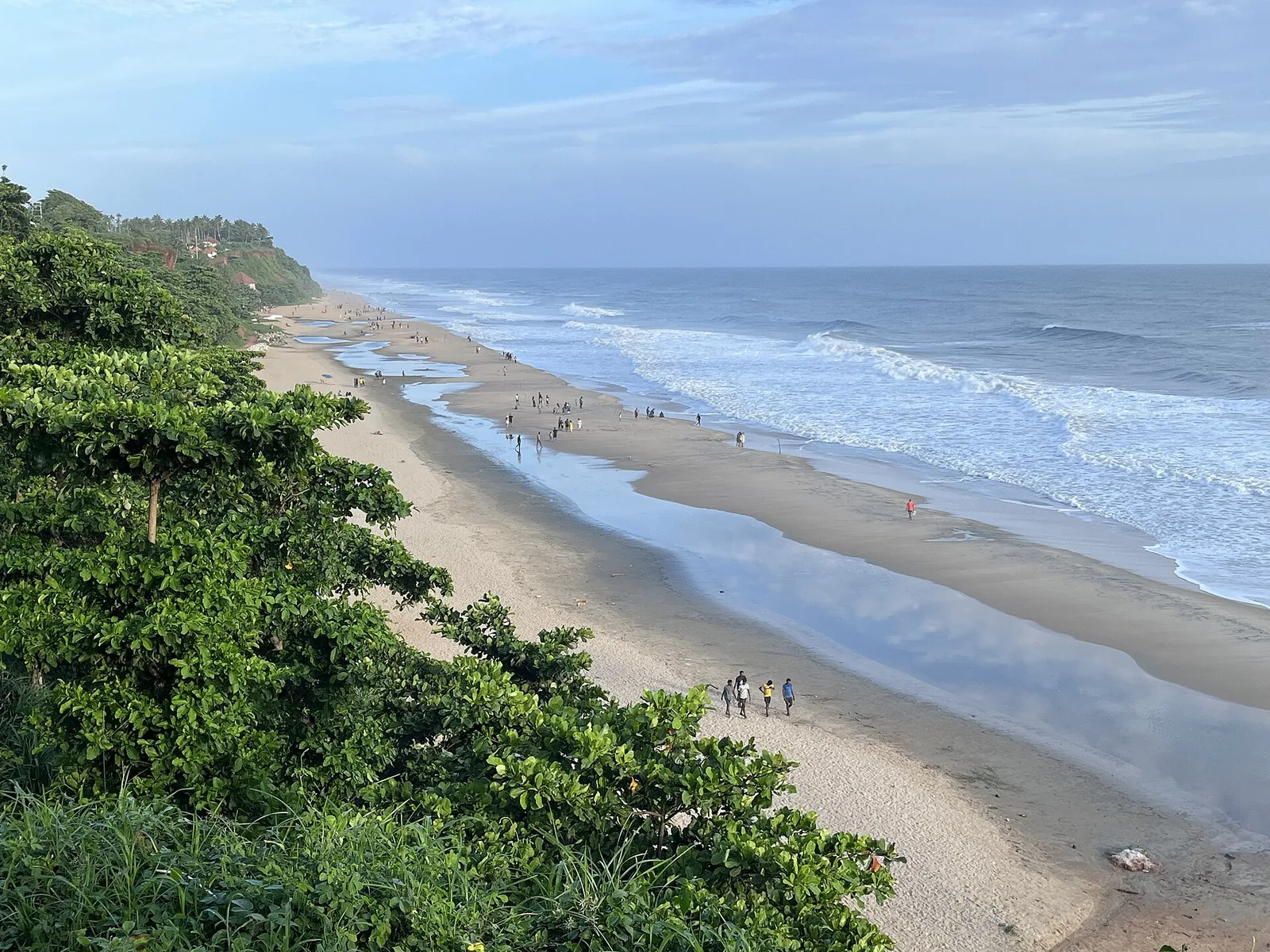
From Varkala Cliff, Papanasam can look like any inviting beach. Its name tells a different story. Kerala Tourism explains that “Papanasam” refers to the belief that bathing here washes away sins. The same shore receives families performing rites for the dead. A visitor descending from the cafes enters a place where leisure and mourning may share the sand.
Papanasam — the sin-washing waters
The belief belongs to a living practice, not to a promise about the sea. Kerala Tourism records ritual bathing and the immersion of ashes here. For the families present, the water carries a meaning that a sunset photograph cannot show. Give ceremonies space and do not photograph mourners without permission. The religious belief also says nothing about whether the surf is safe on a given day; follow current local beach advice.
The temple on the cliff
The Janardanaswamy Temple gives the ritual shore another point of focus. Kerala Tourism describes it as a thousand-year-old temple, while other accounts give older traditional ages. Those are claims about antiquity, not a securely dated construction record. The important connection for a visitor is immediate: the temple and beach form part of the same pilgrimage landscape.
Sivagiri and Sree Narayana Guru
A short way inland, Sivagiri carries a different part of Varkala’s religious history. The mutt is associated with social reformer Sree Narayana Guru, whose life and teaching challenged caste exclusion in Kerala. Kerala Tourism’s Varkala overview identifies it as another pilgrimage stop. The path from beach to temple to Sivagiri does not make these traditions identical. It shows how much more Varkala holds than a cliff-top cafe strip.
- Varkala is easily reached by train — Varkala Sivagiri station is a short ride from the cliff and beach.
- Papanasam is used for ritual bathing and last rites as well as swimming; be mindful and respectful near ceremonies.
- The Janardanaswamy temple has a traditional dress code; Sivagiri is busiest around the pilgrimage days (30 Dec–1 Jan).
Frequently asked questions
What does Papanasam mean?
Papanasam means “destroyer of sins”. By tradition, bathing in the waters of Varkala’s Papanasam beach is believed to wash away sins and purify body and soul, which is why pilgrims also perform ancestral rites here.
How old is the Janardanaswamy temple at Varkala?
Accounts differ. Kerala Tourism calls it a thousand-year-old temple; other descriptions give an older traditional age. Do not treat a rounded age as a documented construction date.
What is Sivagiri in Varkala?
Sivagiri is the mutt founded by the social reformer Sree Narayana Guru (1856–1928), whose samadhi is here. It draws large numbers of pilgrims during the Sivagiri pilgrimage, held each year from 30 December to 1 January.