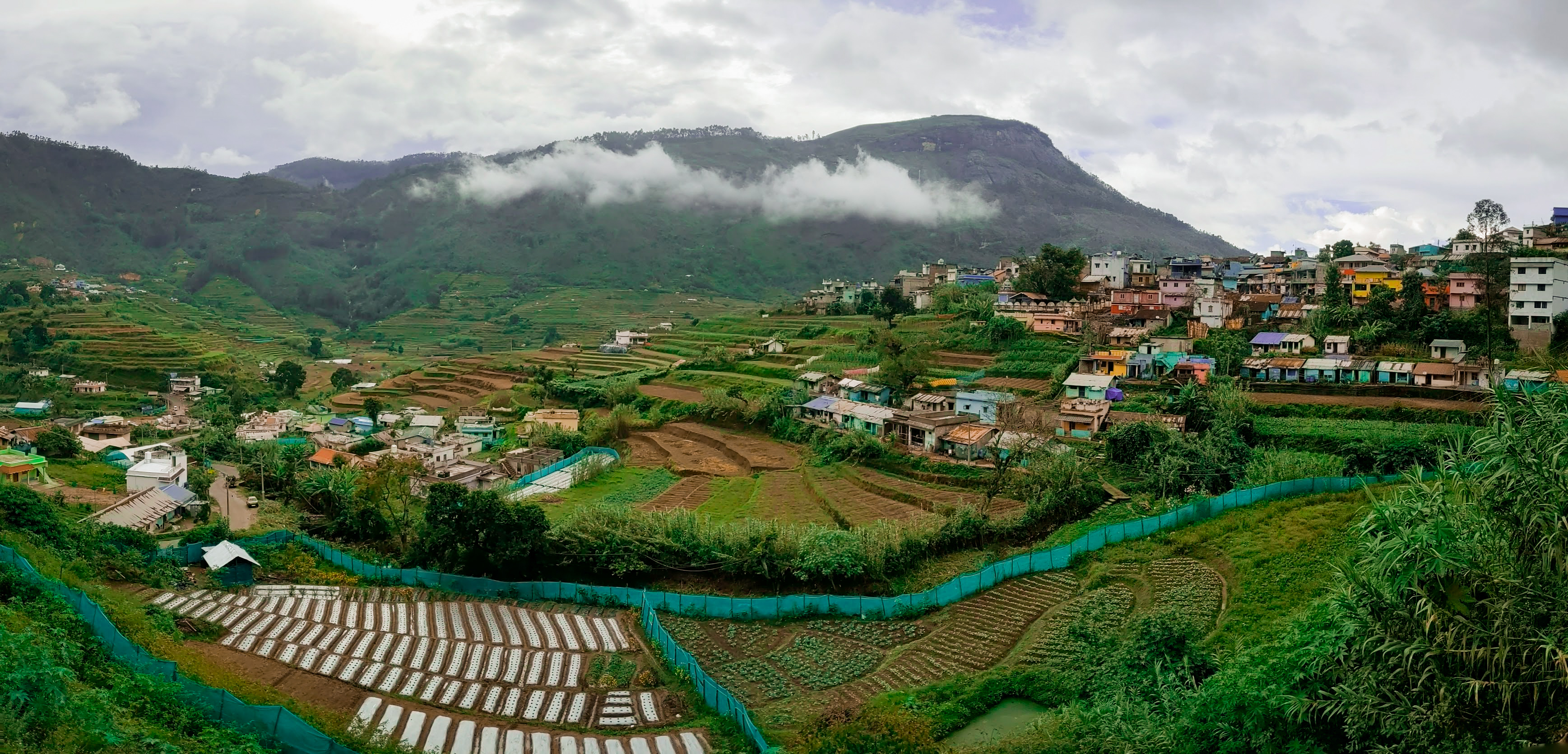
Kerala is a land of coconut palms, paddy and rubber, of humid coasts and monsoon-green backwaters. So it comes as a genuine surprise to round the last forested bend above Munnar and find terraces of strawberries, rows of cabbages, and orchards where apples and plums actually ripen. This is Vattavada, a village in the far east of Idukki district that behaves less like tropical India and more like a cool Himalayan valley. Cold nights, morning frost and a rain-shadow sky have turned it into one of Kerala’s only temperate farming belts.
A cold pocket in a warm state
Vattavada sits high in the Western Ghats along the Palani Hills, right on the Tamil Nadu border. Sources place the village itself at roughly 1,650 m (about 5,440 ft), while the surrounding terrain climbs from around 1,450 m to over 2,600 m above sea level. Crucially, it lies in the rain shadow east of the main ridge, so it escapes the drenching monsoon that soaks the rest of Kerala. The result is a cool, dry-leaning climate: winter temperatures are widely reported between about 5°C and 20°C, with frost documented in the coldest border pockets. That chill is not a hardship here — it is the whole reason the fields look the way they do.
The fruit that shouldn’t grow in Kerala
Walk the terraces and you find a spread that feels borrowed from a temperate hillside: strawberries above all, but also apples, plums, peaches, oranges, pears, gooseberries and passion fruit. It is a roll-call of cool-climate fruit that simply cannot set in the lowland heat below. The strawberry farms are the headline act, many of them opening their gates to visitors and selling fresh berries alongside home-made jams and fruit wines. For most travellers arriving from the coconut plains, biting into a Vattavada strawberry picked minutes earlier is the moment the altitude finally makes sense.
The vegetable basket of Kerala
Fruit gets the postcards, but vegetables pay the bills. Vattavada is often called the vegetable capital or the market of Kerala, its cool terraces yielding cabbages, carrots, potatoes, butter beans and more, trucked down daily to markets across the state. It is also celebrated as Kerala’s largest producer of garlic, the pungent, small-cloved Vattavada variety prized in local kitchens. Terrace farming — narrow shelves cut into the steep slopes — lets growers work land that would otherwise be too sheer to cultivate, and gives the valley its stepped, quilted look.
- Altitude: village around 1,650 m; slopes rising past 2,600 m.
- Rain shadow: sheltered east of the Ghats, so far drier than coastal Kerala.
- Cold nights and frost let strawberries, apples and plums set fruit.
- Signature crops: strawberries, apples, plums, garlic, butter beans, carrots.
- Terrace farming carves cultivable shelves into steep hillsides.
Farm-stay culture and a slower day
Because the farms are the attraction, tourism here has grown up around them rather than around resorts. Homestays and small farm-stays let you wake among the terraces, share a wood-smoke breakfast, and wander out with a grower to see how strawberries are trained and how the orchards are nursed through cold snaps. Evenings turn genuinely cold, so a warm layer is essential even in the Kerala summer. It is an unhurried, agricultural kind of tourism — less about ticking sights, more about the rhythm of a working mountain village that grows the things the rest of the state cannot.
Frequently asked questions
Why can Vattavada grow strawberries and apples when the rest of Kerala can’t?
Its high altitude and position in the rain shadow of the Western Ghats give it cool, relatively dry weather with cold nights and occasional frost — the conditions temperate fruit needs to set. Lowland Kerala is simply too hot and humid.
Can visitors actually walk through the strawberry farms?
Yes. Many strawberry and vegetable farms welcome visitors and sell fresh berries, jams and fruit wines. Practices and any entry charge vary by farm.
What is Vattavada most famous for growing?
Strawberries and temperate fruit such as apples and plums grab attention, but it is best known as a vegetable basket for Kerala and as the state’s largest garlic producer.
How cold does it get?
Winter temperatures are commonly reported in the range of about 5°C to 20°C, with frost in the coldest border areas. Carry warm clothing year-round.