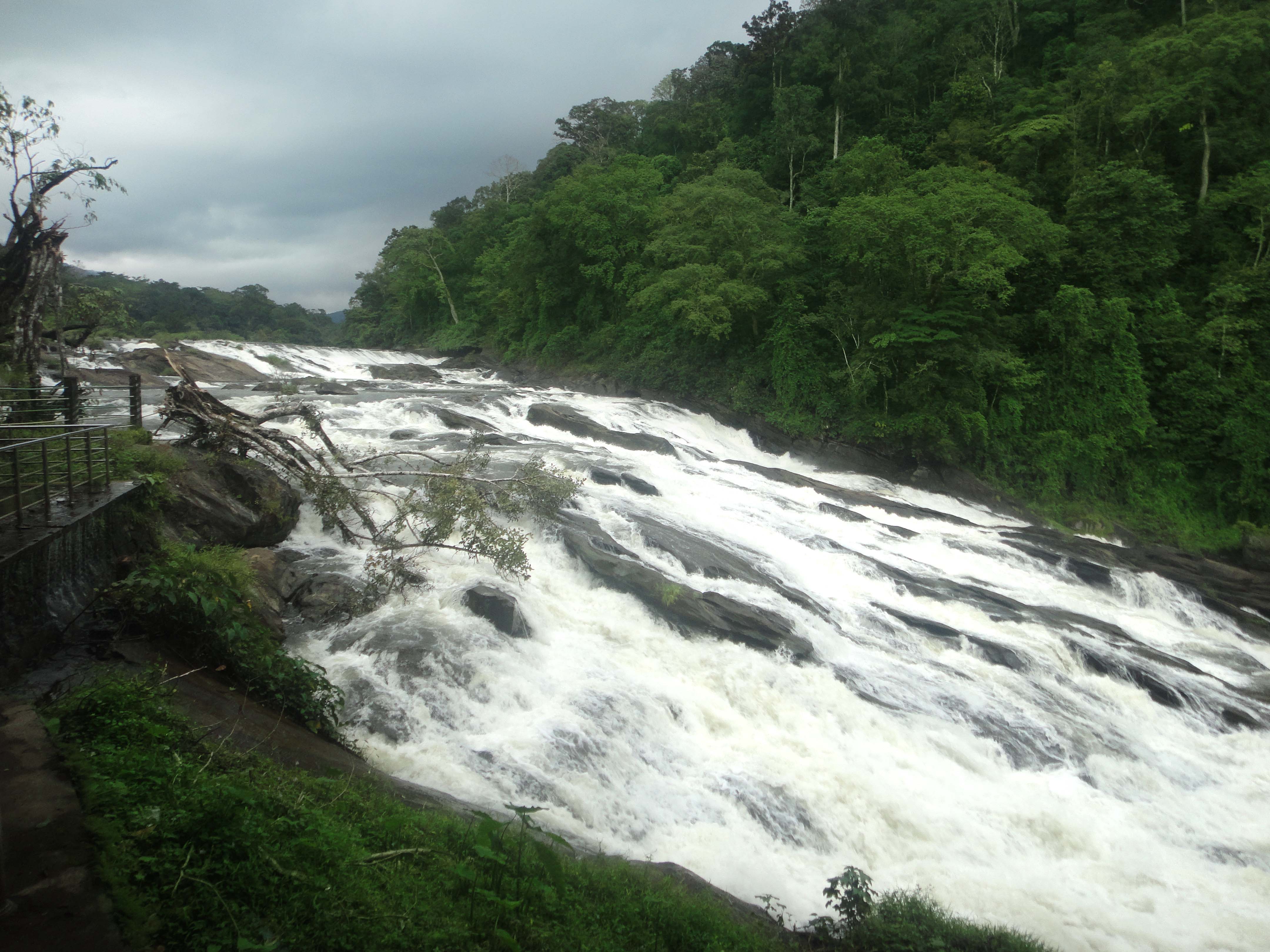
Most visitors to Vazhachal Falls see a waterfall, a forest and a car park. What they are actually standing in is the territory of the Kadar, a small indigenous community who have lived along the Chalakudy river for generations, and whose decisions over the last fifty years are a large part of the reason there is still a forest here to look at.
A community of the river
The Kadar are traditionally forest gatherers — honey, medicinal plants, fruit, fish — and the river is the centre of the life rather than a feature of the scenery. That produces a kind of knowledge that does not travel: which tree fruits when, which stretch holds which fish, where a particular hornbill pair has nested for years. Researchers working on this landscape have found that the Kadar language itself encodes ecological distinctions that scientific naming misses, with species names unique to these settlements.
The community has also been displaced repeatedly. Hydroelectric projects upstream on the Chalakudy have moved Kadar settlements more than once over the last century, which is the essential background to everything that follows: by the time a new dam was proposed, this was not a community being asked for the first time.
The turn
Hornbills were once hunted here. From roughly the 1970s onward that stopped, and over the following decades the relationship inverted: members of the Kadar community became the people who find, monitor and protect hornbill nests along this stretch, working with the forest department and with researchers on nest surveys.
It is worth being precise about why this matters ecologically. Great hornbills nest by sealing the female into a cavity in a very large old tree, where she stays for weeks while the male feeds her through a slit. A nest tree is therefore a fixed, irreplaceable, decades-old asset — and the people best placed to know where every one of them is are the people who have walked this forest their whole lives.
- The Vazhachal Forest Division holds one of the last substantial low-elevation riverine forests in Kerala.
- All four peninsular Indian hornbill species occur here — Great, Malabar Pied, Malabar Grey and Indian Grey.
- It is an elephant corridor and a refuge for the endangered lion-tailed macaque.
- The Chalakudy is among the most fish-species-rich rivers in Kerala.
- Six dams already stand on the river. The proposal that was fought was for a seventh.
Community forest rights, and why they decided a dam
India’s Forest Rights Act of 2006 allows forest-dwelling communities to claim Community Forest Rights over the landscape they have traditionally used and managed. The Kadar settlements along the Vazhachal stretch secured such rights, which converted their objection to the proposed Athirappilly hydroelectric project from a moral argument into a statutory one.
The project — a 163-megawatt scheme first put forward by the Kerala State Electricity Board in the mid-1990s, which would have been the seventh dam on the Chalakudy — was opposed on both ecological and rights grounds: submergence of riverine forest, disruption of the hornbill nesting habitat and the elephant corridor, reduced flow over the falls themselves, and the displacement of families who had already been displaced before. Kadar village assemblies, the gramasabhas, passed formal resolutions against it. Under the Forest Rights Act that consent is a legal question, not a courtesy.
The proposal was revived as recently as 2020 and drew a fresh round of opposition, after which the Kerala government abandoned the 163-MW project in the face of sustained protest from environmental and tribal organisations. Because it has been shelved and revived more than once across two decades, campaigners treat the present position as a reprieve rather than a settlement.
The community has also produced public figures in the process — most prominently Geetha Vazhachal, described as the first woman moopathi, or chieftain, of the Kadar, who became a well-known voice both for the community and for the river.
What to do with this as a visitor
Nothing performative. Do not go looking for a village to photograph, and do not treat the settlements as an attraction. What the story should change is simply how you look at the forest: not as scenery that happens to have survived, but as a place that is standing because specific people, with a specific legal instrument, said it should.
And then go quietly and early, because that is also the only way you will hear a hornbill.
Frequently asked questions
Who are the Kadar?
A small indigenous community who have lived along the Chalakudy river in the Vazhachal–Athirappilly landscape for generations, traditionally gathering forest honey, medicinal plants, fruit and fish. The river is central to their life, and their knowledge of the forest underpins much of the hornbill research done here.
Do the Kadar protect hornbills?
Yes. Hunting largely stopped from around the 1970s, and community members now work on finding, monitoring and protecting hornbill nests along this stretch of the Chalakudy, alongside the forest department and researchers. Nest trees are irreplaceable, decades-old assets, and the Kadar are the people who know where they are.
What are Community Forest Rights?
A provision of India’s Forest Rights Act, 2006, under which forest-dwelling communities can claim collective rights over the landscape they have traditionally used and managed. The Kadar settlements at Vazhachal secured such rights, which gave their village assemblies a statutory say in what happens on this stretch of river.
Was a dam going to be built at Vazhachal?
Yes — a 163-megawatt hydroelectric project first proposed by the Kerala State Electricity Board in the mid-1990s, which would have been the seventh dam on the Chalakudy. It was opposed on ecological and indigenous-rights grounds, revived as recently as 2020, and subsequently abandoned by the Kerala government after sustained protest.
Is the dam proposal finished for good?
Campaigners do not treat it that way. The project has been shelved and revived more than once across two decades, so the current position is generally described as a reprieve rather than a settled outcome. Confirm the current status locally if it matters to you.
Can I visit a Kadar settlement?
Treat the settlements as homes, not an attraction. There is no visitor programme to turn up at, and photographing people or houses without invitation is not acceptable. What the story is for is changing how you look at the forest, not adding a stop to the itinerary.