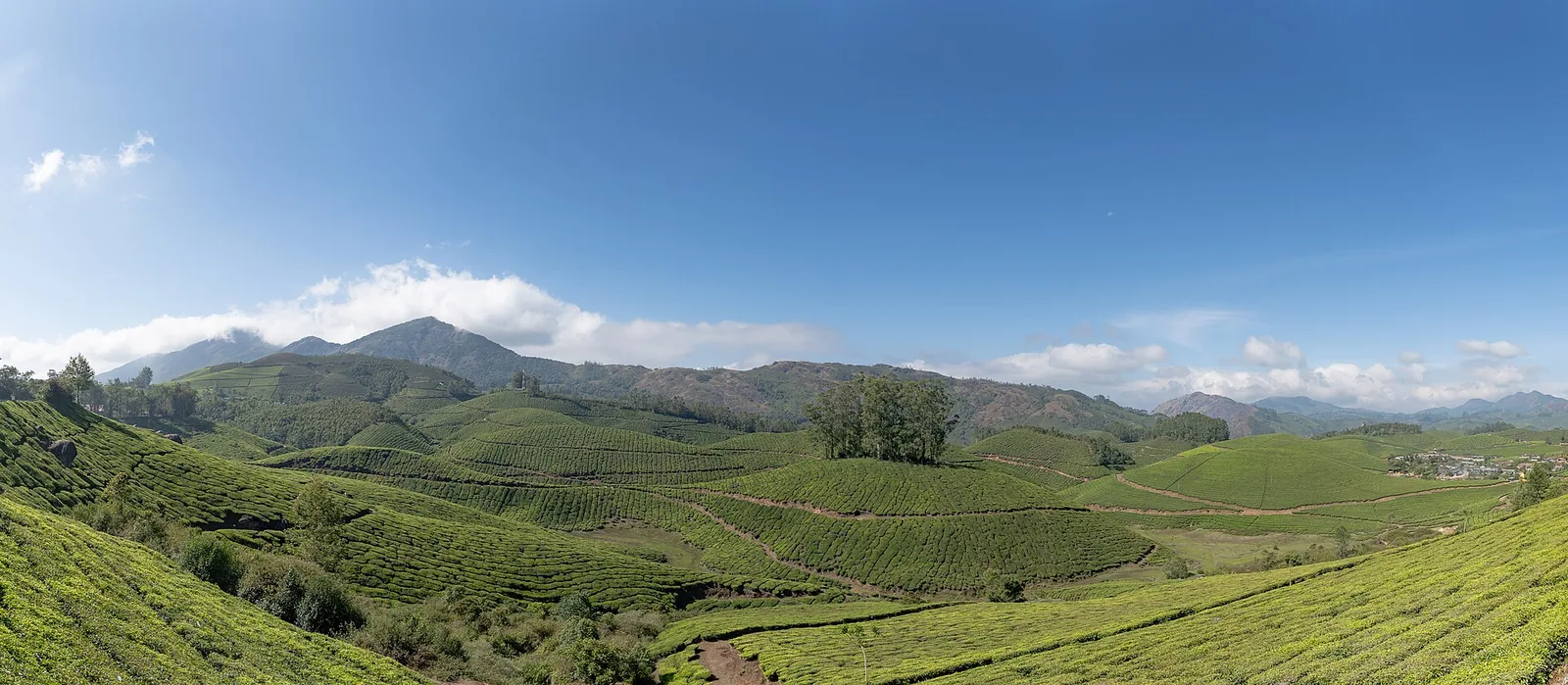
The hills around Munnar are the Kannan Devan Hills. The company that works them is Kanan Devan Hills Plantations. The name is on the factory walls and on the packets. Ask where it comes from and you will almost always get the same answer: two Muthuvan tribesmen named Kannan and Devan guided the first British visitors through this country, and the hills were named in their honour. It is a good story. The one document that would have to support it says otherwise.

What the 1877 deed actually calls the land

The founding document of plantation Munnar is the first Poonjat concession deed, signed at the Poonjar palace in 1877 — 11 July is the date usually given — by which Rohini Thirunal Kerala Varma Valiya Raja leased roughly 136,600 acres to John Daniel Munro for an annual rent of Rs 3,000 and a deposit of Rs 5,000. Those figures are on Kerala Tourism’s own history page and are not in dispute.

The wording is the interesting part. In the plantation company’s own published history, Munro applies to the Poonjar chief "for the grant of the property called Kanan Thevan Anchanatu Mala". He is not asking for an unnamed tract that will later be named after his guides. He is asking, by name, for a property that is already called Kanan Thevan Anchanatu Mala — the Kanan Thevan hills of the Anchanad country.

That is fatal to the usual telling. You cannot name a range in gratitude after an expedition if the range is already carrying that name in the deed the expedition is built on. Whatever Kanan Thevan was — a person, a lineage, a title, a place — the name was in local use before the lease, and Munro adopted it rather than bestowing it.

Three versions, and which one survives contact with the deed

What different sources say about the name

VersionWhere it appearsDoes the 1877 deed allow it?
Two Muthuvan guides, Kannan and DevanWidely repeated, including in museum-published materialNo — the name is already in the deed
One man, Kannan Thevan, an Anchanad chief or guideLocal histories; this site’s own Munnar pageYes — a pre-existing name attached to a person
A pre-existing place name of the Anchanad countryImplied by the deed’s own wordingYes

The plantation company itself, which has more reason than anyone to romanticise its own name, does not claim the two-guide origin at all. Its history records the property name in the deed, and separately records that when Henry Gribble Turner and A. W. Turner came into these hills in the same year, 1877, they were guided by "the local hill men, the Mudhuvans". Those are two true facts standing next to each other. The popular story looks very much like the two of them fused into one.

Two concessions in one year, and what each one cost

Munro was not alone in the hills in 1877, and setting the two grants of that year side by side shows how fast the high range was being taken up. Munro obtained roughly 136,600 acres — something over 550 square kilometres — for Rs 3,000 a year against a Rs 5,000 deposit. In the same year Henry Gribble Turner and A. W. Turner came into the country and obtained a concession recorded at about 227 square miles, and it was on their expedition to the summit that the company history records them being guided by the local Mudhuvans. Two years later, in 1879, Munro founded the North Travancore Land Planting & Agricultural Society to work what he had leased.

The rent is the figure that repays a second look. Rs 3,000 a year, for a block of high country larger than many Indian cities, was a nominal sum even in 1877 — the lease was not priced as land is priced, because to Travancore this was empty upland of no revenue value. It was empty in the ledger only. The people who used those grasslands were not parties to the document, were not compensated by it, and are named in the record twice: once in the property’s own name, and once as guides.

Why the fused version spread

Because it is a better story, and because it does something the deed cannot: it puts the Muthuvan into the founding of Munnar as named individuals rather than as unnamed guides who were paid, or not paid, and then lost the run of these grasslands to tea. The impulse behind the two-guide version is decent. It is still not what the record says.

And the correction does not erase the Muthuvan from the story — it makes their presence older, not smaller. A name already in use in 1877 for the Anchanad hills is a name from before the concession, from the period when this high country was worked and walked by its own people and not yet by anybody’s company. That is a longer claim on the place than being remembered for showing a European the way.

What to do with a name you cannot fully resolve

We are not going to tell you we have settled it. Nobody we can find has produced a primary source identifying Kanan Thevan as a specific person with dates. What can be shown is narrower and firmer: the name predates the lease, it appears in the property description Munro applied for, and the company that carries it does not endorse the guide story.

The general habit worth taking away
  • When a place is "named after" someone, find the earliest document that uses the name and check the date against the story.
  • A name that appears in a deed of sale or lease was, by definition, already current when that deed was drawn.
  • Beware origin stories that flatter the tellers. They are not always wrong, but they are the ones least often checked.
  • Where you cannot resolve it, print the versions and say which the documents allow. Picking one and asserting it is how the fused version got started.