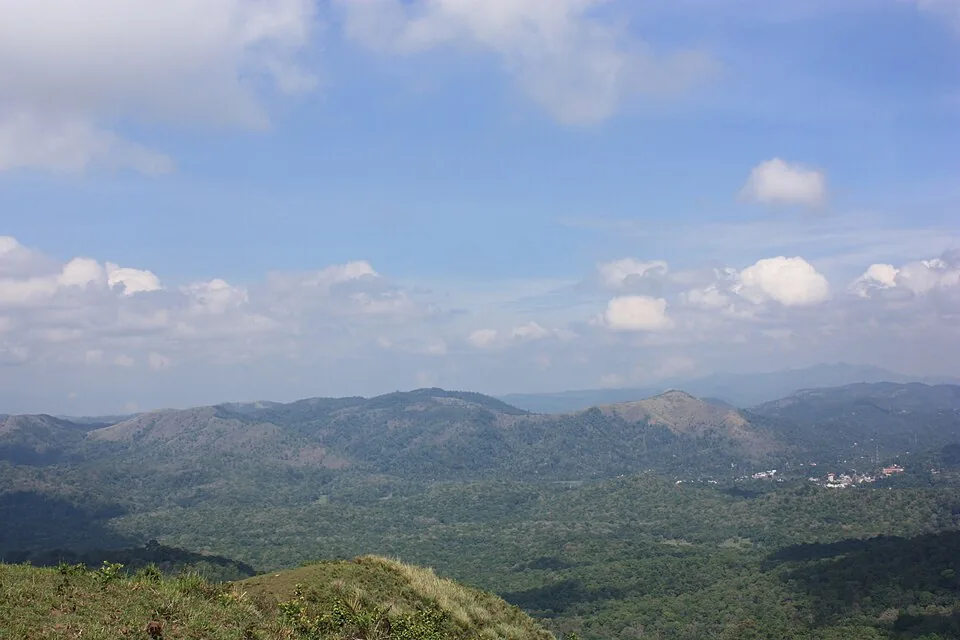
When you book the Periyar Tiger Trail — one or two nights walking and camping inside the reserve — the trackers who lead you in include men who once worked these same hills as poachers and smugglers. That is not a marketing line. It is the deliberate result of a World Bank-funded experiment that ran here from 1996 to 2004, and Periyar is the place where it worked best in India.
The project
The India Eco-Development Project was approved on 5 September 1996 and effective that December, funded by an IDA credit of US$28 million and a Global Environment Facility grant of US$20 million within an appraised US$67 million package, across seven Indian protected areas. The premise was blunt: forests cannot be defended against the people on their edges, only with them. Around Periyar the project counted unemployment in many villages at 60 per cent — which is the number that makes everything that followed make sense. By its close on 30 June 2004, about 580 eco-development committees covering roughly 75,000 households were in place around the seven sites, and the Bank’s own independent evaluation — which picked Periyar and Ranthambhore for field visits precisely because they were the extremes — named Periyar the most successful of the seven. Its finding on the point is one flat sentence: converting poachers and other trespassers into eco-tourism guides has reduced poaching.
Vayana bark and a new dawn
Two committees carry the story. The first was the ex-Vayana Bark Collectors’ eco-development committee — former smugglers of vayana, the bark of the wild cinnamon tree, stripped illegally from these forests. It is this committee that manages the Tiger Trail: the programme was conceived as the alternative livelihood for the very men who knew the deep forest from working it illegally. The second is the Vidiyal Vanapathukappu Sangam — vidiyal is Tamil for “new dawn” — described as the country’s first eco-development committee made up solely of former poachers and sandalwood smugglers. Its origin, as reported by Mongabay in 2020: a 23-member gang of poachers and smugglers operating from K.G. Patti, Varusanadu and Lower Gudalur in Theni district, whose leader, Aruvi, was arrested in 1994; a rehabilitation project prepared by forest officials and their “Cheetah squad” brought the gang to surrender. Aruvi himself was later expelled from the group for returning to timber smuggling — the record keeps its rough edges.
What they do now
As reported in 2020, the Vidiyal team — seventeen members by then — worked as tourist guides, ran the bamboo rafting on the lake, and walked night patrols and special anti-poaching operations, earning about ₹22,000 for twenty-six days’ work a month. Their intelligence network, spread across both Idukki and Theni districts, had helped crack over 230 cases of poaching and smuggling in the reserve. The Periyar Foundation, set up in 2004 to carry the arrangement past the project’s end, is funded from the gate itself — a share of every entry ticket goes to keeping the committees running.
So the honest way to read the reserve’s programme sheet is this: the Nature Walk, the Border Hike, the rafting, the night patrol and the Tiger Trail are not add-ons to conservation here. They are the conservation — the mechanism by which the men who know the forest best are paid to protect it rather than empty it. Booking one, through the official portal, is the most direct way a visitor participates.
- Periyar Tiger Trail — the overnight walking-and-camping programme, managed by the ex-Vayana bark collectors’ committee
- Bamboo rafting and the guided walks — run with eco-development committee members as guides and crew
- Jungle Patrol — visitors join the tourism zone’s edge after dark alongside forest staff and watchers