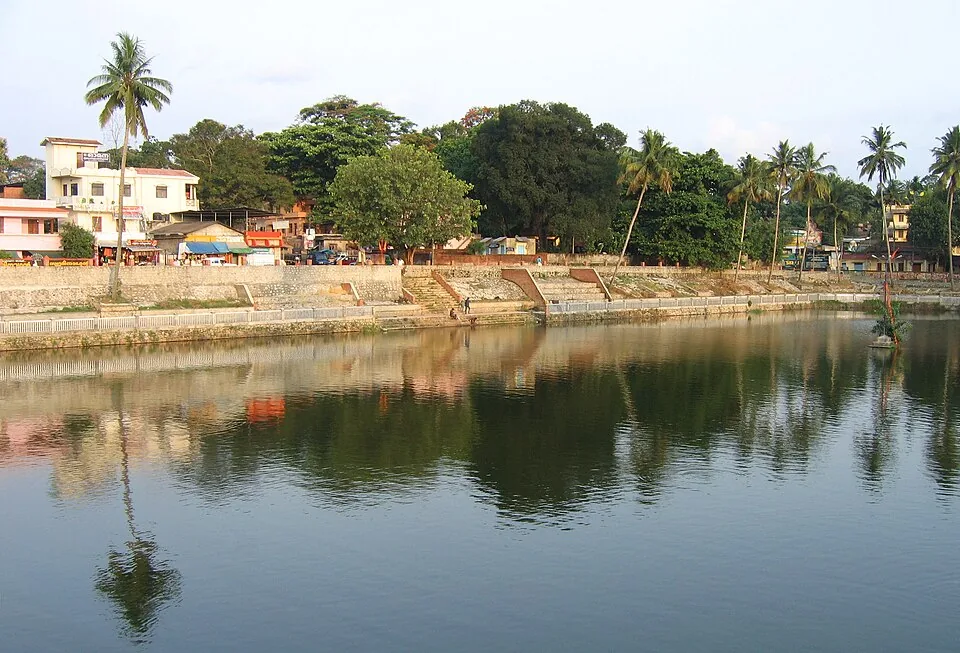
Kottarakkara is very widely described as the birthplace of Kathakali. That description runs together two separate propositions, and they carry very different amounts of weight. Separating them is the single most useful thing anyone can do with this claim, and it is worth doing before you argue with anybody about it.
Proposition one: Ramanattam
The seventeenth-century ruler remembered as the Kottarakkara Thampuran composed Ramanattam, a cycle of eight plays on the life of Rama, in Malayalam; and Kathakali is generally held to descend from it. This is widely held and not seriously disputed. It is the solid half of the claim, and it is a substantial one — the ancestry of Kerala’s best-known art form is not a small thing for a taluk town to carry.
Proposition two: the banyan tree
That he did so at the temple here, beneath a banyan in its grounds, is tradition and nothing more. A raja’s literary project belongs to his court before it belongs to his temple. The two claims get printed as though the second followed from the first, and it does not: the composition is credited to a court, and the location is a story about where the court was.
What the state tourism department says about it
This is the part that surprised us when we checked. Kerala Tourism’s own page for the Kottarakkara Sree Mahaganapathi Temple does not make the Kathakali connection at all. It covers the Shiva dedication, the Ganesha sub-shrine, the unniyappam and the location — and says nothing about Kathakali, Ramanattam, the Thampuran or Perumthachan.
That does not make the tradition false. Tourism copy is not a court of record and omission is not refutation. It does mean the claim is a tradition rather than an official history, and a reader is entitled to know which one they are being handed.
The snub, which we decline to certify
The celebrated origin anecdote runs like this. The Zamorin of Calicut had composed Krishnanattam. The Kottarakkara ruler asked to borrow his performers. The Zamorin refused, with a remark about the Kottarakkara court being incapable of appreciating them — whereupon Kottarakkara wrote his own cycle, on Rama instead of Krishna and in Malayalam instead of Sanskrit.
The ingredients are real. Both cycles existed. The language and the subject really did differ in exactly that way. What is thin is the exchange itself: an insult is the kind of neat causal spark that oral tradition is extremely good at manufacturing after the fact, precisely because it explains a real difference with a single memorable scene. Enjoy it as the frame the tradition chose for itself, and do not repeat it as an event.
- The honest address is the Kottarakkara Thampuran Memorial Museum of Classical Arts — a real, mapped institution in the town, holding exhibits on the traditions the Thampuran is remembered for.
- There is NO regular Kathakali performance at Kottarakkara. No scheduled show, no venue, no interpretation centre.
- For a reliable performance, look to Kochi or Thrissur.
One last thing about the temple
Everybody calls it the Ganapathi temple. The central deity is Shiva, with a Ganapathi sub-shrine that has comprehensively out-famed the main sanctum — the temple’s own foundation legend predicted exactly that. Go in expecting the elephant-headed god in the central sreekovil and you will misread the building.
Frequently asked questions
Was Kathakali really born at Kottarakkara?
The Kottarakkara Thampuran is credited with composing Ramanattam, from which Kathakali is generally held to descend, and that attribution is not seriously disputed. The specific tradition that he composed it beneath a banyan in the temple grounds is tradition only.
Does Kerala Tourism mention Kathakali at the Kottarakkara temple?
No. Its page for the temple covers the Shiva dedication, the Ganesha sub-shrine, the unniyappam and the location, and does not mention Kathakali, Ramanattam or the Thampuran.
Did the Zamorin of Calicut really snub Kottarakkara?
The two cycles — Krishnanattam in Sanskrit and Ramanattam in Malayalam — really did exist and differ that way. The story of the refusal and the insult is tradition, and the evidence for the exchange is thin.
Can I watch Kathakali at Kottarakkara?
Not on a scheduled basis. The town has no regular performance venue. The Kottarakkara Thampuran Memorial Museum of Classical Arts is the visitable version of the connection.