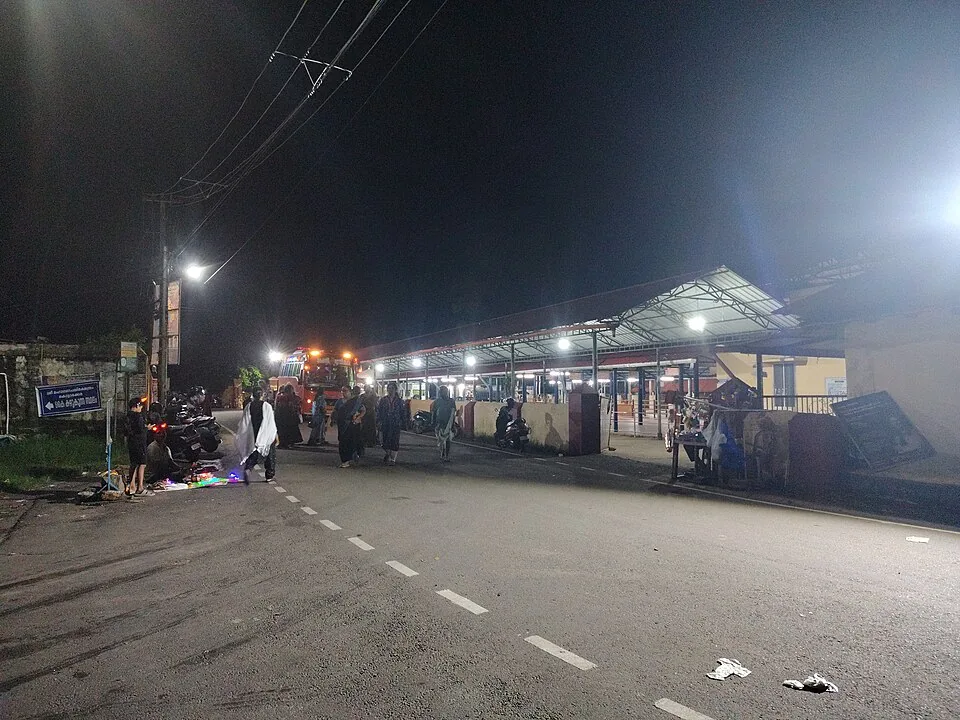
Kottarakkara is built from kottaram, palace, and kara, land or tract: the land of palaces. It is one of those Kerala names that tells you exactly what used to be there and nothing whatever about what is there now.
The plural is doing real work
The name is not decorative. This was the capital of a real principality, and remnants of something like seven palace sites of the Ilayidathu Swaroopam period have been recorded around the town. The earliest palace construction here is dated to the fourteenth century, in the period when Chera Udaya Marthanda Varma ruled Venad. Whatever else is uncertain about this town, that it was a seat of government for centuries is not.
And remnants are not palaces
This is the sentence to carry with you. Recorded remnants and sites are not the same as standing, visitable palaces, and writing about Kottarakkara slides between the two constantly — a phrase like “seven palaces” does a great deal of quiet work on a reader. There is no palace museum on the site of the old court, no preserved quarter, no signposted trail. If you come expecting a palace town in the sense that Padmanabhapuram is a palace town, you will be disappointed, and it will be the phrasing that misled you rather than the place.
- The Kottarakkara Sree Mahaganapathi Temple and its big rectangular tank — the town’s one substantial heritage site.
- The Kottarakkara Thampuran Memorial Museum of Classical Arts: a real, mapped institution, and the checkable version of the town’s claim on the birth of Kathakali.
- Unniyappam, which is the thing most Malayalis actually associate with the name.
- An hour, or two. Not a day.
A capital that became an absence
It is worth being clear that nothing was neglected here in some special way. The principality was annexed in 1741 and folded into Travancore’s administration by 1835; a court that stops being a court stops maintaining its buildings, and timber-and-laterite Kerala palaces that stop being maintained do not last two centuries. The town reads as three layers that barely touch: a vanished principality that gave it its name and left almost nothing above ground, a court that may or may not have invented Kathakali under a tree, and a working junction town whose most famous export is a fried rice-and-jaggery sweet handed out beside a temple tank.
Kottarakkara rewards knowing what you are looking at, because very little of it announces itself. That is a different pleasure from a heritage quarter, and it is the honest one on offer here.
Frequently asked questions
What does the name Kottarakkara mean?
Kottaram (palace) plus kara (land or tract): the land of palaces. It was the seat of Ilayidathu Swaroopam.
Can I visit a palace at Kottarakkara?
No. Remnants and sites of something like seven palaces of the Ilayidathu Swaroopam period have been recorded around the town, but there is no standing, visitable palace and no palace museum.
How old is the palace history here?
The earliest palace construction recorded at Kottarakkara is dated to the fourteenth century, in the period when Chera Udaya Marthanda Varma ruled Venad.
How long should I spend in Kottarakkara?
An hour or two. It works best as a stop on the MC Road between Kollam and Kottayam rather than as a destination.