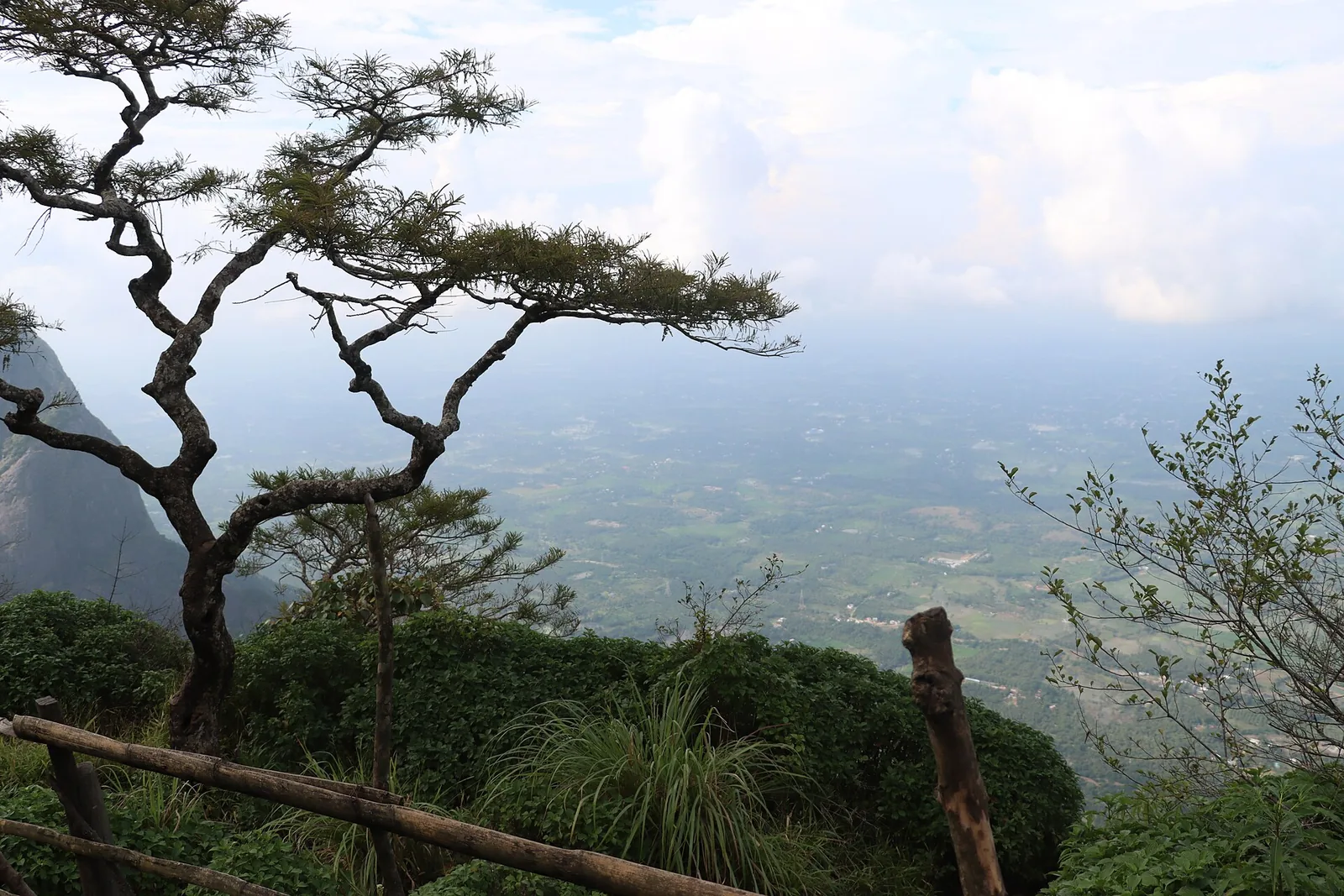
Five kilometres by road above the Nelliyampathy settlement the hills simply stop. The ground falls away and the Palakkad plains open out below, flat and hazy and enormous, and the place where you stand to see it is called Seetharkundu. The name is not decorative. It is a claim.
What the name says
Seetharkundu is traditionally believed to be where Lord Rama, Lakshmana and Sita rested during their exile. That is the English Wikipedia article’s wording, and the two words at the front of it — traditionally believed — are the correct ones and we are keeping them. There is no inscription, no excavation, no text that names this specific escarpment. There is a name, and a tradition that explains the name.
Which is not nothing. Kerala and the wider south are threaded with Ramayana geography of exactly this kind: places whose names encode an episode, sustained by nothing more formal than the fact that people have called them that for a very long time. Some of these traditions are ancient and some are considerably younger than they feel. Distinguishing between them requires evidence nobody here has, so the honest position is to report the tradition, name it as one, and not pretend to adjudicate.
Why a resting place, specifically
It is worth noticing what kind of claim it is. Not a battle, not a boon, not a temple foundation — a rest. The exile narrative moves an enormous distance through forest, and the places attached to it are frequently places where something small happened: they stopped, they drank, they sat. Seetharkundu is a natural place to sit. If you were walking these hills without a road, this is where you would stop, because it is where the view arrives.
- Five kilometres by road from the settlement — a short drive on hill roads, not a walk from the town.
- It is an escarpment edge with a long drop. Treat the edge as an edge, especially in mist.
- Mist is the main risk to the trip, not the road. The view can close completely within minutes and reopen just as fast.
- Seetharkundu, Palakapandy, Kesavan Para and Kara Para are described as four interconnected peaks reachable by small forest paths — this is trekking country, and paths through reserve forest need local advice on the day.
The view is the argument
Stand there and the geography of the whole district explains itself. Behind you is high, wet, cool plantation country — tea on the cooler shoulders, coffee in shade, cardamom, and the once-famous orange groves. In front, several hundred metres down, is Palakkad: flat, hot, rice-growing, and dry enough that it needed the reservoirs at Pothundi and Malampuzha to farm at all. You are standing on the line between the two, and it is a line you can see.
That contrast is also why the hills got planted. Cool, high, well-watered ground within a day of the plains was exactly what nineteenth- and twentieth-century plantation agriculture was looking for, and Nelliyampathy has been estate country long enough that the estates are part of the landscape rather than an intrusion on it. What Seetharkundu gives you is the reason, laid out in one view: the hills have the water, and the plain has the fields.