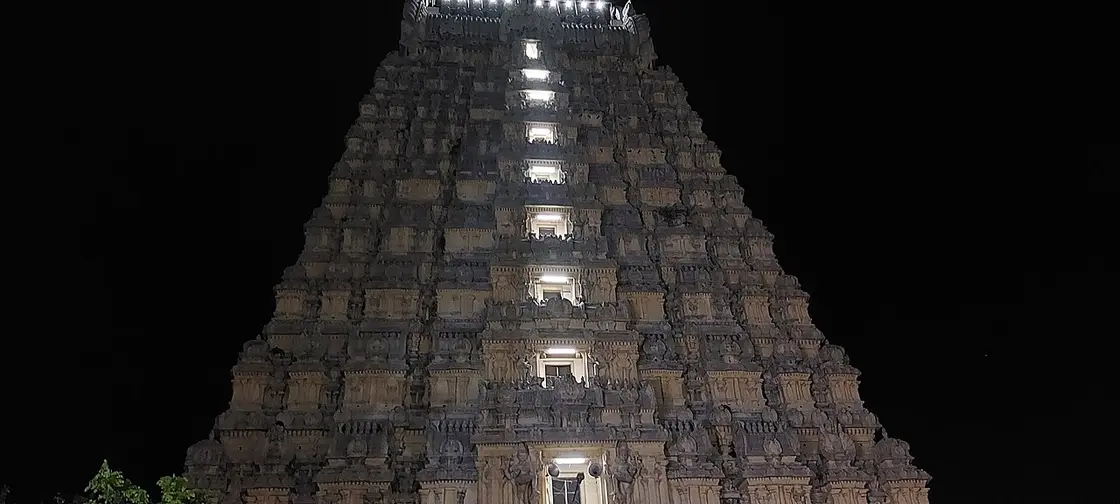
Ekambareswarar Temple is one of the largest temples in Kanchipuram and is dedicated to Shiva as the earth element among the five Pancha Bhoota Sthalams, where the lingam is worshipped as the Prithvi (earth) lingam. According to temple tradition, the goddess Parvati worshipped Shiva here by fashioning a lingam out of earth beneath a mango tree.
Who's going?Tailor Ekambareswarar Temple to your trip
Before you go to Ekambareswarar Temple
Check entry arrangements. Ask temple staff about visitor entry, dress requirements and access to the inner shrine before you travel, especially if you are visiting as a non-Hindu.
Dress respectfully and follow the institution’s admission and photography rules.
Typetemple
Nearest baseSowcarpet
DistrictChennai
Best timeOctober to March is the most pleasant…
Time neededPlan for about 1 to 1.5 hours to see the…
The temple is known for its immense towering gopuram, counted among the tallest in South India at roughly 59 metres, and for the ancient mango tree venerated as its sacred sthala-vriksham. It grew through the patronage of successive dynasties including the Pallavas, Cholas and the Vijayanagara rulers, notably Krishnadevaraya, who is credited with contributions to the temple's structures.
What to expect
Highlights
The soaring main gopuram, among the tallest temple towers in South India
The revered old mango tree honoured as the temple's sacred tree, tied to the Parvati legend
The spacious pillared halls and the earth (Prithvi) lingam central to its Pancha Bhoota Sthalam identity
Getting there
How to visit
Walk or take an auto-rickshaw from the town centre, as the temple is centrally placed among Kanchipuram's shrines
Remove footwear before entering and dress modestly, covering shoulders and knees
Allow extra time during festivals and weekends when darshan queues can be long
Distance by road
Mahabalipuram (Mamallapuram)55 km
Kanchipuram72 km
Puducherry150 km
Vellore135 km
Tirupati135 km
Road km to Chennai; ghat roads and traffic vary — allow extra.
Timing
Best time
October to March is the most pleasant season, with early morning or evening visits avoiding the midday heat.
Weather in Ekambareswarar TempleSeasonal guide
Live forecast loads in your browser.
Today at Ekambareswarar Temple
Sunrise5:59 am
Sunset5:50 pm
Golden hour best light4:50 pm–5:50 pm
Blue hour after sunset5:50 pm–6:15 pm
Sun sets toward compass bearingW · 261°
Moon tonight🌒 Waxing crescent · 24%
Sun and moon are calculated for this location and shown in IST. Photography windows are the hour around sunrise and sunset; the sunset bearing is degrees clockwise from true north. Moon phase is accurate to about half a day.
Visitor notes
As a busy active pilgrimage temple, expect crowds and be mindful of ongoing rituals
Non-Hindus may face restrictions in the innermost sanctum, and photography rules can vary, so check on arrival
Safety
Good to know
Timings and darshan arrangements can change on festival days, so confirm before visiting (indicative)
Stay · eat · do · rent · see · shop
Stays, food & things to do near Ekambareswarar Temple
Verified hotels, homestays, restaurants, experiences, sights, shops and rentals around Ekambareswarar Temple — commission-free, with direct contact. Filter by what you need.
Verified places are being added. The category filters will fill in as approved stays, restaurants, experiences, sights, shops and nature listings go live.
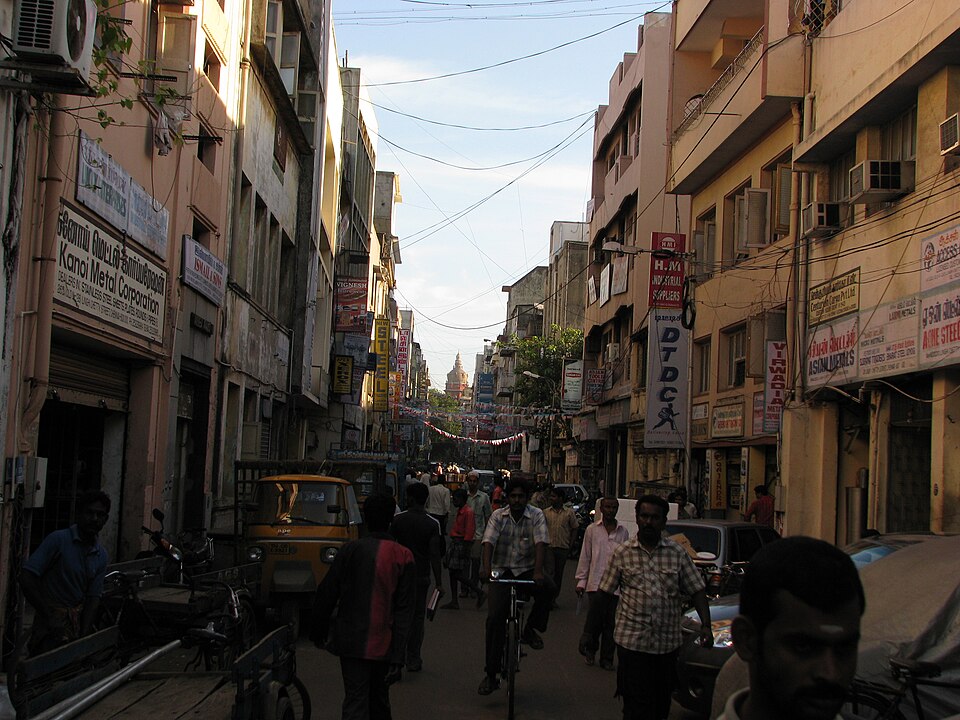
The historic North-Indian and Marwari trading quarter of George Town, a dense grid of wholesale cloth, jewellery and hardware markets and the temple cluster around Mint Street. It is celebrated for its Rajasthani and Gujarati vegetarian street food along Mint and Godown streets. The name derives from 'sowcar', meaning moneylender or banker.
Dress code: Follow the temple’s worship dress, footwear and photography rules.
Getting around Ekambareswarar Temple
If you need step-free access, contact the site before travelling. Ask about a level entrance, steps along the route, the nearest drop-off point, seating and accessible toilets.
The historic North-Indian and Marwari trading quarter of George Town, a dense grid of wholesale cloth, jewellery and hardware markets and the temple cluster around Mint Street. It is celebrated for its Rajasthani and Gujarati vegetarian street food along Mint and Godown streets. The name derives from 'sowcar', meaning moneylender or banker.
Dedicated to Lord Murugan and popularly called Kandha Kottam, this is one of the most important Murugan temples in old Madras. Also known as the Muthukumaraswamy Devasthanam, it was established in the 17th century by the Vellala merchant community of George Town. Its annual Skanda Sashti festival draws large crowds.
A Shiva temple built alongside the Chennakesava Perumal Temple by Manali Muthukrishna Mudaliar in 1762, the two are known together as the 'Twin Temples' or Pattinam Temples of Chennai and share an interlinking passage. It replaced an earlier shrine razed by the East India Company. The paired Vishnu-Shiva complex is one of the oldest surviving temple foundations of colonial Madras.
This Vishnu temple honours Chenna Kesava Perumal, regarded as the patron deity of Chennai, and the city's name 'Chennapattanam' is widely believed to derive from it. The original was built by Beri Thimappa, the dubash who brokered the 1639 land deal that created Madras. After the East India Company demolished the first structure in 1757, the present temple was rebuilt in 1762 by Manali Muthukrishna Mudaliar.
The city's main post office in the Esplanade area, an Indo-Saracenic building completed in 1884 to a design by Robert Chisholm. Its arcaded corridors, domes and decorative stonework make it one of the finest heritage government buildings in Chennai. It has functioned continuously as a postal hub for well over a century.
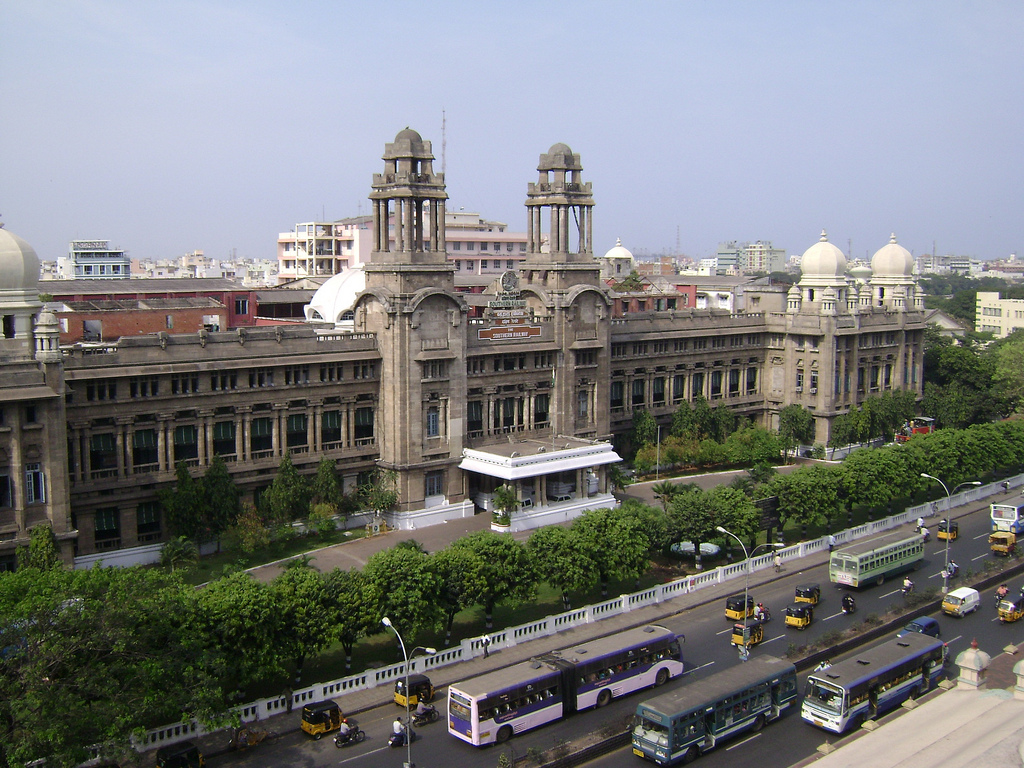
An imposing administrative building completed in 1922 near Parry's Corner, serving as the headquarters of the Southern Railway zone. Its Indo-Saracenic domes and long arcaded facade make it a defining silhouette of the George Town waterfront. It stands beside the Ripon Building and other civic landmarks of old Madras.
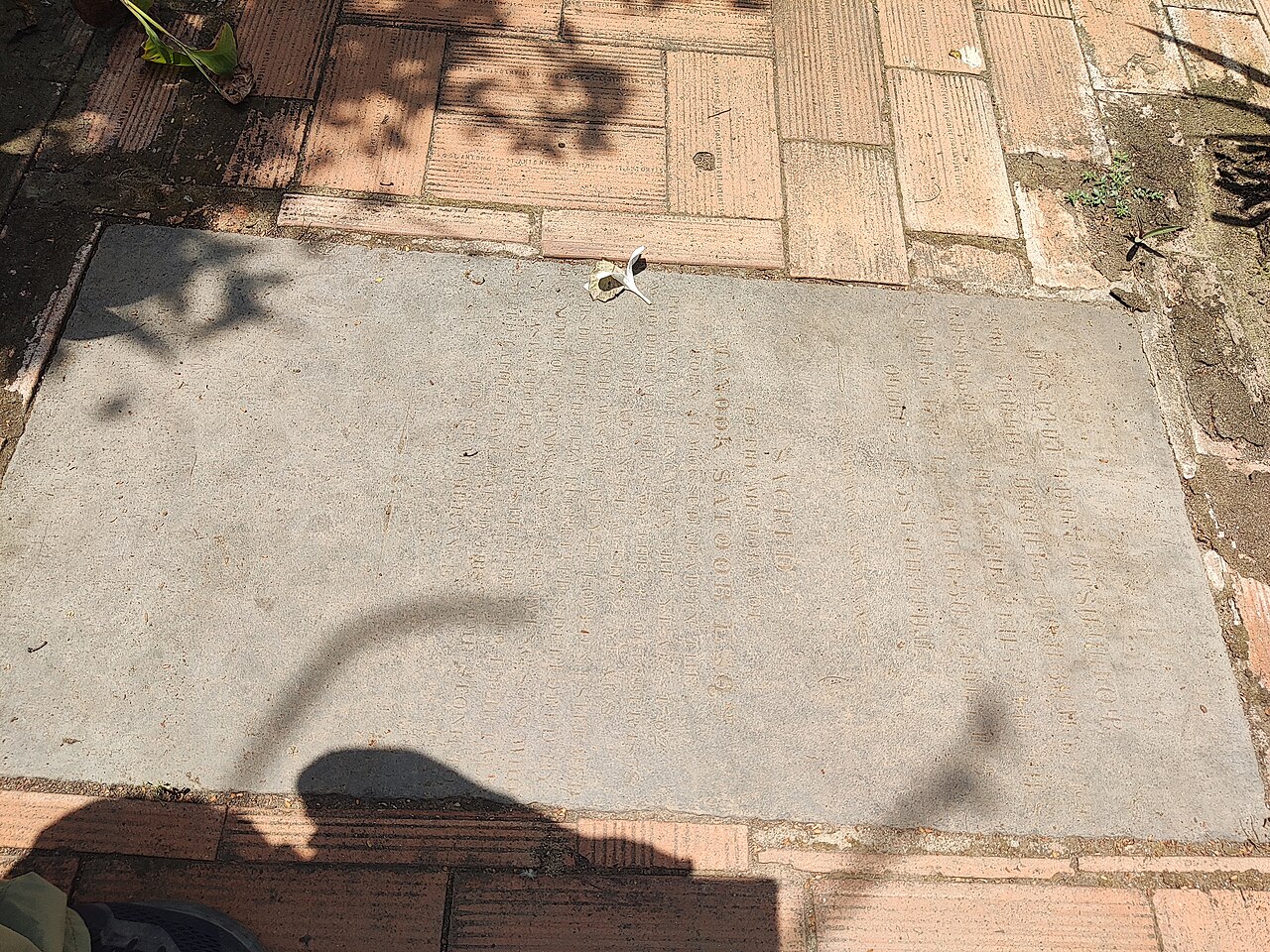
The Armenian Church of the Holy Virgin Mary in George Town, whose present structure dates to 1712, is a serene memorial to Chennai's once-thriving Armenian merchant community. It is celebrated for its belfry of six bells and the many Armenian graves in its tranquil courtyard, and stands near where Haroutiun Shmavonian published Azdarar, the world's first Armenian-language journal.
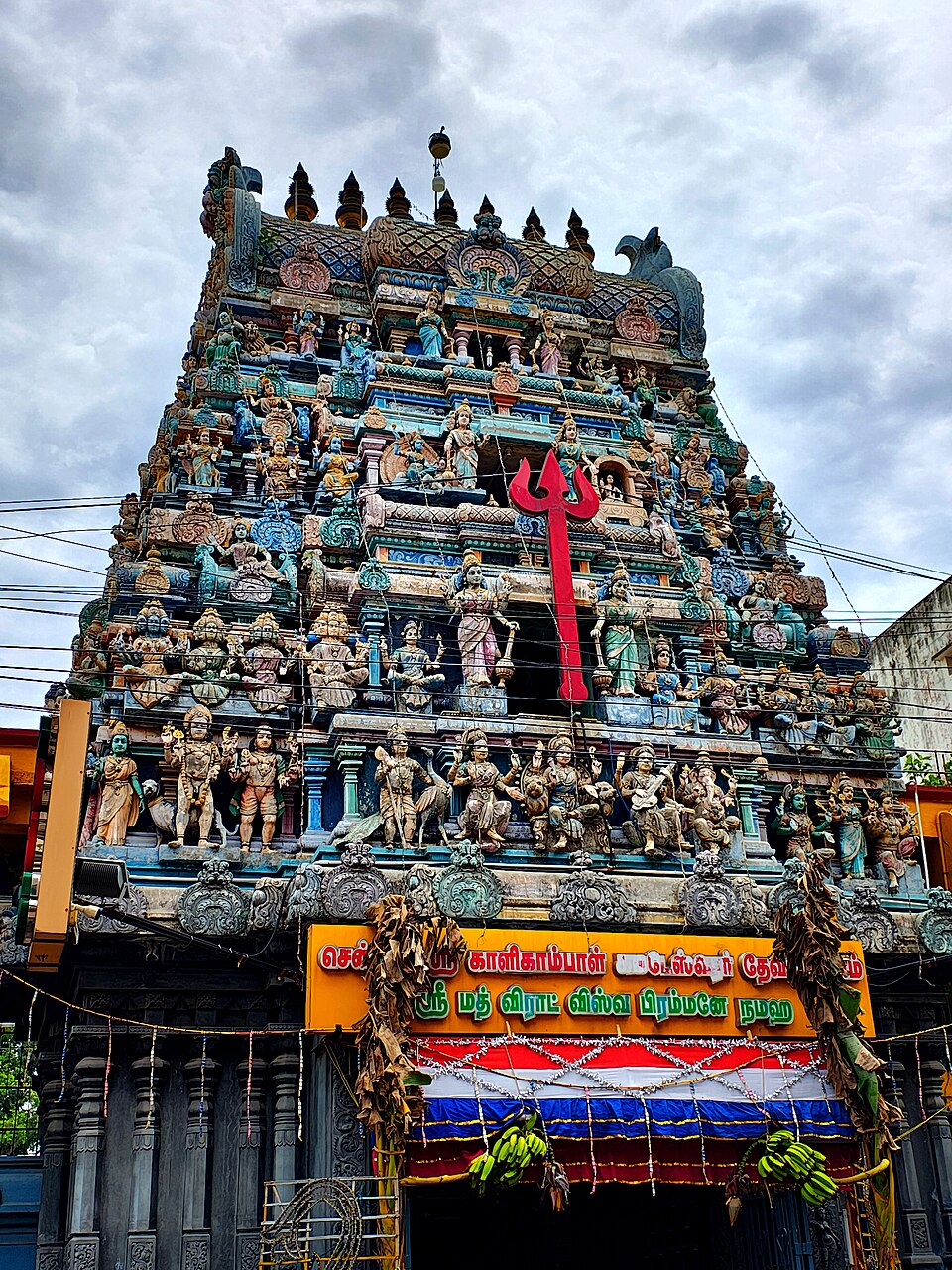
A Shakti temple on Thambu Chetty Street where the presiding deity is the goddess Kalikambal (Kamakshi) with her consort Kamateswarar. Tradition holds that the Maratha emperor Shivaji worshipped here in 1677, and it is famously the temple where actor Rajinikanth prays. Originally sited near the seashore, it was relocated inland by the British in 1670.
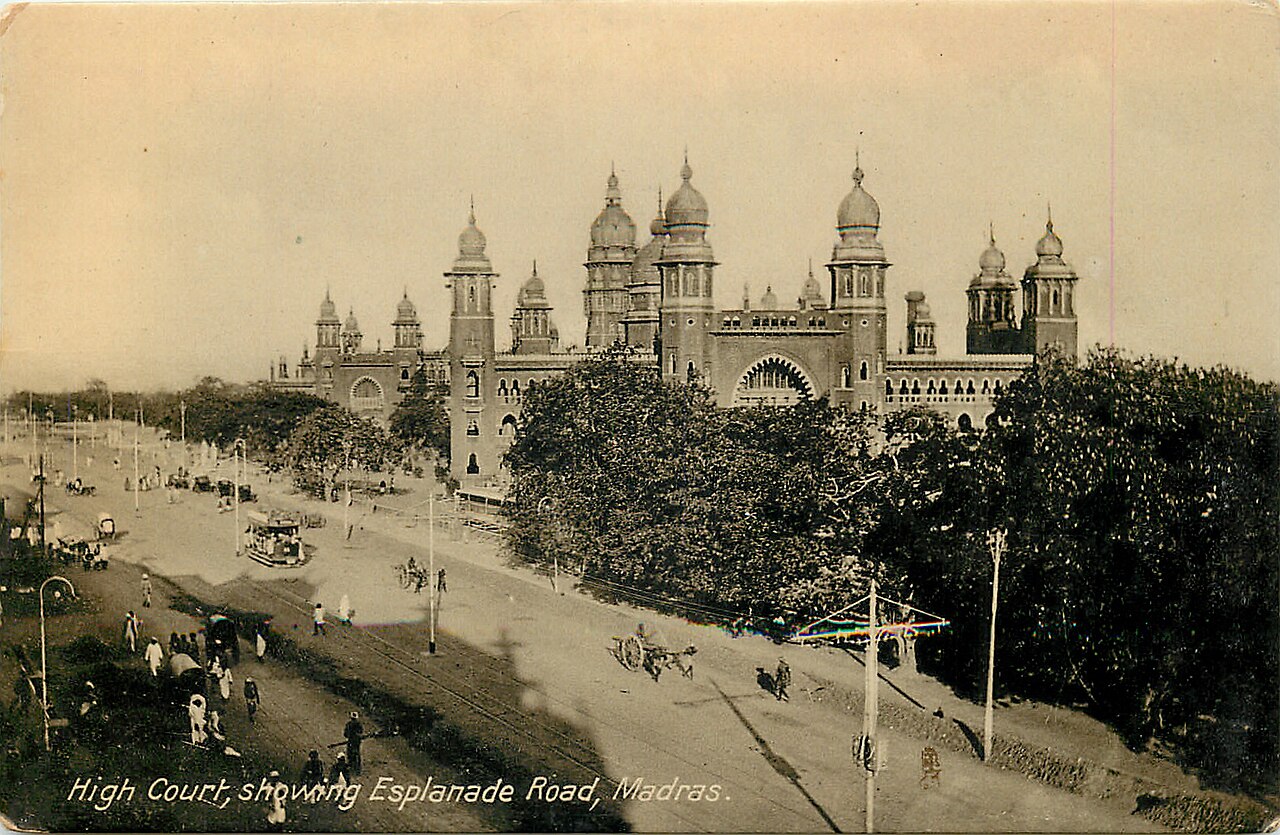
Completed in 1892, this sprawling red-sandstone complex is one of the grandest examples of Indo-Saracenic architecture in the world and long ranked as the second-largest judicial building after the Courts of London. Its domes, minarets and stained-glass-lit corridors dominate the northern seafront. A lighthouse once operated from atop one of its towers.
A warren of stalls near the harbour set up in the 1960s by Tamil repatriates from Burma, long famous for smuggled and imported electronics, foreign goods and pirated media. It also hosts eateries serving Burmese atho and other dishes brought back by the settlers. It remains a colourful, chaotic George Town institution.
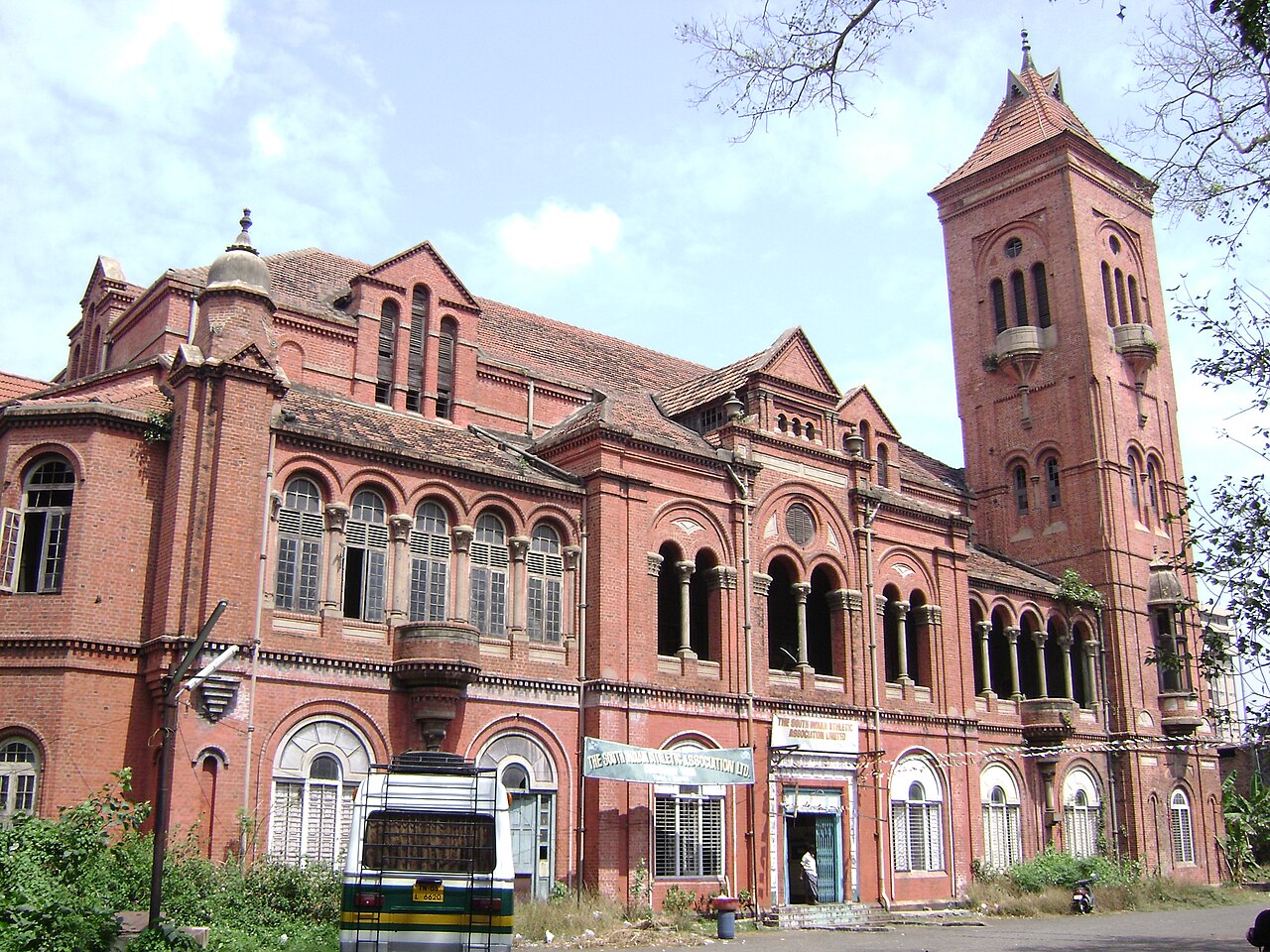
Chennai's Victorian-era Town Hall, a red-brick Indo-Saracenic landmark near Central station in Park Town, designed by Robert Chisholm and built between 1883 and 1889. Restored under the Singara Chennai initiative, it now serves as a heritage museum and cultural performance venue.
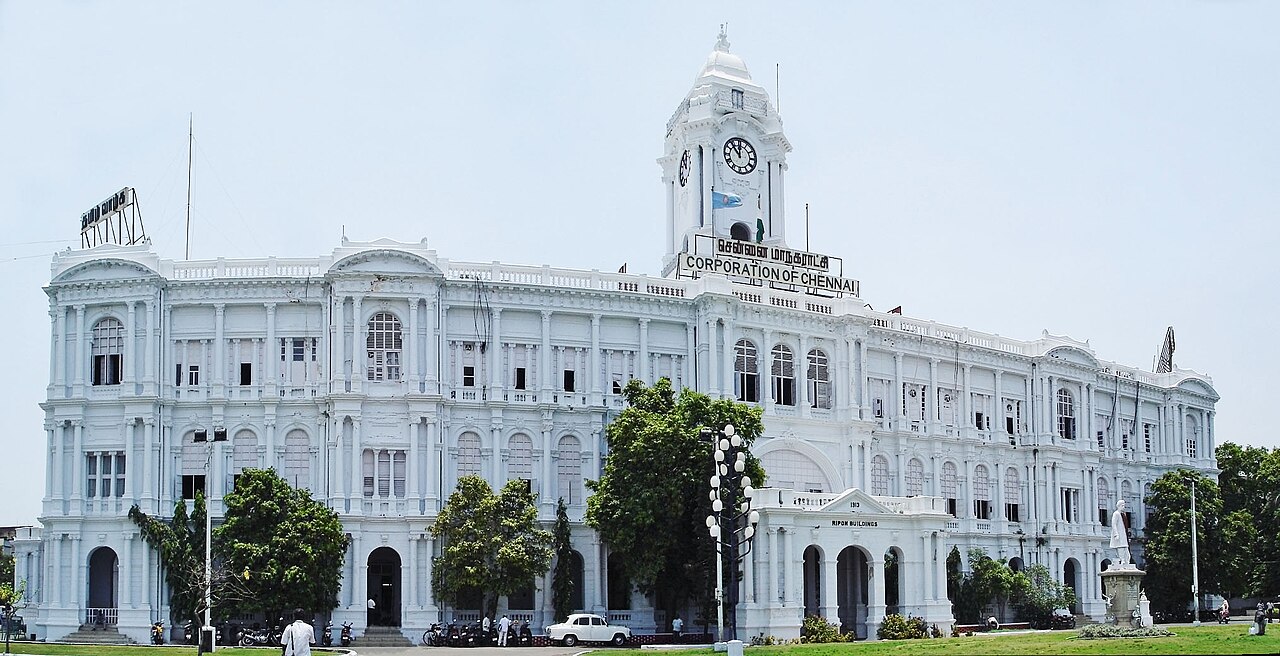
A gleaming white Neoclassical colonial building completed in 1913 and designed by G.T.S. Harris, serving as the headquarters of the Greater Chennai Corporation. It is named after Lord Ripon, the Viceroy regarded as the father of local self-government, and is famed for its Westminster-chime clock tower.
When is the best time to visit Ekambareswarar Temple?
October to March is the most pleasant season, with early morning or evening visits avoiding the midday heat.
How do I reach Ekambareswarar Temple?
Walk or take an auto-rickshaw from the town centre, as the temple is centrally placed among Kanchipuram's shrines Remove footwear before entering and dress modestly, covering shoulders and knees Allow extra time during festivals and weekends when darshan queues can be long
How much time do I need for Ekambareswarar Temple?
Plan for about 1 to 1.5 hours to see the gopuram, halls and main shrine.
What else is near Ekambareswarar Temple?
Nearby you can pair Sowcarpet (300 m), Kandaswamy Temple (400 m), Chenna Malleeswarar Temple (700 m), Chennakesava Perumal Temple (700 m).
What should I know before visiting Ekambareswarar Temple?
Timings and darshan arrangements can change on festival days, so confirm before visiting (indicative)
We have not published a story about Ekambareswarar Temple itself yet. These cover Sowcarpet and the wider district, with separate journeys between stops.
Around Sowcarpet
These guides explore Sowcarpet and the surrounding area. Choose a visit that fits your interests, allowing separately for travel between stops.