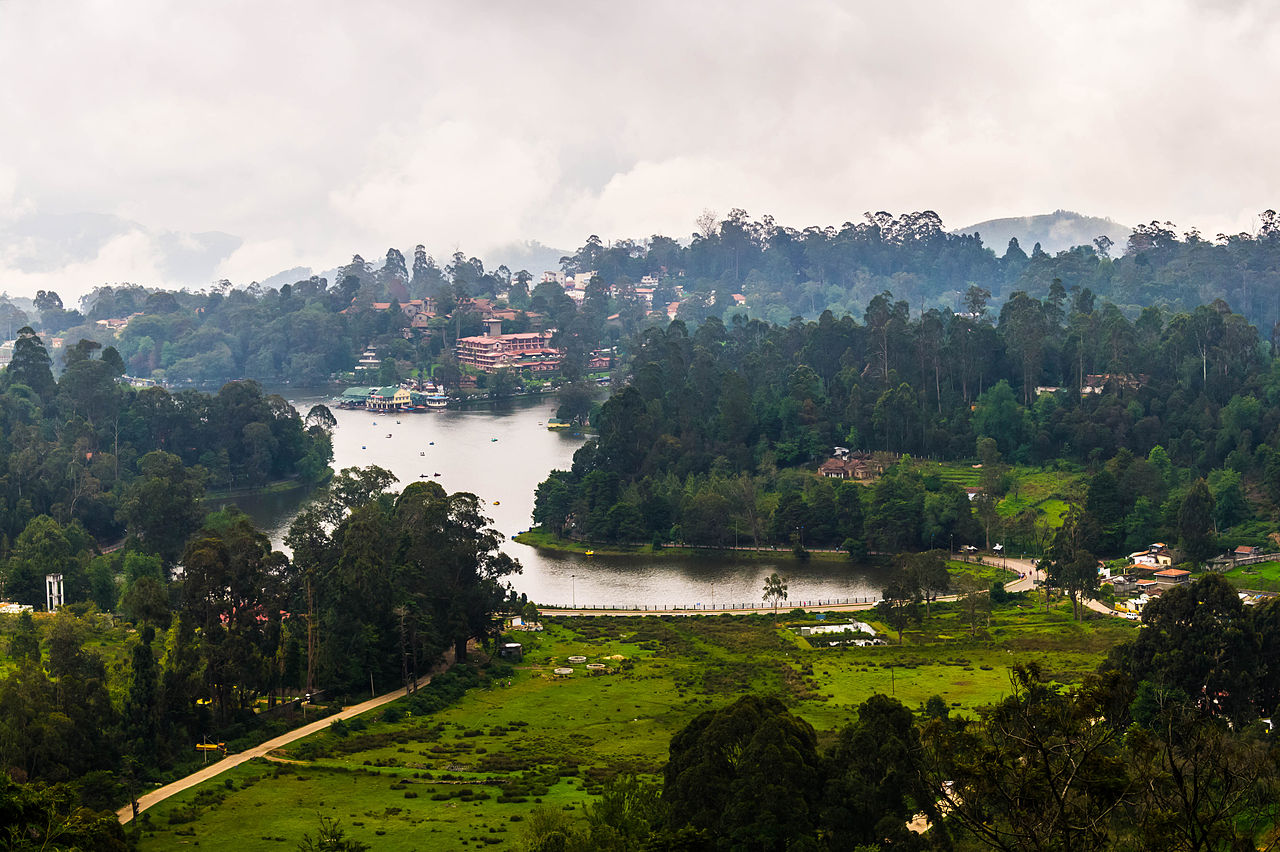
High in the Palani Hills of Dindigul district, wrapped for much of the year in mist and the resinous scent of eucalyptus, Kodaikanal has earned a fond nickname: the “Princess of Hill Stations.” At roughly 2,133 metres above sea level, it is cool where the Tamil plains below are scorching, green where they are dust-brown. Yet this genteel retreat of lakes and gardens is barely older than the railways — a town more or less invented in the middle of the nineteenth century by people fleeing the heat and disease of the lowlands.
- Location: Palani Hills, Dindigul district, Tamil Nadu, at about 2,133 m elevation.
- Founded: 1845, as a hill retreat established by American missionaries of the Madurai Mission.
- Signature sights: the man-made Kodaikanal Lake (1863), Coaker’s Walk, Pillar Rocks and Bryant Park.
- Rare bloom: the Neelakurinji (Strobilanthes kunthiana), which flowers roughly once every twelve years.
A refuge from the fever of the plains
The name is usually parsed from two Tamil words — kodai and kanal — most often rendered as “gift of the forest,” though its exact sense is debated, with some preferring readings closer to “the land of forests” or a reference to the summer season. Whatever the etymology, the forest came first and the town came later. In 1845 American missionaries of the Madurai Mission, worn down by the malarial heat of the plains, built the first bungalows on this high plateau as a place to recover their health and raise their children in a temperate climate. Through the second half of the century Kodaikanal grew into a regular summer haven for missionaries and, in time, for European planters and officials — a quiet, churchgoing alternative to the grander, more military hill stations of the south.

The lake that made the town
Kodaikanal’s defining feature was not there at the beginning. In 1863, acting on a suggestion by Sir Vere Henry Levinge — then the Collector of Madurai — a stream was dammed to form an artificial lake. Roughly star-shaped and covering some 60 acres, with a wooded shoreline winding for about five kilometres, it gave the settlement a focal point around which villas, boat clubs and walking paths gathered. Levinge is remembered as the man who, more than any other, turned a scattering of health bungalows into a proper resort; he is said to have introduced boats to the water himself. Today a lakeside stroll, a pedal boat and a stop at the boathouse remain the town’s central ritual, much as they were a century and a half ago.
Sky-watchers, sholas and a flower that keeps time
The same clear, dust-free mountain air that soothed the missionaries drew scientists too. In 1899 the Kodaikanal Solar Observatory was established on a ridge above the town, chosen for its high altitude and clean southern skies; regular observations of the Sun began there in 1901, and the observatory went on to make lasting contributions to solar astronomy. Around it survive the sholas — the pockets of stunted, evergreen montane forest that fill the folds of the Palani Hills and shelter their own birds, insects and plants. Among the most celebrated is the Neelakurinji, Strobilanthes kunthiana, a shrub that blooms only about once every twelve years, when whole hillsides turn a soft violet-blue and visitors travel from across the country to see it.
Walks, rocks and gardens
For all its scientific pedigree, Kodaikanal is best known for gentler pleasures laid out in colonial times. Coaker’s Walk, a paved kilometre-long path constructed in 1872 and named for the officer who traced it, curls along a steep hillside and, on a clear morning, opens onto vast views of the plains far below. A short drive out of town, the Pillar Rocks — three sheer granite faces rising around 122 metres — loom in and out of the drifting cloud. And on the eastern shore of the lake lies Bryant Park, a landscaped garden famous for its annual flower show, a genteel echo of the ornamental gardens the town’s founders so loved. Together they make Kodaikanal what it has been for generations: not a place of grand monuments, but a cool, quiet retreat where the chief business is to walk, to look and to breathe.
Frequently asked questions
When and why was Kodaikanal founded?
It was established in 1845 by American missionaries of the Madurai Mission, who built the first houses here as a high, cool retreat from the heat and malarial disease of the Tamil plains.
Is Kodaikanal Lake natural or man-made?
It is entirely man-made. The roughly star-shaped lake, covering about 60 acres, was formed in 1863 by damming a stream, on the suggestion of Sir Vere Henry Levinge, then Collector of Madurai.
What does the name “Kodaikanal” mean?
It comes from the Tamil words kodai and kanal and is most often translated as “gift of the forest,” though the precise meaning is debated and other readings, such as “the land of forests,” are also offered.
What is the Kurinji flower?
The Neelakurinji (Strobilanthes kunthiana) is a shrub of the Palani Hills that blooms only about once every twelve years, briefly washing the slopes in violet-blue.
How high is Kodaikanal and what is its climate like?
It sits at roughly 2,133 metres in the Palani Hills, giving it a cool, misty climate year-round — the reason it became a health retreat and remains a popular hill station.