
In the flat, canal-fed rice country of the Cauvery delta, the town of Mannargudi grows around one of the largest temple complexes in Tamil Nadu. At its centre is the Rajagopalaswamy temple, dedicated to Krishna in his form as Rajagopala — the royal cowherd. Devotees know the place as Dakshina Dwaraka, the Dwaraka of the south, after Krishna’s fabled coastal city of Dwaraka in Gujarat. The name fits the temple’s ambition: not a single shrine but a walled sacred town of towering gateways, pillared halls, concentric enclosures and one of the biggest temple tanks in the whole of India.
- Where: Mannargudi, Thiruvarur district, in the Cauvery delta — roughly 30 km south of Thanjavur and about the same from Thiruvarur town.
- Deity: Krishna as Rajagopalaswamy (Rajagopala), with his consorts Rukmini and Satyabhama; the goddess is worshipped as Sengamala Thayar.
- Scale: around 23 acres, seven prakarams (concentric enclosures), sixteen gopurams and the vast Haridra Nadhi temple tank just outside the walls.
- Best time: October to March, when the delta is cooler; the Panguni Brahmotsavam (around March–April) is the biggest festival, with float processions on the tank.
- Dress modestly, and check current darshan timings and inner-shrine photography rules before you go in.
The Dwaraka of the south
The presiding deity is Krishna worshipped as Rajagopala — literally the royal protector of cattle — and it is this image of Krishna the cowherd that earns Mannargudi its title of Dakshina Dwaraka, the southern counterpart to Krishna’s own city. The Rajagopalaswamy temple enshrines him alongside his consorts Rukmini and Satyabhama, with the goddess Sengamala Thayar in her own shrine. Local tradition, told here as legend rather than history, links the site to the sage Gopilar and holds that Krishna revealed himself here to grace his devotees — the kind of origin story that gathers around many great Vaishnavite shrines and shapes how pilgrims read the place. What is beyond dispute is the temple’s standing: it is one of the most important Krishna temples in the Tamil country, a living pilgrimage centre rather than a museum piece.
Chola foundations, Nayak grandeur
The temple is old. Inscriptions and tradition trace its first brick-and-stone shrine to the Chola king Kulottunga Chola I, in the late eleventh and early twelfth century, with later Chola rulers adding to it. But the sprawling complex a visitor sees today owes most to the centuries that followed, when the delta passed under Vijayanagara overlordship and was governed on its behalf by the Thanjavur Nayaks. Across the sixteenth and seventeenth centuries these rulers — above all Vijayaraghava Nayak, whose patronage is remembered here — poured resources into Mannargudi. They raised the great gopuram, the thousand-pillared hall and the huge compound wall that turned a delta shrine into a temple city. The result is a layered monument in which Chola bones carry Vijayanagara-era muscle, a common pattern in the delta’s big temples but rarely on this scale.
A temple built on a giant scale
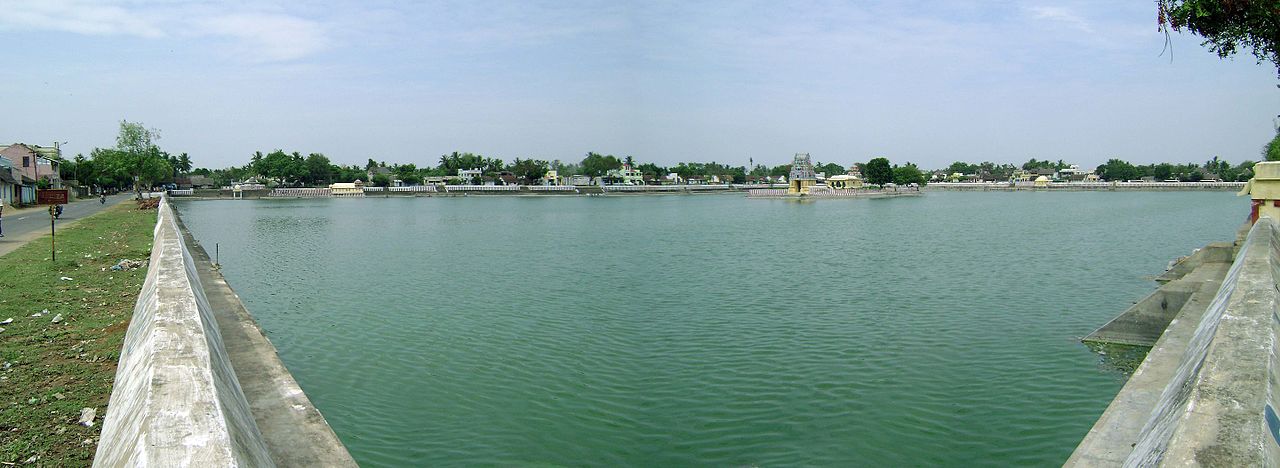
Even by delta standards, the numbers are startling. The complex covers some 23 acres inside a granite wall, arranged as seven prakarams, or concentric enclosures, that draw the pilgrim inward towards the sanctum in stages. Sixteen gopurams punctuate the walls, and the main eastern rajagopuram rises around 154 feet, a landmark visible far across the surrounding paddy. Within the fourth enclosure, the Kasi Prakaram, stands a grand thousand-pillared mandapam, one of the great Nayak-era pillared halls. Just beyond the main enclosure lies the temple’s most extraordinary feature, the Haridra Nadhi tank — roughly 1,158 feet long and 837 feet broad, so large it ranks among the biggest temple tanks in India. During the annual float festival the deity is carried out onto its waters on an illuminated raft, and the whole town gathers along the steps to watch.
Divya Desam or Abhimana Kshetram?
Given its size and fame, visitors often assume Mannargudi must be one of the 108 Divya Desams, the Vishnu temples sung by the Alvar poet-saints — but its status is more nuanced, and worth stating carefully. The temple is most widely described as an Abhimana Kshetram, and indeed as first among the traditional list of Abhimana Kshetrams: sites held dear in the Vaishnavite tradition that were not, however, the subject of the Alvars’ Mangalasasanam hymns. On that strict reckoning it is not counted among the 108 Divya Desams. Some popular lists and travel accounts do loosely include it, which is why you will see the claim both ways, so it is fairer to say it is a major Krishna temple whose Divya Desam status is debated and not universally accepted. Either way, its devotional pull is undiminished.
Visiting
Mannargudi sits in Thiruvarur district, well connected by road and rail across the delta and easy to reach from Thanjavur, Kumbakonam or Thiruvarur town; the nearest airport is Tiruchirappalli. The temple rewards an unhurried visit — allow time to walk the prakarams and to sit a while by the Haridra Nadhi, especially in the cool of early morning or late afternoon. It pairs naturally with the nearby marquee shrines of the delta: the great Thyagaraja temple at Tiruvarur and its enormous Kamalalayam tank are a short drive away. If your interest is temples and the culture that grew around them, read on with two companion guides: /india/tamil-nadu/guides/divya-desams-of-tamil-nadu and /india/tamil-nadu/guides/carnatic-music-towns-of-tamil-nadu.
Frequently asked questions
Why is Mannargudi called Dakshina Dwaraka?
Because its presiding deity is Krishna worshipped as Rajagopala, the royal cowherd. That link to Krishna gives the town its title of Dakshina Dwaraka — the “Dwaraka of the south” — after Krishna’s legendary city of Dwaraka in Gujarat.
Is the Rajagopalaswamy temple a Divya Desam?
Its status is debated. The temple is most often described as an Abhimana Kshetram — in fact as first among the traditional list — rather than one of the 108 Divya Desams, because the Alvar saints did not sing their Mangalasasanam hymns here. Some popular lists do include it, so you will see the claim both ways; the safest description is a major Krishna temple whose Divya Desam status is not universally accepted.
How big is the temple and its tank?
The complex covers around 23 acres with seven concentric prakarams, sixteen gopurams and a main rajagopuram roughly 154 feet tall. Its Haridra Nadhi tank, about 1,158 feet by 837 feet, ranks among the largest temple tanks in India.
Who built the temple?
Tradition traces the original shrine to the Chola king Kulottunga Chola I in the late eleventh to early twelfth century. The sprawling complex seen today was expanded across the sixteenth and seventeenth centuries under Vijayanagara overlordship and the Thanjavur Nayaks — especially Vijayaraghava Nayak — who added the main gopuram, the thousand-pillared hall and the great compound wall.
When is the best time to visit?
October to March, when the delta is at its coolest and most comfortable. The Panguni Brahmotsavam, around March–April, is the biggest annual festival, when the deity is taken onto the Haridra Nadhi tank on an illuminated float.
What else is nearby?
Mannargudi combines well with the other great temples of the delta, including the Thyagaraja temple at Tiruvarur with its huge Kamalalayam tank, and the temple towns of Kumbakonam and Thanjavur a little further afield.