
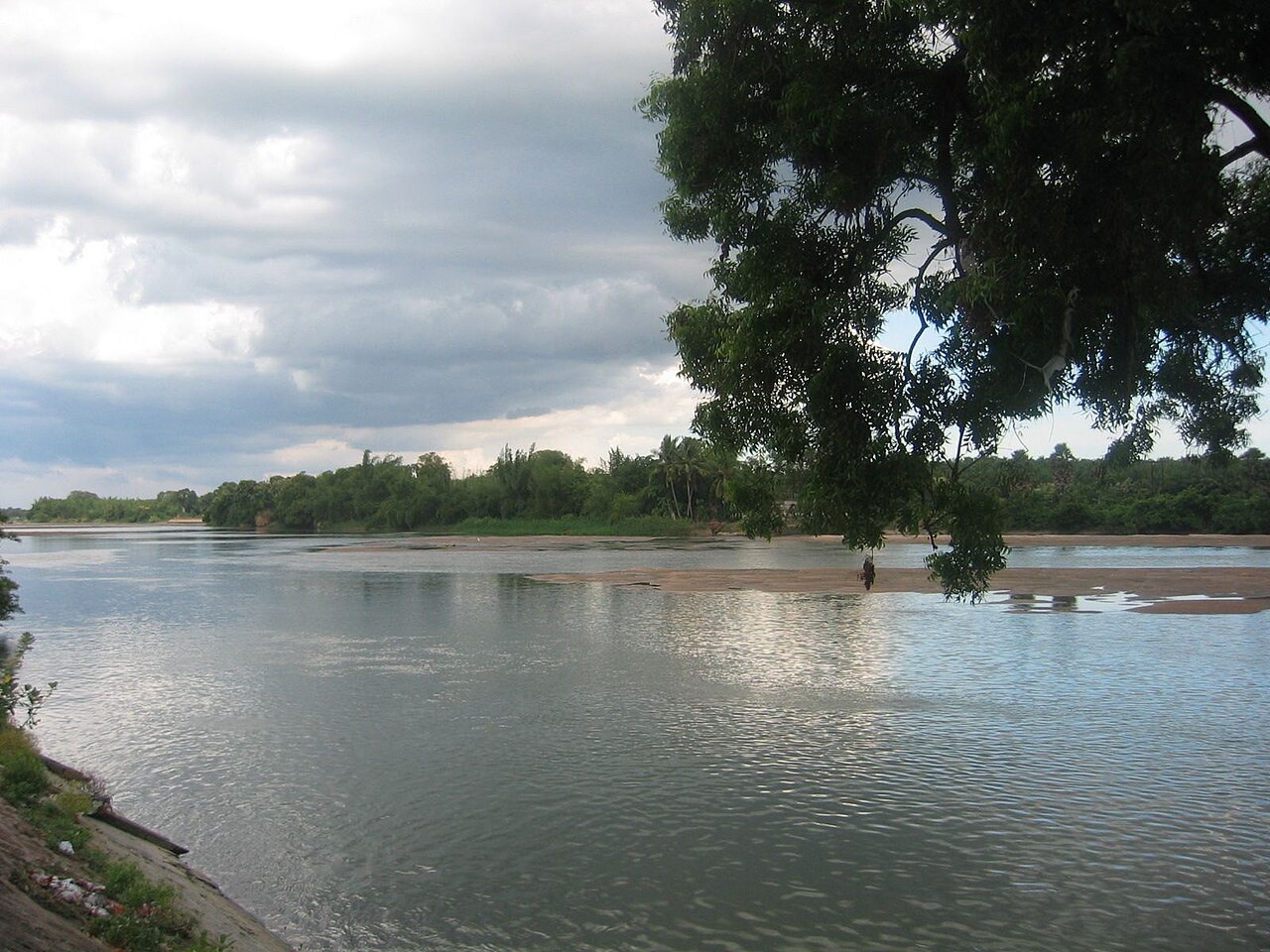
Just west of Thanjavur, where the Kaveri fans out into a spread of channels, sits a small delta town with a large place in the story of South Indian music. Thiruvaiyaru — the name means the town of five rivers — is where Tyagaraja, one of the three composer-saints revered as the Trinity of Carnatic music, spent much of his life and, in 1847, attained samadhi on the riverbank. Every January the town fills with musicians who come to sing at his tomb. For a few days, one of the world’s deepest classical traditions gathers in a single place and sings with one voice.
- Where: Thiruvaiyaru, on the Kaveri about 13 km north of Thanjavur, in the Kaveri delta of central Tamil Nadu
- What: The home town and samadhi of the composer-saint Tyagaraja, and the site of the annual Tyagaraja Aradhana music festival
- When: The Aradhana falls each January, on the lunar day of Pushya Bahula Panchami — the date on which Tyagaraja is said to have passed in 1847
- Also here: The ancient Panchanadeeswarar (Aiyarappar) Shiva temple, and living crafts including the GI-tagged Thanjavur veena and Tanjore painting
- Best paired with: Thanjavur city — the Brihadisvara temple, the Maratha palace and the Saraswati Mahal Library
The saint of Thiruvaiyaru
Tyagaraja (1767–1847) was born at Tiruvarur, further out in the delta, but it was at Thiruvaiyaru that he lived, taught and composed for most of his life. He is remembered above all as a devotee of Rama, and the bulk of his enormous output — hundreds of kritis, the compact devotional songs that are the backbone of the Carnatic repertoire — is addressed to that god. Alongside his near-contemporaries Muthuswami Dikshitar and Syama Sastri, he is honoured as one of the Trinity, the three composers who between them shaped the classical music of the Tamil and Telugu south into the form it still takes today. When he died, he was interred on the bank of the Kaveri, and the samadhi shrine raised over the spot became a place of pilgrimage for musicians rather than a shrine to any deity.
The Aradhana: hundreds of voices, five songs
The Tyagaraja Aradhana is the festival held each January to mark the anniversary of his passing, on the lunar day of Pushya Bahula Panchami — the fifth day of the waning moon in the month of Pushya. Musicians travel to Thiruvaiyaru from across India and far beyond, and for several days the town becomes an open-air concert of the Carnatic world. The emotional heart of the gathering is the collective rendering of the Pancharatna Kritis, Tyagaraja’s five “gem” compositions, sung and played in unison by hundreds of voices, veenas, violins and drums all facing the shrine at once. It is an extraordinary sound — a whole tradition performing the same music together, not in competition but in shared homage — and it has grown, edition by edition, into the most cherished date in the Carnatic calendar.
The Aradhana as it is known today took shape in the early twentieth century, when rival groups of devotees were brought together to worship at the tomb as one, and it has been observed annually ever since. The atmosphere is devotional but open: anyone may sit and listen, and the Pancharatna singing in particular is a communal act rather than a ticketed recital. For visitors, it is the rare chance to hear the core of the Carnatic repertoire performed on the ground that gave rise to much of it.
Panchanadeeswarar: the temple of five rivers
Long before the Aradhana, Thiruvaiyaru was a temple town. Its great shrine is the Panchanadeeswarar temple, also called the Aiyarappar temple, dedicated to Shiva as the lord of the five rivers — the Kaveri and its delta channels that give the town its name. It is an old and important Shiva sthalam of the Kaveri country, expanded across the Chola and later centuries into a broad complex of gopurams, pillared halls and a large tank, and it remains a working temple woven into the town’s daily life. The temple and the music are not separate stories: Thiruvaiyaru was a place of worship and learning, and that older sacred life is part of why a devotional composer settled and stayed here.

A town that still makes its music
Thiruvaiyaru does not only remember music — it still makes the instruments and images of it. The town is a centre for the Thanjavur veena, the Saraswati veena that is the signature fretted instrument of Carnatic music. Carved traditionally from a single length of seasoned jackwood and strung across two dozen fixed frets, it was the first musical instrument in India to receive a Geographical Indication tag, protecting the craft to this delta. In the same tradition of gilded devotion, artists here and around Thanjavur still make Tanjore paintings — richly worked panels built up on a jackwood plank, with gold foil laid over raised gesso and set with glass and stones, GI-tagged in 2007. Instrument, image and song all belong to the same courtly delta culture that Thanjavur’s Nayak and Maratha rulers once nurtured.
Visiting
Thiruvaiyaru is an easy day trip from Thanjavur, about 13 km away, and most travellers pair it with the city’s Chola-era Brihadisvara temple and Maratha palace. The samadhi and the Panchanadeeswarar temple are both working shrines, so dress modestly and expect to leave footwear outside. To catch the Aradhana, plan around Pushya Bahula Panchami in January — check the exact date for the year, as it follows the lunar calendar and shifts. In town you can also visit the Rajarajan Manimandapam, a memorial hall with exhibits on Chola history and art. For the wider musical geography of the state, read /india/tamil-nadu/guides/carnatic-music-towns-of-tamil-nadu , and to plan the season, /india/tamil-nadu/guides/best-time-to-visit-tamil-nadu .
Frequently asked questions
Where is Thiruvaiyaru?
Thiruvaiyaru is a small town on the Kaveri river about 13 km north of Thanjavur, in the Kaveri delta of central Tamil Nadu. Its name means the town of five rivers.
Who was Tyagaraja?
Tyagaraja (1767–1847) was a composer-saint and devotee of Rama, counted with Muthuswami Dikshitar and Syama Sastri as one of the Trinity of Carnatic music. He lived much of his life at Thiruvaiyaru and attained samadhi there in 1847.
What is the Tyagaraja Aradhana?
It is the music festival held at Thiruvaiyaru each January to mark the anniversary of Tyagaraja’s passing, on the lunar day of Pushya Bahula Panchami. Hundreds of musicians gather at his samadhi and sing his Pancharatna Kritis in unison.
What are the Pancharatna Kritis?
They are Tyagaraja’s five “gem” compositions. At the Aradhana they are performed collectively — sung and played in one voice by all the assembled musicians facing the shrine — which is the emotional peak of the festival.
What else is there to see in Thiruvaiyaru?
The ancient Panchanadeeswarar (Aiyarappar) Shiva temple, the crafts of the Thanjavur veena and Tanjore painting, and the Rajarajan Manimandapam memorial hall on Chola history and art.
Why is the Thanjavur veena special?
The Thanjavur veena is the Saraswati veena of Carnatic music, traditionally carved from a single piece of jackwood. It was the first musical instrument in India to be given a Geographical Indication tag, recognising the craft as belonging to this region.