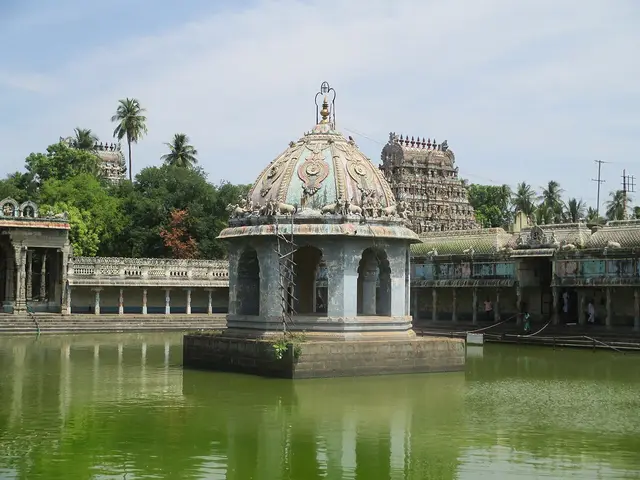
What to expect
Highlights
- Vaitheeswaran Koil — A living Shiva temple associated with Vaidyanathar and the Angaraka shrine; astrology businesses nearby are separate private services.
The healer-Shiva and Angaraka-navagraha temple base, a Naadi-astrology centre.
Live forecast loads in your browser.
Sun and moon are calculated for this location and shown in IST. Photography windows are the hour around sunrise and sunset; the sunset bearing is degrees clockwise from true north. Moon phase is accurate to about half a day.
Vaitheeswaran Koil is a living Shiva temple where Vaidyanathar is worshipped as healer and Angaraka is honoured in the Navagraha circuit. Come for temple worship, not a promise of medical cure or a compulsory astrology purchase. Darshan, remedial rituals and nearby palm-leaf readers are separate choices.
The district identifies the shrine with the Tevaram name Pullirukkuvelur and with Vaidyanathar, Thaiyalnayagi and Muthukumaraswami. Its Mars association shapes the busy Navagraha route.
Healing belongs to devotional belief and must not replace healthcare. Likewise, a reader outside the temple does not represent temple authority or guarantee an authentic manuscript.
Check the correct queue, dress modestly and establish every ritual or consultation price before paying.
For the visit itself, allow one to two hours. The best time is a quieter morning or evening session. Check the current darshan session. Keep worship and private astrology services distinct. Use licensed healthcare for illness; devotional practice is not treatment.
Entry: Ordinary darshan, paid rituals and private consultations are separate.
Between Mayiladuthurai and Sirkazhi with its own rail station.
If you need step-free access, contact the site before travelling. Ask about a level entrance, steps along the route, the nearest drop-off point, seating and accessible toilets.
Emergency numbers are verified against official government and state tourism sources. 112 works anywhere in India.
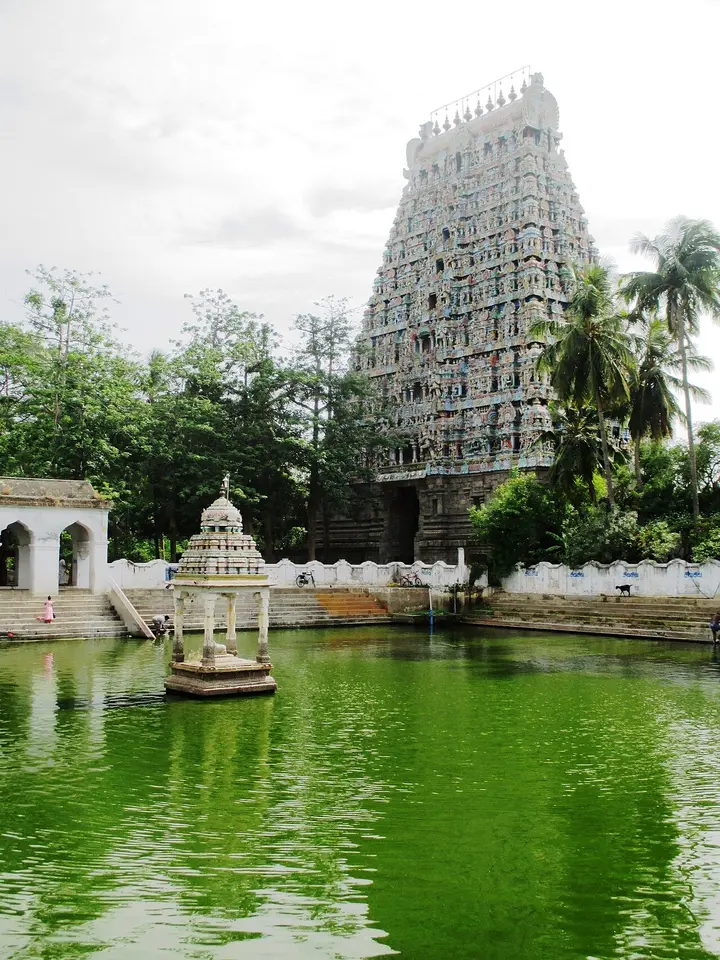 Featured: Mayuranathaswami Temple, Mayiladuthurai
The Kaveri-delta town base for the Mayuranathaswami temple and the surrounding navagraha and Chola shrines.
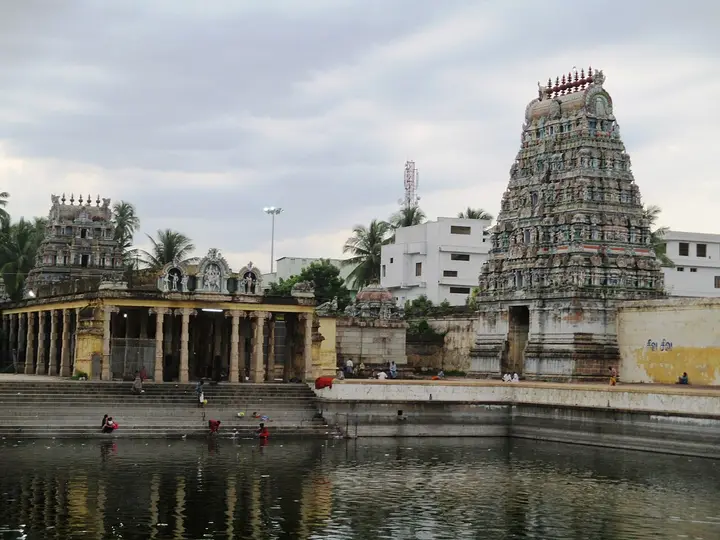 Featured: Sattainathar Temple, Sirkazhi
The base for the Sattainathar temple, Thiruvenkadu Budhan shrine and the northern delta beaches.
 Featured: Amritaghateswarar-Abirami Temple, Thirukadaiyur
The Tranquebar colonial-coast base for Fort Dansborg, the Masilamaninathar shore temple and the Danish churches.
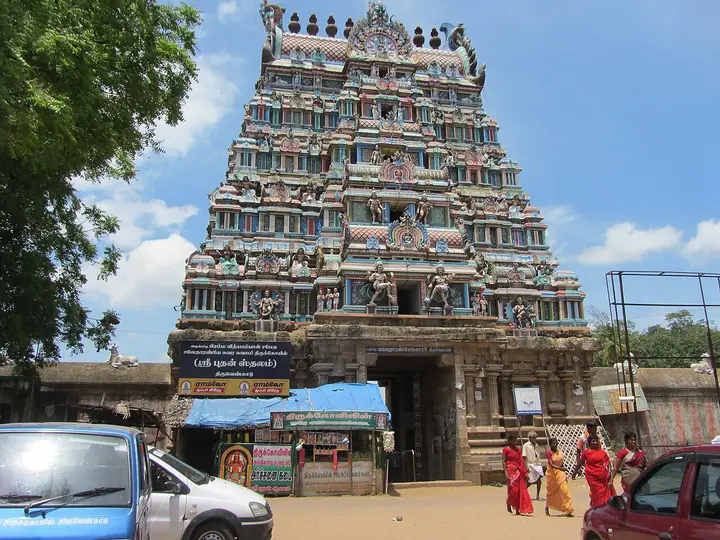 Featured: Swetharanyeswarar Temple, Thiruvenkadu
The ancient Kaveripoompattinam port base for the Poompuhar heritage, the Ketu navagraha temple and the beach.
Thirunangur area of the district.
Thirunagari area of the district.
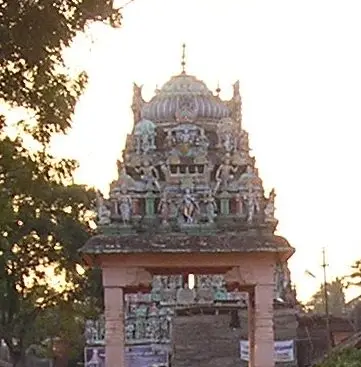 Featured: Parimala Ranganatha Perumal Temple, Thiruindalur
Thiruindalur area of the district.
Kuthalam area of the district.
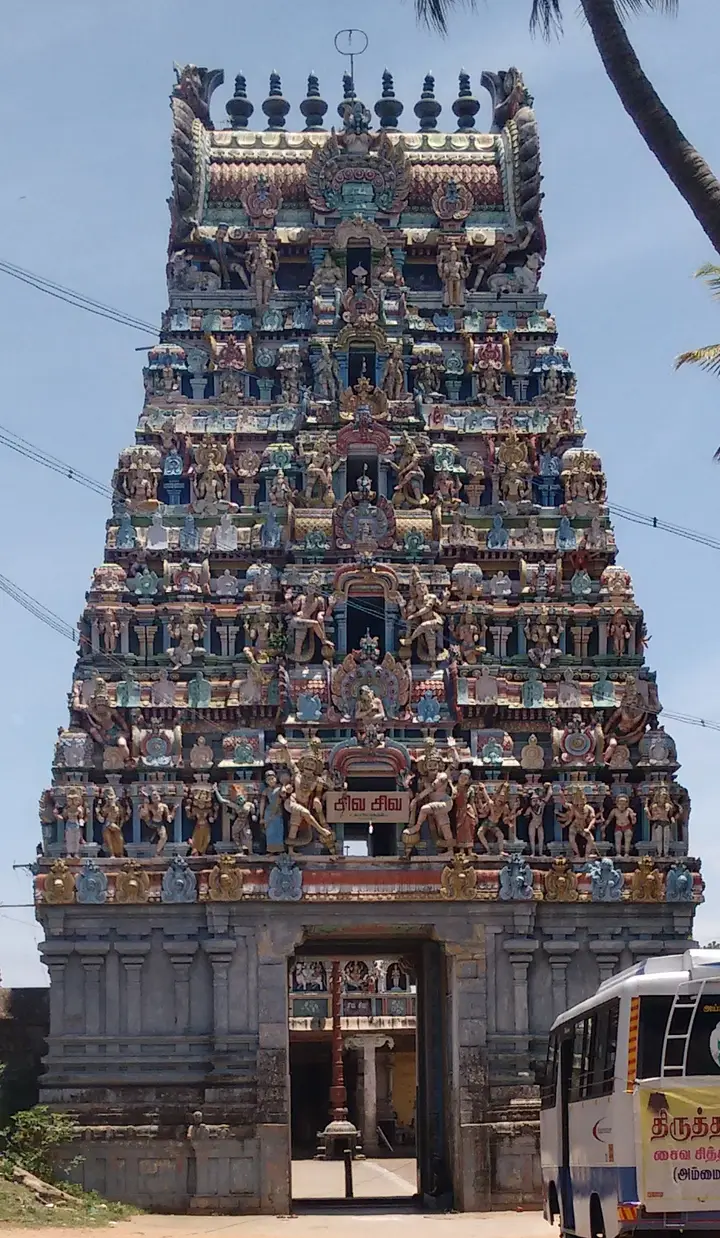 Featured: Sivalokanathar Temple, Tirupunkur (Thiruppungur)
Tirupunkur area of the district.
Thiruvelvikudi area of the district.
Thirukkurukavur area of the district.
Anandathandavapuram area of the district.
Nidur area of the district.
Ethirkolpadi area of the district.
Sembiyankandiyur area of the district.
Ananthamangalam area of the district.
Every verified place in Vaitheeswaran Koil — filter by what you’re after.
Verified places are being added. The category filters will fill in as approved stays, restaurants, experiences, sights, shops and nature listings go live.
List your placeThe best tourist places to visit in Vaitheeswaran Koil — temples, viewpoints, lakes, heritage and nature, each with a full guide, how to reach it and what to see nearby.
Roampedia is commission-free. Travellers discover your business, book directly and contact you through official details. Basic listings are free, while Gold and Platinum package upgrades can be requested from the owner dashboard after approval.
Written about Vaitheeswaran Koil itself — its history, its legends and the arguments about them.
Wider reading from Mayiladuthurai. The stories about Vaitheeswaran Koil itself are above.
A cluster of eleven Vishnu temples around Thirunangur village that together form part of the 108 Divya Desams glorified in the Nalayira Divya Prabandham. All eleven were sanctified by Tirumangai Alvar, and the oldest date to the reign of the Chola king Parantaka I. Each has a distinct presiding deity, from Gopalakrishnan at Thirukkavalampadi to Vaikuntanathan at Thiruvaikunda Vinnagaram. Every year in the Tamil month of Thai the processional deities of all eleven gather here for the spectacular Garuda Sevai festival.
A Shiva temple in Kuthalam town, about 12 km from Mayiladuthurai on the road to Kumbakonam, and one of the 276 Paadal Petra Sthalams praised in the Thevaram. It is the 154th Paadal Petra Sthalam and the 37th on the south bank of the Cauvery, where Shiva is worshipped as a self-manifested (Swayambu) deity. By legend the sage Bharatha performed a yagna here from which Parvathi emerged as a child, tying the site into the Thirumanancheri divine-wedding circuit.
A Shiva temple about midway between Mayiladuthurai and Kumbakonam, forming part of the sacred circuit that narrates the celestial wedding of Shiva and Parvathi. Its name reflects the belief that the wedding ceremony, including the yagna (velvi), was performed here, and the deity is worshipped as Kalyanasundareswarar (Manavaleswarar). It complements nearby Ethirkolpadi and Thirumanancheri, which mark other episodes of the same wedding legend.
Route-level itineraries and practical guides for the rest of the state.

Two days along the Nagapattinam–Mayiladuthurai coast — Velankanni’s basilica, Nagore’s dargah, Chola Shiva temples and the Danish fort at Tranquebar, in a workable route.
A sacred bathing ghat on the Cauvery at Mayiladuthurai that is the focus of the celebrated Thula Snanam pilgrimage, when devotees take a ritual dip during the Tamil month of Aippasi (Thula). Its most important day, Kadai Muzhukku (Mudavan Muzhukku), draws huge crowds who believe all sacred rivers converge here. The ghat adjoins the Mayuranathaswamy temple and is one of six Cauvery-bank sites regarded as equivalent to Kasi (Varanasi).
An archaeological site where in early 2006 a polished Neolithic stone celt engraved with four signs resembling the Indus script was discovered by a local schoolteacher. Epigraphist Iravatham Mahadevan saw it as strong evidence that Neolithic Tamil Nadu and the Indus Valley people may have shared a Dravidian language. Later ASI excavations yielded Megalithic/Iron Age pottery, urns and bowls dated between roughly 300 BCE and 100 CE.
No. Healing is a matter of faith and does not replace medical care.
No. Nearby readers are separate private services.
Top places to visit in Vaitheeswaran Koil include Vaitheeswaran Koil — each has a full guide with how to reach it and what to see nearby on this page.
November to February is the coolest, most comfortable season to visit Vaitheeswaran Koil and the rest of Tamil Nadu. April to June is very hot, and the October–December north-east monsoon brings the delta its main rains.
Photographs: raguleo (CC BY 3.0). Wikimedia Commons.