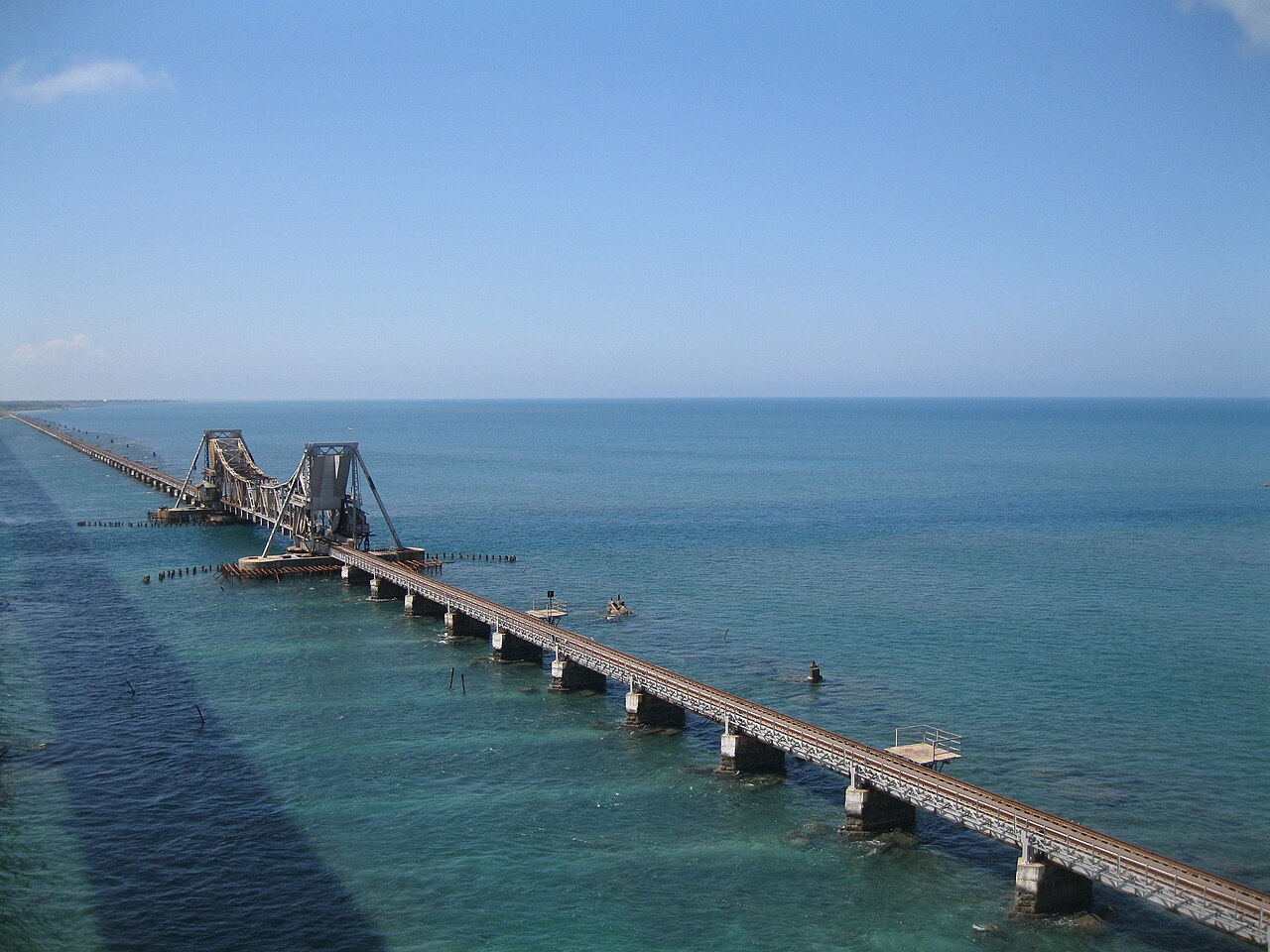
Opened in April 2025, this is India's first vertical-lift sea railway bridge, built alongside the century-old original Pamban Bridge to carry rail traffic to Rameswaram.
The story of New Pamban Bridge
For New Pamban Bridge, opened in April 2025, this is India's first vertical-lift sea railway bridge, built alongside the century-old original Pamban Bridge to carry rail traffic to Rameswaram. For New Pamban Bridge, the useful visit is built around the specific feature described here, not around promotional superlatives or facilities that have not been verified.
Approach New Pamban Bridge from Mandapam with enough daylight to identify the recognised entrance and return by the same lawful route. For New Pamban Bridge, check current opening, local transport and any permission at the source responsible for the site; an old listing cannot confirm what is operating today.
At New Pamban Bridge, look first for the feature that gives the site its identity, then place later repairs and present use around it. For New Pamban Bridge, stay on public ground, ask before photographing people or work, and do not climb masonry, enter an excavation or cross a barrier for a cleaner view.
For New Pamban Bridge, allow roughly an hour on site, then adjust for queues, walking and the return to Mandapam. For New Pamban Bridge, pair it only with nearby stops that leave a safe daylight margin, and verify food, toilets and accessible drop-off separately when those are essential.
Read the full history of New Pamban Bridge 258 more words
History
Opened in April 2025, this is India's first vertical-lift sea railway bridge, built alongside the century-old original Pamban Bridge to carry rail traffic to Rameswaram. This documented core is the safest starting point for understanding New Pamban Bridge. Dates, dynastic associations and superlatives repeated without a named inscription, conservation record or official interpretation should be treated cautiously rather than added as fact.
New Pamban Bridge also belongs to the history of Mandapam and the wider Ramanathapuram district. Its present condition reflects continuing use, repair, environmental exposure or changing settlement around it; the surviving place is not an unchanged remnant of one period.
A useful historical visit compares the defining feature described above with what is visible now. Notice materials, plan, landscape and present use, and allow a locked area, altered structure or living ritual to remain part of the honest account rather than filling the gap with an unsupported reconstruction.
Why visit
Visit New Pamban Bridge for the specific feature and local history described on this page, rather than as a generic stop in Ramanathapuram.
The most useful visit combines close observation at New Pamban Bridge with a realistic return plan through Mandapam; it does not depend on an unverified ticket, unrestricted access or a promised experience.
Its value is clearest when you give the place enough time to understand the feature named in its story instead of reducing the stop to a photograph.
The surrounding Mandapam context makes New Pamban Bridge practical to combine with verified local food, accommodation and visitor services while keeping the attraction itself in focus.