Sankarankovil is a major south-Tamil-Nadu pilgrimage and trading town shaped by the Sankaranarayanaswamy temple. This guide starts in the town centre at 9.1700730, 77.5353690 and keeps each excursion within a practical day-trip radius.
The page anchor was read directly from OSM town node 245582958 at 9.1700730, 77.5353690; it was neither typed from memory nor reconstructed from rounded coordinates.
Sankarankovil is a major south-Tamil-Nadu pilgrimage and trading town shaped by the Sankaranarayanaswamy temple. Its value lies in the relationship between living worship, ordinary streets and the wider landscape rather than in a single photo stop.
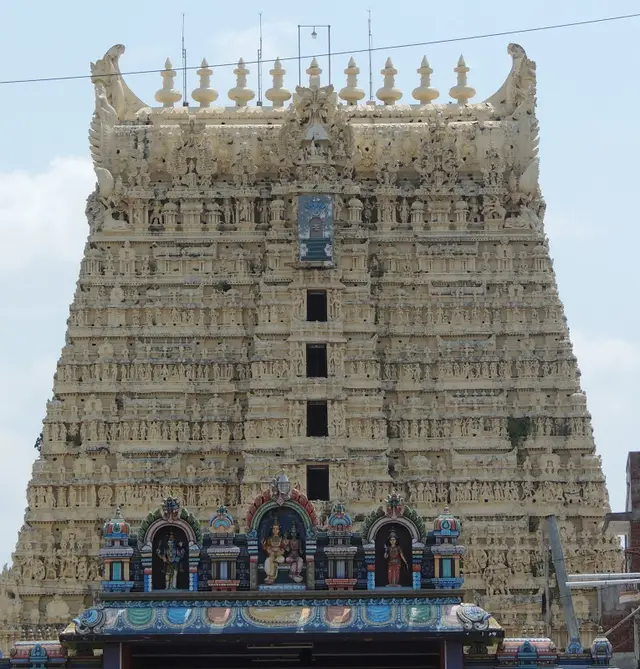
Sankaranarayanaswamy Temple is the first selected place. Its assignment was checked as part of the Sankarankovil itinerary before any road measurement was made.
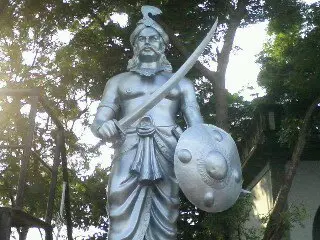
Puli Thevar Memorial Palace, Nerkattumseval is the second selected place. It is treated as a separate destination, not silently merged with the town centre.
Measured road results from the exact town anchor are 2.51 km / about 4 minutes to Sankaranarayanaswamy; 7.75 km / about 7 minutes to Puli Thevar Memorial. They describe routed vehicle distance, not permission, opening or pedestrian safety.
The temple’s Sankaranarayana image makes Shaiva–Vaishnava unity visible in a single form.
Pandya patronage is central to the monumental shrine’s recorded history.
Nerkattumseval preserves memory of Puli Thevar and eighteenth-century resistance to Company expansion.
The temple’s foundational serpent story and the sacred anthill earth are living devotional traditions.
Gomathi Amman’s penance is commemorated through ritual, not offered as archaeological evidence.
Adi Thapasu retells the revelation of Shiva and Vishnu as one; attend as worship rather than spectacle.
The best general window is November to February; Adi Thapasu is significant but substantially more crowded. Temple festivals can be rewarding, but access, traffic and queue conditions change substantially.
Active shrines set their own split worship hours. Confirm the current session before leaving and never infer that an open outer gate guarantees sanctum access.
Photography is permission-led. Reusable photographs on this page document the place and their licence; they do not grant a visitor permission inside a living shrine.
Eat, refuel and withdraw cash in town before a rural leg. Displayed businesses carry directions so a reader can see exactly where each one stands.
Accessibility must be checked doorway by doorway. A vehicle approach does not prove that thresholds, queues, toilets or the final worship route are step-free.
A good visit leaves time for one conversation: ask a priest, shopkeeper or resident how the local story is told, and accept that living traditions can have more than one version.
Legend & myth
The temple’s foundational serpent story and the sacred anthill earth are living devotional traditions.
Gomathi Amman’s penance is commemorated through ritual, not offered as archaeological evidence.
Adi Thapasu retells the revelation of Shiva and Vishnu as one; attend as worship rather than spectacle.