Government Archaeological Museum, Palayamkottai

Tamil Nadu's 12th district museum, opened in 1992 at Palayamkottai, displaying bronzes, stone sculptures, hero stones, coins, palm-leaf manuscripts and prehistoric tools including finds from Adichanallur.

G
Government Archaeological Museum, Palayamkottai
Place
Practical guide

Plan Government Archaeological Museum, Palayamkottai

Who's going?Tailor Government Archaeological Museum, Palayamkottai to your trip
Typemuseum
Nearest basePalayamkottai
DistrictTirunelveli
Best timeChoose a cooler daylight visit and…
Time neededAllow about one to two hours at…
Entry₹5
Places to visit6Listed businesses1

Government Archaeological Museum, Palayamkottai works best as a focused visit from Palayamkottai, with enough time to understand its defining feature and follow current access rules.

The story

Tamil Nadu's 12th district museum, opened in 1992 at Palayamkottai, displaying bronzes, stone sculptures, hero stones, coins, palm-leaf manuscripts and prehistoric tools including finds from Adichanallur. Its galleries and dioramas showcase the region's tribal cultures and Tirunelveli folk arts.

The story of Government Archaeological Museum, Palayamkottai

For Government Archaeological Museum, Palayamkottai, tamil Nadu's 12th district museum, opened in 1992 at Palayamkottai, displaying bronzes, stone sculptures, hero stones, coins, palm-leaf manuscripts and prehistoric tools including finds from Adichanallur. For Government Archaeological Museum, Palayamkottai, its galleries and dioramas showcase the region's tribal cultures and Tirunelveli folk arts. For Government Archaeological Museum, Palayamkottai, what survives on the ground may be fragmentary, fenced or under conservation, and the absence of a conventional visitor centre does not make restricted ground public.

Plan the last leg from Palayamkottai before committing to Government Archaeological Museum, Palayamkottai. For Government Archaeological Museum, Palayamkottai, arriving early enough to ask for directions and understand the visitor boundary is more useful than squeezing the site between distant stops or depending on an unverified closing time.

Use the surviving details at Government Archaeological Museum, Palayamkottai as evidence rather than forcing the site to match a dramatic online description. For Government Archaeological Museum, Palayamkottai, if the principal feature is inaccessible, an honest exterior visit is preferable to trespass or an invented account of what lies beyond the gate.

Understanding Government Archaeological Museum, Palayamkottai also means placing it within Tirunelveli: the attraction's identity comes from its own surviving feature, living use and local setting, not from borrowing the fame or story of a better-known site elsewhere in Tamil Nadu.

Leave enough time after Government Archaeological Museum, Palayamkottai for an unhurried return to Palayamkottai. For Government Archaeological Museum, Palayamkottai, seasonal conditions, festival traffic and rural mobile coverage can all extend a short outing, while unsupported assumptions about a café or ticket desk create avoidable problems.

Read the full history of Government Archaeological Museum, Palayamkottai 279 more words

History

Tamil Nadu's 12th district museum, opened in 1992 at Palayamkottai, displaying bronzes, stone sculptures, hero stones, coins, palm-leaf manuscripts and prehistoric tools including finds from Adichanallur. Its galleries and dioramas showcase the region's tribal cultures and Tirunelveli folk arts. This documented core is the safest starting point for understanding Government Archaeological Museum, Palayamkottai. Dates, dynastic associations and superlatives repeated without a named inscription, conservation record or official interpretation should be treated cautiously rather than added as fact.

Government Archaeological Museum, Palayamkottai also belongs to the history of Palayamkottai and the wider Tirunelveli district. Its present condition reflects continuing use, repair, environmental exposure or changing settlement around it; the surviving place is not an unchanged remnant of one period.

A useful historical visit compares the defining feature described above with what is visible now. Notice materials, plan, landscape and present use, and allow a locked area, altered structure or living ritual to remain part of the honest account rather than filling the gap with an unsupported reconstruction.

Why visit

Visit Government Archaeological Museum, Palayamkottai for the specific surviving archaeological evidence and its setting described on this page, rather than as a generic stop in Tirunelveli.

The most useful visit combines close observation at Government Archaeological Museum, Palayamkottai with a realistic return plan through Palayamkottai; it does not depend on an unverified ticket, unrestricted access or a promised experience.

Its value is clearest when you give the place enough time to understand the feature named in its story instead of reducing the stop to a photograph.

The surrounding Palayamkottai context makes Government Archaeological Museum, Palayamkottai practical to combine with verified local food, accommodation and visitor services while keeping the attraction itself in focus.
What to expect

Highlights

  • Read the defining surviving feature and physical setting of Government Archaeological Museum, Palayamkottai.
  • Understand how Government Archaeological Museum, Palayamkottai belongs to Palayamkottai and Tirunelveli rather than treating it as an isolated map pin.
  • Separate documented evidence from local tradition, later alteration and unsupported online claims.
  • Use the verified Palayamkottai inventory for practical trip support without assuming every listing is beside the entrance.
Getting there

How to visit

  • Use Palayamkottai as the practical base and confirm the recognised public approach to Government Archaeological Museum, Palayamkottai before departure.
  • Check the current opening, permission, worship or conservation arrangements with the authority responsible for Government Archaeological Museum, Palayamkottai.
  • Arrange the return journey before entering; do not assume app-cab coverage, lighting or a ticket counter at the site.
  • Allow the current visitor boundary, worship routine or conservation instruction to determine what can actually be seen.
Timing

Best time

Choose a cooler daylight visit and verify the current operating or worship session for Government Archaeological Museum, Palayamkottai; festivals, maintenance and weather can change access.

Weather in Government Archaeological Museum, PalayamkottaiSeasonal guide

Live forecast loads in your browser.

Today at Government Archaeological Museum, Palayamkottai
Sunrise6:06 am
Sunset6:02 pm
Golden hour best light5:02 pm–6:02 pm
Blue hour after sunset6:02 pm–6:27 pm
Sun sets toward compass bearingW · 261°
Moon tonight🌒 Waxing crescent · 24%

Sun and moon are calculated for this location and shown in IST. Photography windows are the hour around sunrise and sunset; the sunset bearing is degrees clockwise from true north. Moon phase is accurate to about half a day.

Visitor notes

  • Confirm the exact visitor entrance, current access and last safe return from Government Archaeological Museum, Palayamkottai on the day of travel.
  • Ask before photographing interiors, worship, residents or working areas at Government Archaeological Museum, Palayamkottai.
  • Treat the map as a locator and follow signs or staff directions to the currently open public entrance.
Safety

Good to know

  • Obey barriers and staff instructions at Government Archaeological Museum, Palayamkottai; do not climb structures, enter restricted ground or block worship and working access.
  • Use suitable footwear, carry water and keep enough daylight for the return to Palayamkottai.
  • Keep children close around traffic, water, drops, crowds and uneven surfaces; seek local advice where the visitor boundary is unclear.
Stay · eat · do · rent · see · shop

Stays, food & things to do near Government Archaeological Museum, Palayamkottai

Verified hotels, homestays, restaurants, experiences, sights, shops and rentals around Government Archaeological Museum, Palayamkottai — commission-free, with direct contact. Filter by what you need.

Top pick
Computer shop
Avalon Data Product
3.3 km · ~8 min by autoClosed now

Computer shop. 11D/13, Trivandrum Rd, 627002.

Directions Commission-freeView details

Book with the place itself. India’s cyber-crime coordination centre warned in April 2025 that convincing copies of hotel and pilgrimage booking sites are being pushed through sponsored search and social ads, taking payment for rooms the property never hears about. Every listing here links to the business’s own contact details and its own Google or Bing profile — we take no commission and sit in nobody’s payment path. If a booking page reached you through an ad, check the address bar against the property’s own site before you pay. Fraud can be reported on cybercrime.gov.in or on 1930.

Ranked guides

Top experiences around Government Archaeological Museum, Palayamkottai

5 more places around Palayamkottai. Open a guide to plan the visit and onward journey.

templeNellaiappar Temple

7.8 km · ~20 min by auto

A vast twin Shiva (Nellaiappar) and Parvati (Kanthimathi) temple beside the Thamirabarani, famed for its musical stone pillars and the Chain (Mani) Mandapam linking the two shrines.

wildlifeKoonthankulam Bird Sanctuary

14.9 km · ~25 min by cab

A Ramsar-listed sanctuary in Nanguneri taluk that is the largest breeding reserve for water birds in South India, protected by the local village community.

churchHoly Trinity Cathedral, Palayamkottai

3.5 km · ~9 min by auto

The 1826 CMS cathedral of the CSI Tirunelveli Diocese, locally called 'Oosi Gopuram', built by Rev. Rhenius and a landmark of the region's mission history.

heritageIruttu Kadai Halwa Shop

7.4 km · ~19 min by auto

The famed 'dark shop' halwa outlet opposite the Nellaiappar temple, established in 1900 and unchanged since, source of the wheat-ghee Tirunelveli halwa the city is known for.

templeUchishta Ganapathy Temple, Manimoortheeswaram

5.2 km · ~13 min by auto

An ancient Ganesha temple on the Thamirabarani at Manimoortheeswaram, about 2 km from Tirunelveli Junction and claimed to be the largest Vinayagar temple in Asia. Over 1,000 years old, it enshrines the rare Uchishta Ganapathy form along with 31 other forms of Ganesha.

Roampedia is commission-free — own or know a stay, eatery, guide or shop near Government Archaeological Museum, Palayamkottai? List it and it appears here once verified.

Add a nearby business
Before you go

Government Archaeological Museum, Palayamkottai — at a glance

Timings10:00 AM-5:00 PM; closed Fridays and second Saturdays
Best timeOctober to March
Entry price
Indian adult
₹5

Government monuments, museums and forest reserves in India often charge foreign visitors more. We have not verified whether this site does — ask at the counter.

Fees change without notice. Check the current rate at the counter.

Entry: A small museum admission charge applies

Festivals: Government Archaeological Museum, Palayamkottai does not have a reliably documented fixed public festival in the source record. Plan around current opening, weather and local-event notices instead of travelling for an assumed celebration.

Photography: Photography rules can change with worship, conservation, security and private activity. Follow signs and ask before photographing interiors, ceremonies, collections or identifiable people at Government Archaeological Museum, Palayamkottai.

Parking: Use the museum's designated parking or a lawful public space nearby, and keep its entrance and emergency access clear.

Getting here

How to reach Government Archaeological Museum, Palayamkottai

  • ✈︎ By air Use the airport serving Tirunelveli and complete the journey to Palayamkottai by road or rail; verify the transfer time before booking a same-day visit to Government Archaeological Museum, Palayamkottai.
  • 🚆︎ By train Use the practical railhead for Palayamkottai, then confirm the final local-road connection to Government Archaeological Museum, Palayamkottai; the geographically nearest station may not have the most useful service.
  • 🚗︎ By road Travel to Palayamkottai, then follow the map link to Government Archaeological Museum, Palayamkottai. Use the museum's public visitor entrance and allow time for its ticketing and security procedure.
  • 🚌︎ By bus Check current TNSTC or local-bus service to Palayamkottai and ask for the correct stop for Government Archaeological Museum, Palayamkottai. Confirm the last usable return before starting the visit.
Getting around

Getting around Government Archaeological Museum, Palayamkottai

Palayamkottai is the practical movement base. Use walking, an auto-rickshaw, a locally arranged taxi or current public transport according to distance, and agree the return plan before entering Government Archaeological Museum, Palayamkottai.

Online taxis: App-cab availability can change by time and locality. Check the live Uber or Ola app before relying on a pickup at Government Archaeological Museum, Palayamkottai, and keep the local bus or auto-rickshaw option as a fallback.

Do

Things to do

  • Identify the feature that gives Government Archaeological Museum, Palayamkottai its visitor value.
  • Read the site in relation to Palayamkottai and Tirunelveli.
  • Distinguish documented history from living tradition and later alteration.
  • Combine it only with genuinely nearby stops that preserve a safe return margin.
  • Pause at the principal viewpoint, shrine, exhibit or surviving feature instead of treating Government Archaeological Museum, Palayamkottai as a drive-by photo stop.
Plan

Good to know

  • Save the route offline before leaving Palayamkottai.
  • Carry water and sun or rain protection.
  • Accept an exterior-only visit when current access does not permit entry.
  • Keep identification, personal medication and enough cash for local transport.
Facilities

On site

  • Ask at Government Archaeological Museum, Palayamkottai's reception for toilets, drinking water, seating and accessibility assistance.
  • Food and drink should remain outside galleries unless the museum explicitly permits them; plan the meal in Palayamkottai.
  • Use the public reception for tickets and visitor information, and follow staff instructions for bags, cameras and gallery access.
Stay safe

Safety

  • Follow current site, worship and security instructions.
  • Do not cross barriers, climb structures or enter unstable, private or restricted ground.
  • Keep enough daylight and transport margin for the return to Palayamkottai.
Getting around Government Archaeological Museum, Palayamkottai

If you need step-free access, contact the site before travelling. Ask about a level entrance, steps along the route, the nearest drop-off point, seating and accessible toilets.

If you need help at Government Archaeological Museum, Palayamkottai
112All emergencies (police · fire · medical)The single number to call in any emergency (ERSS).

Emergency numbers are verified against official government and state tourism sources. 112 works anywhere in India.

Eat nearby

What to eat in Palayamkottai

Palayamkottai is the sensible meal base for a visit to Government Archaeological Museum, Palayamkottai. These are regional dishes to look for, not claims that food is sold at the attraction; check current opening hours and dietary requirements directly.

Explore food in Palayamkottai →
01

Fresh Tamil tiffin

For breakfast or an early supper, choose idli, pongal, vadai or dosai cooked to order at a busy local dining room.

02

Tamil Nadu meals

A rice meal with sambar, kuzhambu, vegetables, rasam and curd is the most dependable midday option; arrive before the lunch service finishes.

03

Tea, coffee and a fresh snack

Use the nearest town for filter coffee or tea with a freshly fried or baked snack, especially before travelling to a rural site with no dependable food counter.

Nearby

What’s near Government Archaeological Museum, Palayamkottai

churchHoly Trinity Cathedral, Palayamkottai

The 1826 CMS cathedral of the CSI Tirunelveli Diocese, locally called 'Oosi Gopuram', built by Rev. Rhenius and a landmark of the region's mission history.

3.5 km · ~9 min by auto · straight line
templeUchishta Ganapathy Temple, Manimoortheeswaram

An ancient Ganesha temple on the Thamirabarani at Manimoortheeswaram, about 2 km from Tirunelveli Junction and claimed to be the largest Vinayagar temple in Asia. Over 1,000 years old, it enshrines the rare Uchishta Ganapathy form along with 31 other forms of Ganesha.

5.2 km · ~13 min by auto · straight line
heritageIruttu Kadai Halwa Shop

The famed 'dark shop' halwa outlet opposite the Nellaiappar temple, established in 1900 and unchanged since, source of the wheat-ghee Tirunelveli halwa the city is known for.

7.4 km · ~19 min by auto · straight line
templeNellaiappar Temple

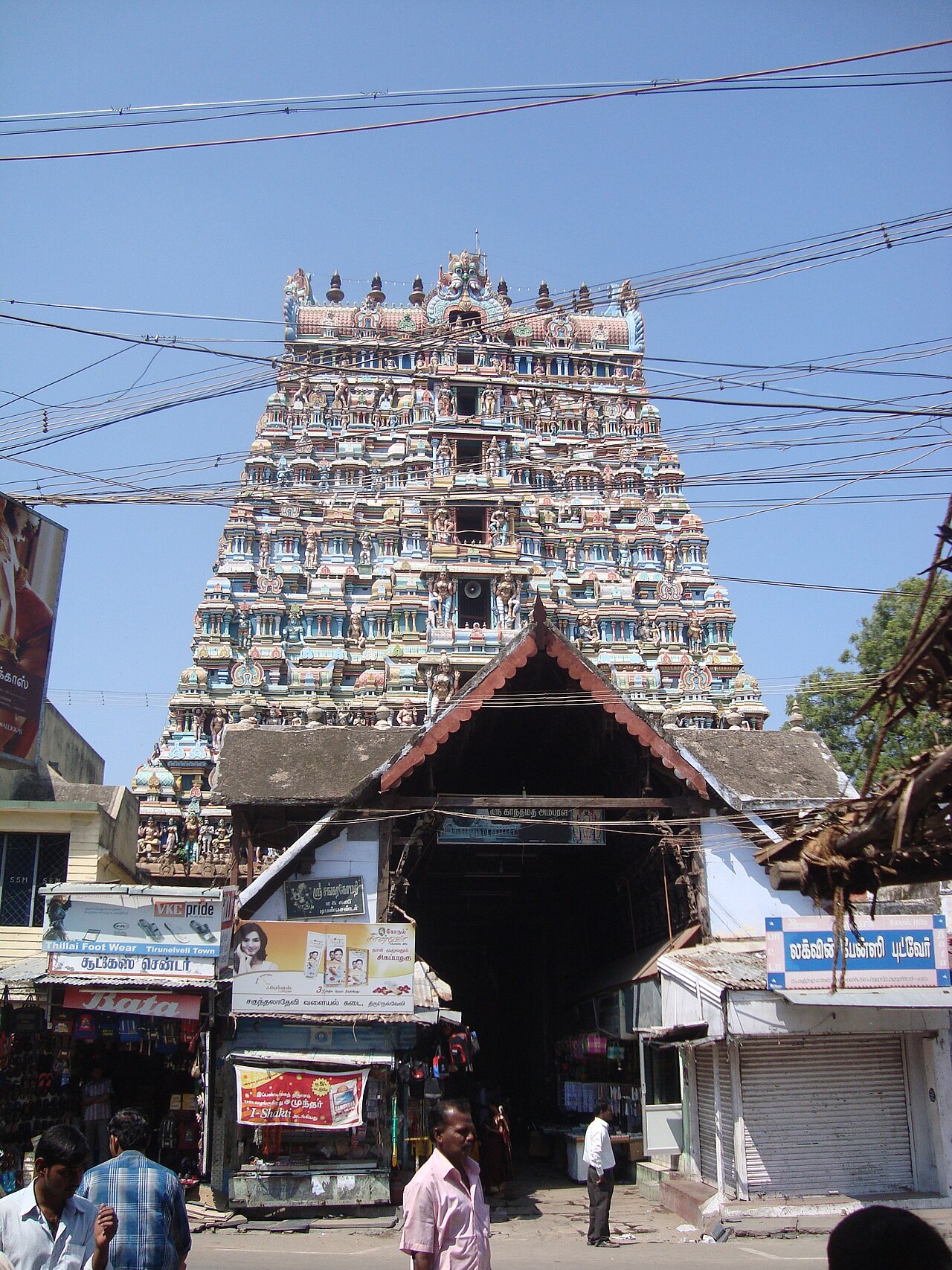
A vast twin Shiva (Nellaiappar) and Parvati (Kanthimathi) temple beside the Thamirabarani, famed for its musical stone pillars and the Chain (Mani) Mandapam linking the two shrines.

7.8 km · ~20 min by auto · straight line
wildlifeKoonthankulam Bird Sanctuary

A Ramsar-listed sanctuary in Nanguneri taluk that is the largest breeding reserve for water birds in South India, protected by the local village community.

14.9 km · ~25 min by cab · straight line
heritagePattamadai

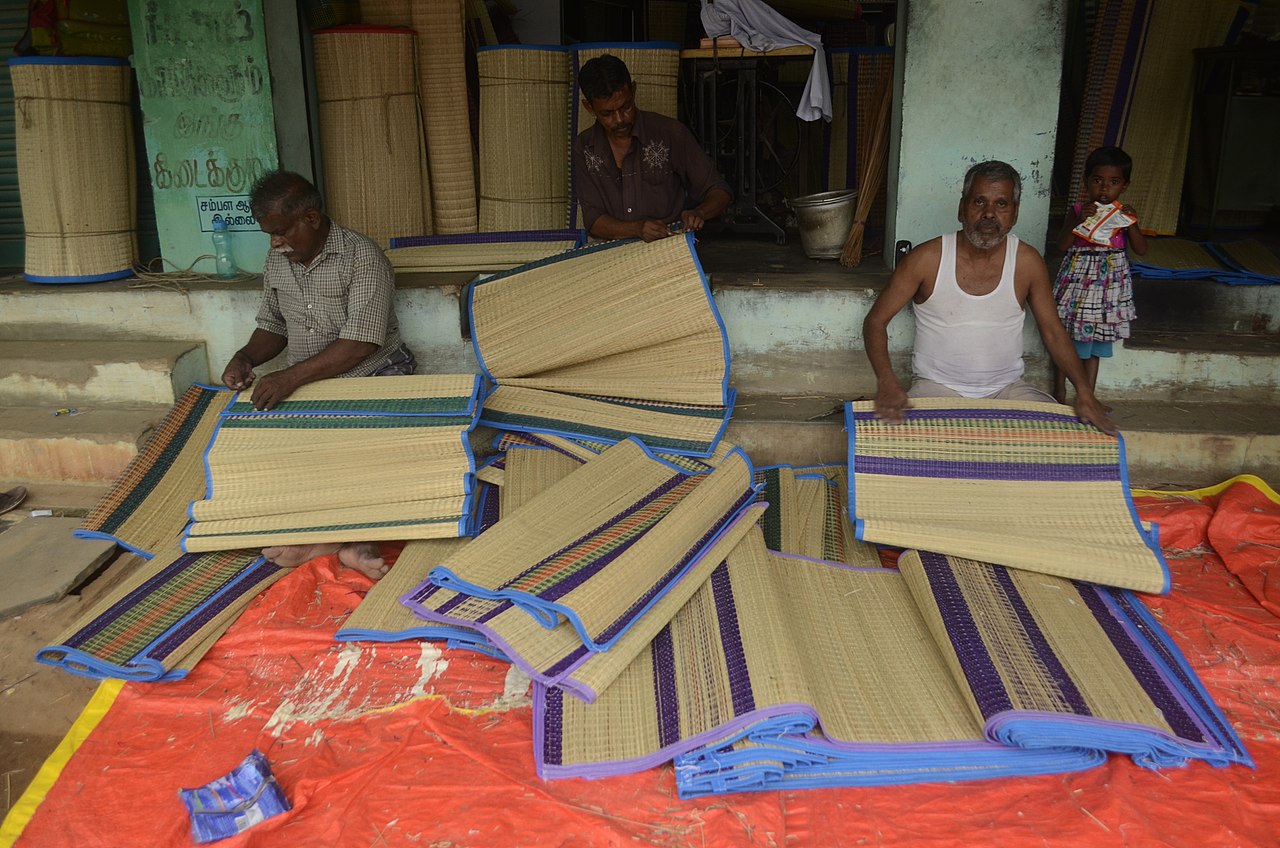
A town on the Thamirabarani famed for the Pattamadai pai, a superfine korai-grass mat woven so tightly it can be folded like cloth, a GI-tagged handicraft once presented to royalty. The riverbank village is the traditional centre of this centuries-old silk-mat weaving craft.

20.0 km · ~33 min by cab · straight line
templeBhaktavatsala Perumal Temple, Cheranmahadevi

A 12th-century Pandya Vishnu temple on the banks of the Thamirabarani at Cheranmahadevi, noted for its carved mandapams.

22.8 km · ~38 min by cab · straight line
templeCheranmahadevi Kailasanathar (Ammainathar) Temple

A Shiva temple on the right bank of the Thamirabarani, the second of the nine Nava Kailasam temples strung along the river.

23.0 km · ~38 min by cab · straight line
A
Adithavarneswarar Temple, Melaseval
Place
templeAdithavarneswarar Temple, Melaseval

An old Shiva temple at Melaseval village on the Ambasamudram road, standing near the larger Navaneethakrishnan temple. It is one of the Saivite shrines of the Thamirabarani belt west of Tirunelveli.

23.2 km · ~39 min by cab · straight line
N
Navaneethakrishnan Temple, Melaseval
Place
templeNavaneethakrishnan Temple, Melaseval

A roughly 700-year-old Vishnu temple on the Thamirabarani about 16 km west of Tirunelveli, built under the Travancore Samasthanam. Its moolavar is a rare standing Krishna holding butter in both palms, and the maha mandapam walls carry over 40 carvings from the Ramayana, Mahabharata and Bhagavata.

23.5 km · ~39 min by cab · straight line
templeKrishnapuram Venkatachalapathy Temple

A 16th-century Nayak-era Vishnu temple renowned for its near life-size sculpted pillar figures, some of which produce musical notes when struck.

26.3 km · ~44 min by cab · straight line
templeVanamamalai Perumal Temple

A 108 Divya Desam Vishnu temple at Nanguneri, one of the few where the deity receives a daily oil/ghee ablution, revered in the Nalayira Divya Prabandham hymns of Nammalvar.

26.8 km · ~45 min by cab · straight line

All 6 places to visit in Palayamkottai →

On the map

Where Government Archaeological Museum, Palayamkottai is

Good to know

Government Archaeological Museum, Palayamkottai — frequently asked

What should I verify before visiting Government Archaeological Museum, Palayamkottai?

Confirm the current public entrance, opening session, permission or ticket rule and return transport from Palayamkottai. Site management and local notices take priority over an undated listing.

How much time should I allow for Government Archaeological Museum, Palayamkottai?

Allow about an hour at the site, plus the complete approach, any worship or security queue and a comfortable daylight margin for returning to Palayamkottai.

What is significant about Government Archaeological Museum, Palayamkottai?

Tamil Nadu's 12th district museum, opened in 1992 at Palayamkottai, displaying bronzes, stone sculptures, hero stones, coins, palm-leaf manuscripts and prehistoric tools including finds from Adichanallur. Its galleries and dioramas showcase the region's tribal cultures and Tirunelveli folk arts.

Can I photograph Government Archaeological Museum, Palayamkottai?

Do not assume that every interior, ceremony, resident, object or protected area may be photographed. Follow current signs and ask the responsible staff or worship authority before taking pictures.

Is Government Archaeological Museum, Palayamkottai accessible without steps?

A vehicle reaching the mapped point does not prove a step-free visit. Confirm the actual entrance, surface, gradients, thresholds, seating and toilet access before travelling.

When is the best time to visit Government Archaeological Museum, Palayamkottai?

Choose a cooler daylight visit and verify the current operating or worship session for Government Archaeological Museum, Palayamkottai; festivals, maintenance and weather can change access.

What are the entry fee and timings at Government Archaeological Museum, Palayamkottai?

Entry: A small museum admission charge applies. Timings: 10:00 AM-5:00 PM; closed Fridays and second Saturdays. The rupee figure quoted is the Indian adult rate. Government monuments, museums and forest reserves in India often charge foreign visitors more, and we have not verified whether this site does.

How do I reach Government Archaeological Museum, Palayamkottai?

Use Palayamkottai as the practical base and confirm the recognised public approach to Government Archaeological Museum, Palayamkottai before departure. Check the current opening, permission, worship or conservation arrangements with the authority responsible for Government Archaeological Museum, Palayamkottai. Arrange the return journey before entering; do not assume app-cab coverage, lighting or a ticket counter at the site. Allow the current visitor boundary, worship routine or conservation instruction to determine what can actually be seen.

How much time do I need for Government Archaeological Museum, Palayamkottai?

Allow about one to two hours at Government Archaeological Museum, Palayamkottai, plus the complete approach, any queue and the return to Palayamkottai.

What else is near Government Archaeological Museum, Palayamkottai?

Nearby you can pair Holy Trinity Cathedral, Palayamkottai (3.5 km), Uchishta Ganapathy Temple, Manimoortheeswaram (5.2 km), Iruttu Kadai Halwa Shop (7.4 km), Nellaiappar Temple (7.8 km).

What should I know before visiting Government Archaeological Museum, Palayamkottai?

Obey barriers and staff instructions at Government Archaeological Museum, Palayamkottai; do not climb structures, enter restricted ground or block worship and working access. Use suitable footwear, carry water and keep enough daylight for the return to Palayamkottai. Keep children close around traffic, water, drops, crowds and uneven surfaces; seek local advice where the visitor boundary is unclear.

Read before you go

Government Archaeological Museum, Palayamkottai guides, stories & itineraries

Stories & history of Government Archaeological Museum, Palayamkottai

Written about Government Archaeological Museum, Palayamkottai itself — its history, its legends and the arguments about them.

Around Palayamkottai

These reads cover nearby destinations, each with its own arrival point and visit arrangements.

Tamil Nadu-wide guides & itineraries

Route-level itineraries and practical guides for the rest of Tamil Nadu.

See all 17 Tirunelveli guides & stories →