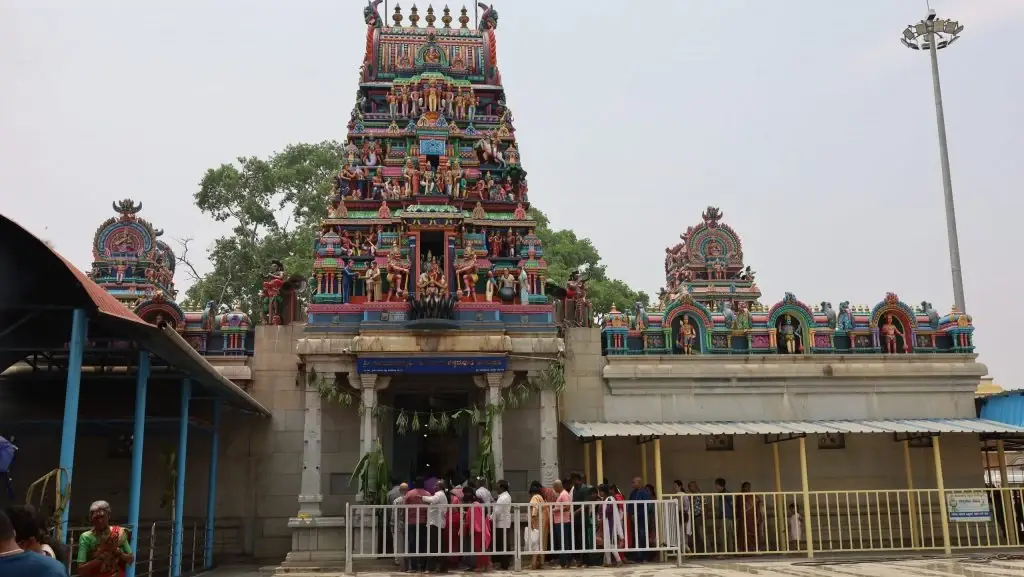
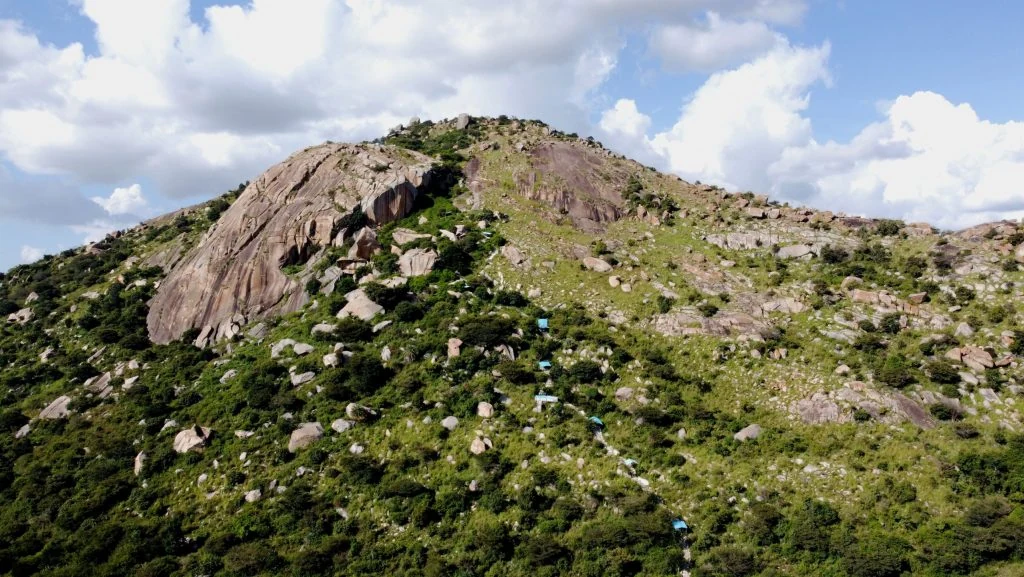
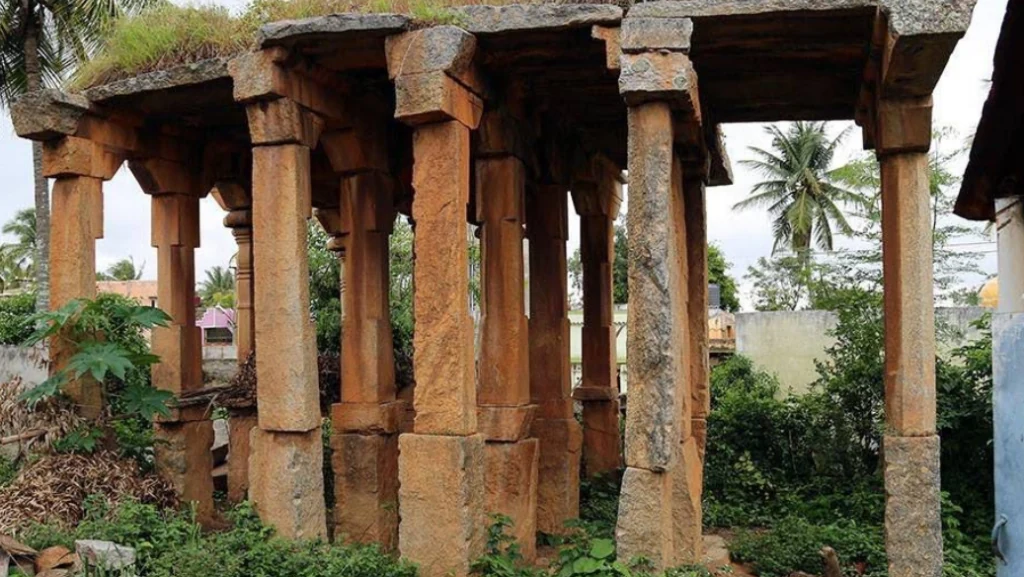
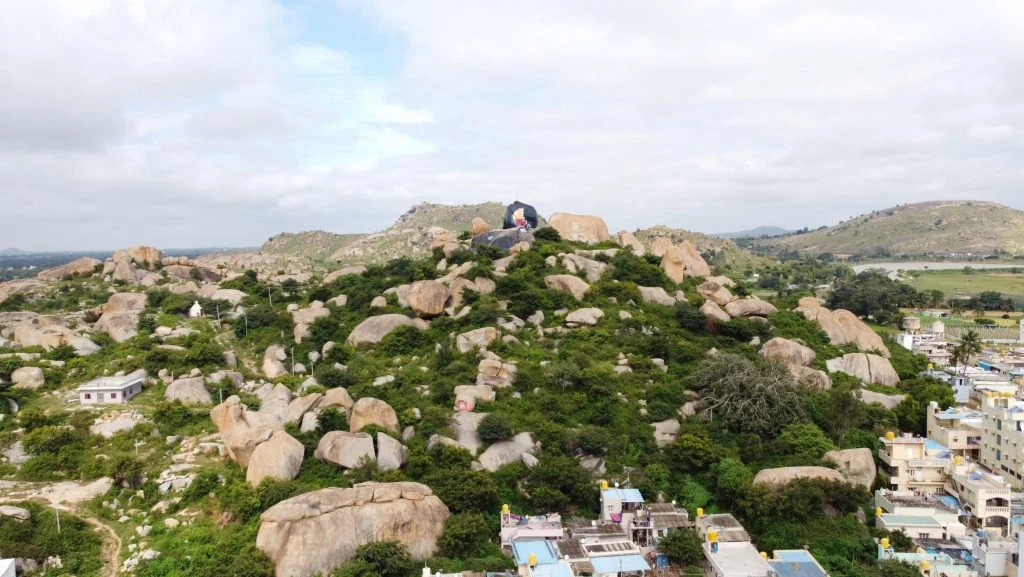
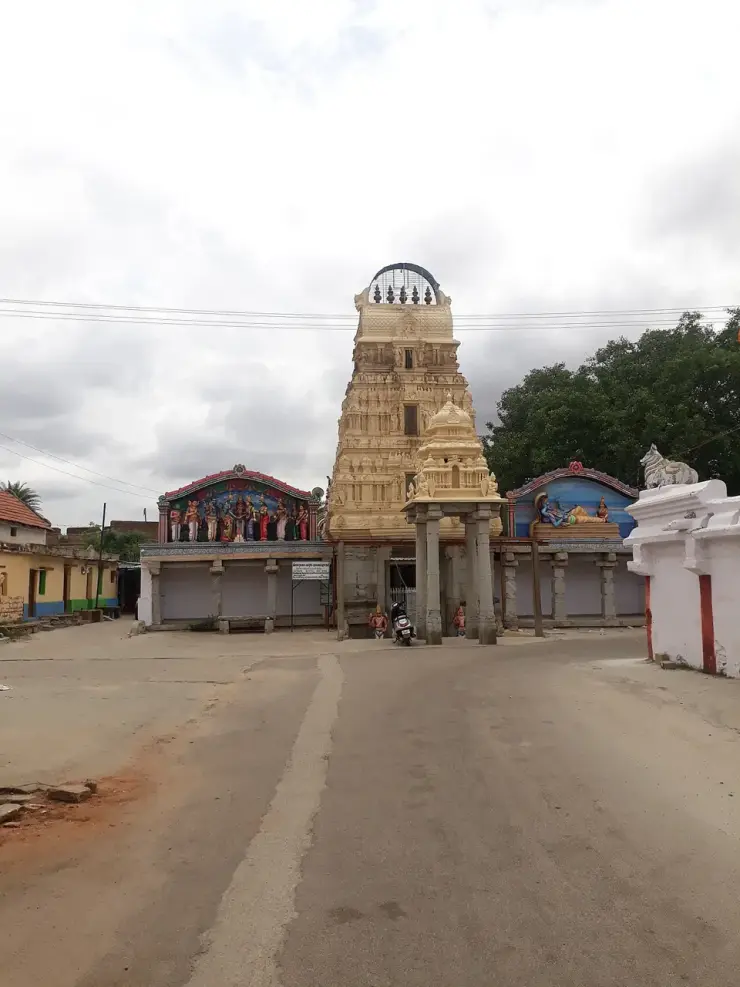
Sri Shanimahathmaswamy Temple stands near Chikka Madhure, also identified with Kanaswadi, in Doddaballapura taluk. It is an active regional pilgrimage centre where Saturday worship, oil lamps and the annual chariot procession shape the visitor experience.
The story of Shanimahathma Temple, Chikka Madhure
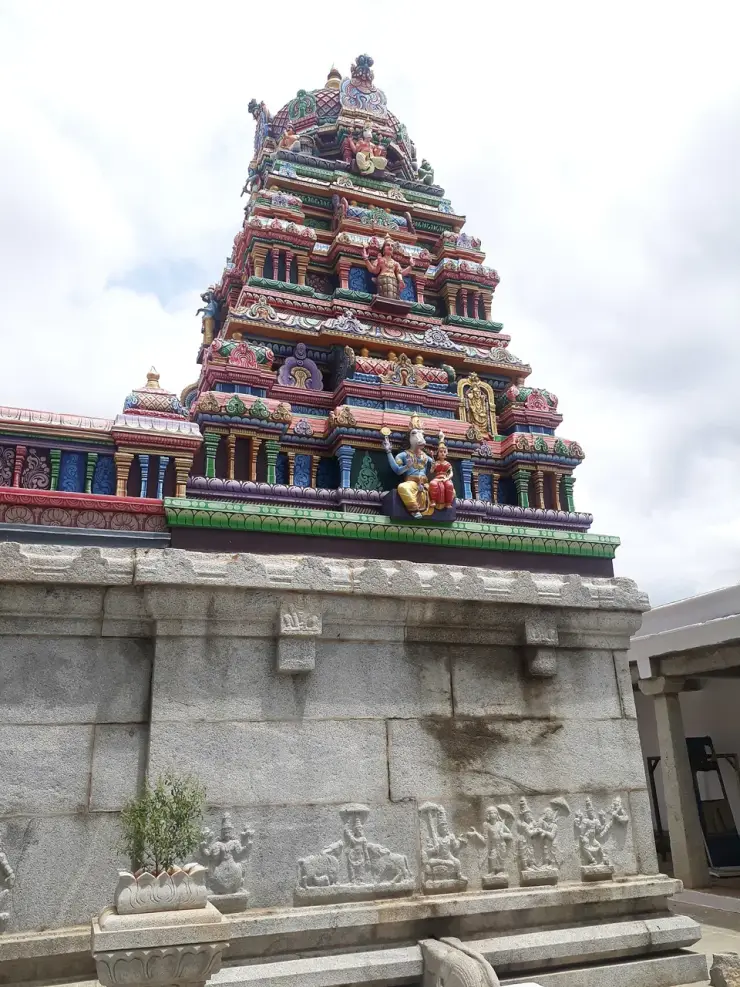
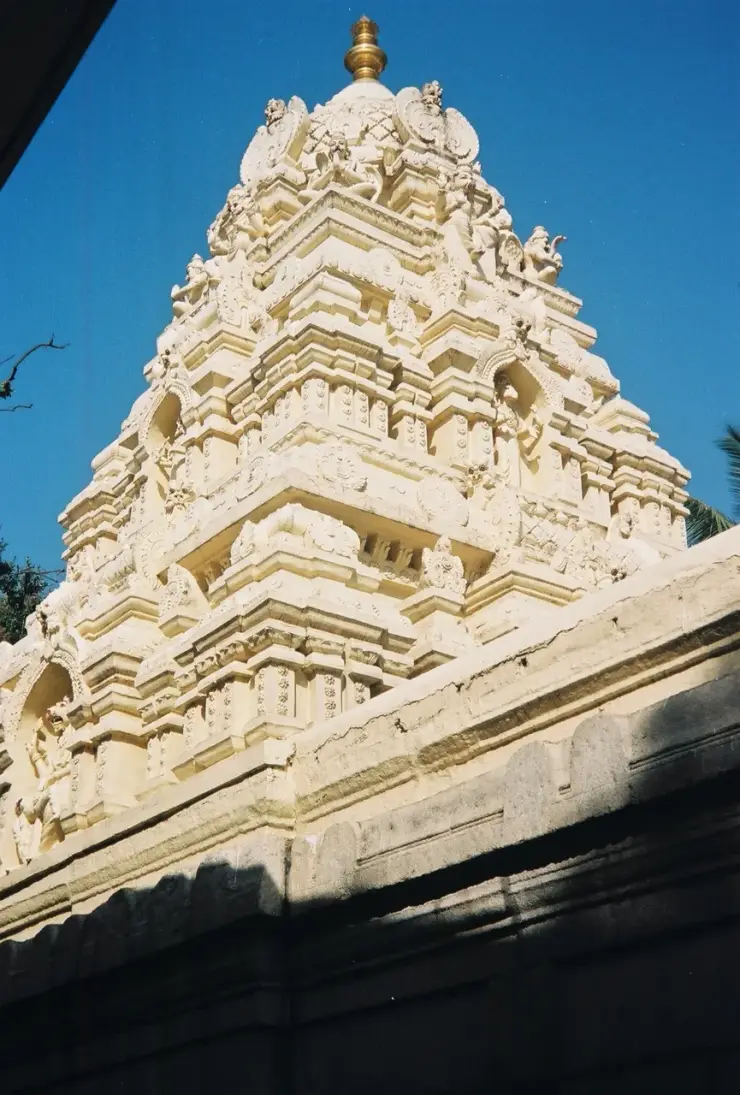
Bengaluru Rural district administration identifies the deity as Shani, one of the navagrahas worshipped in Hindu tradition, and credits the temple’s construction to a local farmer named Ganga Hanumaiah. Its gopura and sculptural programme give the approach a recognisable South Indian temple form, but worship remains the reason most people come.
A characteristic offering described by the district is ellu batti: black sesame tied in cloth, dipped in gingelly oil and lit in the designated fireplace. Devotees understand Shani worship as a way of seeking relief from burdens and obstacles. That belief should be reported as faith and practice, never as a guaranteed result promised to visitors.
Saturday is the important weekly day, and the Saturdays of Shravana draw especially large numbers. The annual rathotsava takes the deity in procession around the neighbouring area. On those days traffic, parking, queues, hot paving and access to the inner shrine can differ markedly from an ordinary weekday.
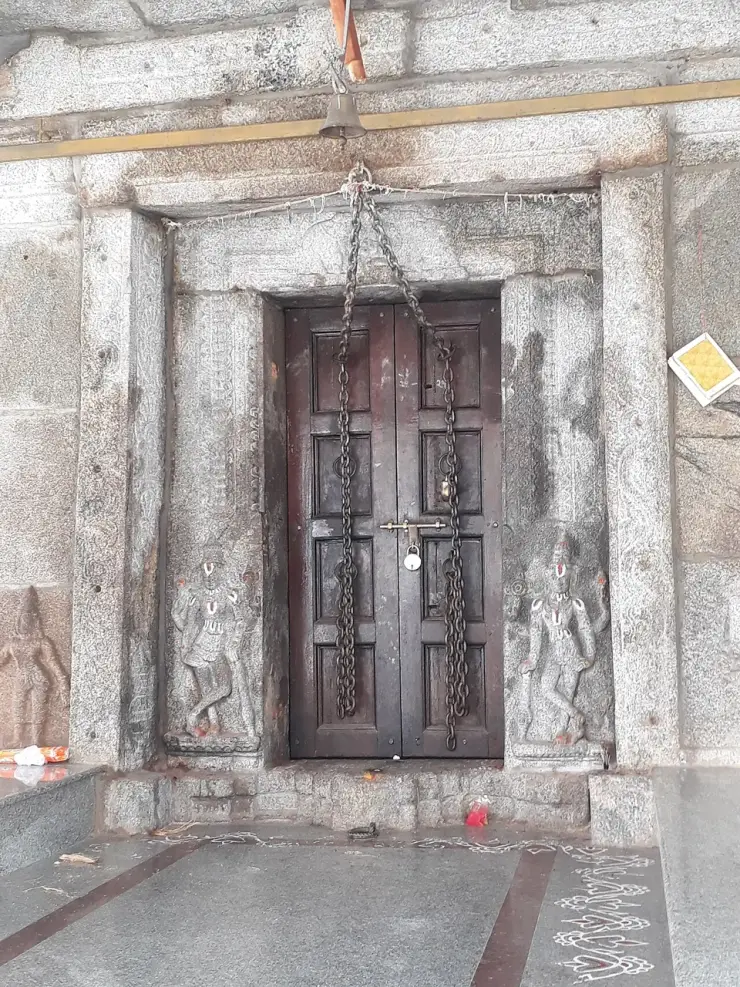
Choose the day deliberately. A weekday allows a quieter architectural and devotional visit; a Saturday offers the temple’s fuller public rhythm but demands more time. Follow the queue, use only authorised lamp areas, keep loose clothing away from flames and ask before photographing either the sanctum or devotees.
Tradition and living practice
Ellu batti lamps use black sesame wrapped in cloth and gingelly oil; light offerings only where temple staff direct.
Saturdays, especially in Shravana, are major worship days. The annual chariot procession brings the deity through the surrounding area.
History
The official district page credits local farmer Ganga Hanumaiah with building the temple.
The complex has a gopura with sculptural decoration described by the district as Dravidian or South Indian in form.
No secure construction year is supplied by the official record, so the page does not invent one.
Why visit
Understand a distinctive, living form of Shani worship.
Observe the temple gopura and sculpture at an unhurried pace.
Experience the Saturday pilgrimage rhythm when prepared for crowds.
Visit the nearby lake edge only from a lawful public point and as a separate stop.