What to expect
Highlights
- The finely carved single-cella temple.
- The riverside Tungabhadra setting.
- The early inscriptions naming Basavanna.
The Mukteshwara Temple at Chaudayyadanapura is a finely wrought single-cella Kalyani Chalukya temple of the 11th–12th centuries on the Tungabhadra.

Check entry arrangements. Ask temple staff about visitor entry, dress requirements and access to the inner shrine before you travel, especially if you are visiting as a non-Hindu.
Dress respectfully and follow the institution’s admission and photography rules.
Its inscriptions carry among the earliest references to Basavanna, making it a landmark in the history of Veerashaivism.
Road km to Haveri; ghat roads and traffic vary — allow extra.
October to February; morning light.
Live forecast loads in your browser.
Sun and moon are calculated for this location and shown in IST. Photography windows are the hour around sunrise and sunset; the sunset bearing is degrees clockwise from true north. Moon phase is accurate to about half a day.
Verified hotels, homestays, restaurants, experiences, sights, shops and rentals around Mukteshwara Temple, Chaudayyadanapura — commission-free, with direct contact. Filter by what you need.
Verified places are being added. The category filters will fill in as approved stays, restaurants, experiences, sights, shops and nature listings go live.
List your placeOne more place around Ranebennur worth a day of its own.

16.9 km · ~28 min by cab
A sanctuary of open scrub and grassland near Ranebennur, declared in 1974, with a large population of blackbuck (over six thousand) — historically a Great Indian Bustard habitat, and home to wolf, fox and pangolin.
Roampedia is commission-free — own or know a stay, eatery, guide or shop near Mukteshwara Temple, Chaudayyadanapura? List it and it appears here once verified.
Add a nearby businessEntry: Free
At Chaudayyadanapura in Ranebennur taluk near Guttal; a car is best
If you are travelling by bus or ferry, check the return service with the operator before setting out. Leave time to reach the stop or jetty after your visit.
Ask at the bus stand for the time of the last service back, not the next one. If you miss it, an auto or app cab is the fallback — agree the fare before you get in.
If you need step-free access, contact the site before travelling. Ask about a level entrance, steps along the route, the nearest drop-off point, seating and accessible toilets.
Emergency numbers are verified against official government and state tourism sources. 112 works anywhere in India.
A sanctuary of open scrub and grassland near Ranebennur, declared in 1974, with a large population of blackbuck (over six thousand) — historically a Great Indian Bustard habitat, and home to wolf, fox and pangolin.
16.9 km · ~28 min by cab · straight line
The trading town of Byadgi, home to the nationally famous GI-tagged Byadgi red chilli — its wholesale chilli market is one of the largest in India, a colourful sensory and agri-heritage draw rather than a monument.
17.2 km · ~29 min by cab · straight line
A riverside Western Chalukya Shiva temple at Galaganatha (old Palluni) on the Tungabhadra, with a pyramidal basement and a 1080 CE grant inscription naming Vikramaditya VI and the master sculptor Jakanachari.
18.3 km · ~30 min by cab · straight line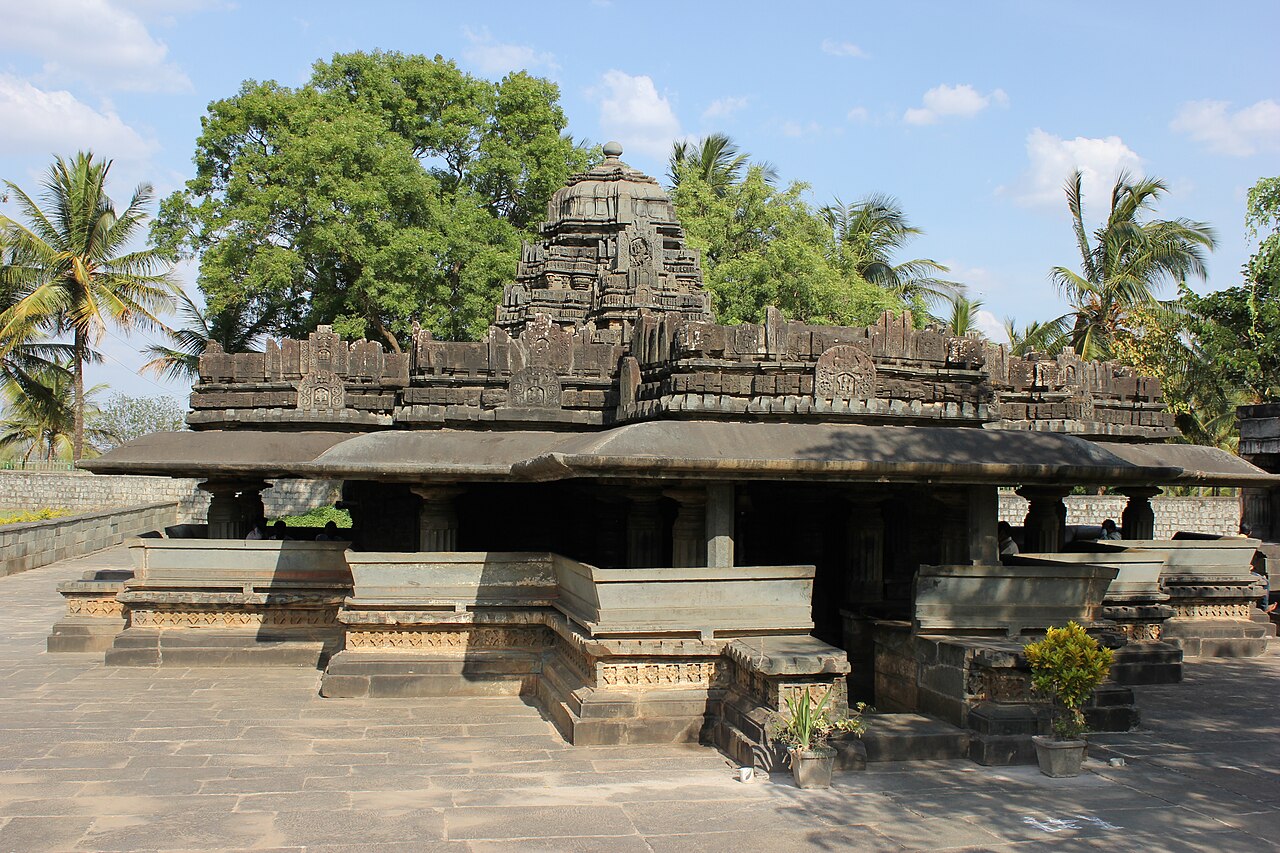
An ornate Western Chalukya temple in Haveri town consecrated in the late 11th century, with dated inscriptions of 1087 and 1108 CE — unusually west-facing, and celebrated for the loose deity sculptures collected around it.
23.3 km · ~39 min by cab · straight line
The Adikeshava temple and Kanaka Guru Peetha at Kaginele in Byadgi taluk — the home shrine of the 16th-century saint-poet Kanakadasa, whose ankita (signature) was "Kaginele Adikeshava"; a major pilgrimage centre with the peetha built in 1992.
29.9 km · ~50 min by cab · straight line
The Someshwara and Veerabhadra temples of Abalur (Ablur) in Hirekerur taluk, site of the Ekantada Ramayya legend — their inscriptions are key sources on the medieval Shaiva–Jain conflict and the rise of early Veerashaivism.
36.4 km · ~61 min by cab · straight line
The former princely seat of the Savanur Nawabs, with surviving fort gates and walls — and, at the Doddahunase Matha nearby, ancient baobab trees of enormous girth, a rare botanical heritage of the town.
39.0 km · ~65 min by cab · straight line
An 11th-century trikuta (three-shrine) Kadamba-origin temple elaborated by the Kalyani Chalukyas at Rattihalli on the Kumudvati river, once capital of the Nurumbad Kadamba sub-line.
40.3 km · ~67 min by cab · straight line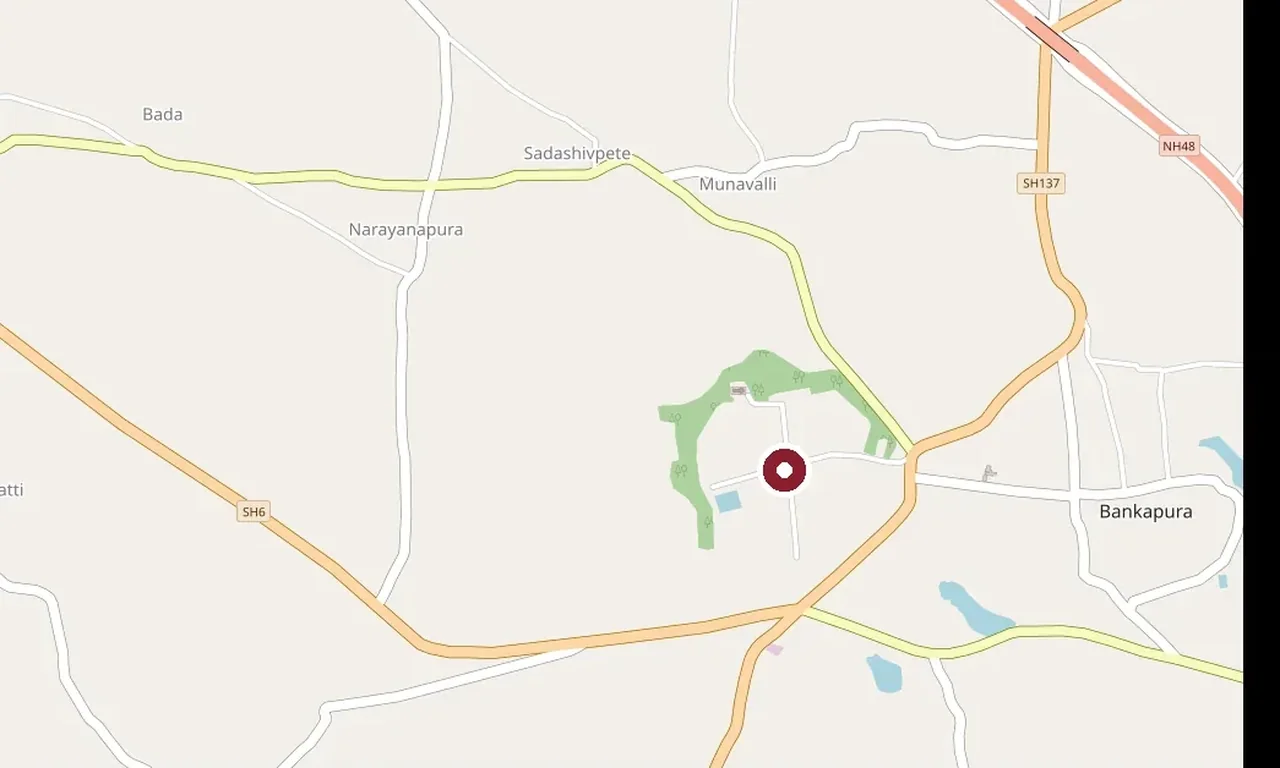
One of only two peacock sanctuaries in Karnataka, spread over about 139 acres within and around the old Bankapura fort — home to one of the region’s largest populations of Indian peafowl.
42.7 km · ~71 min by cab · straight line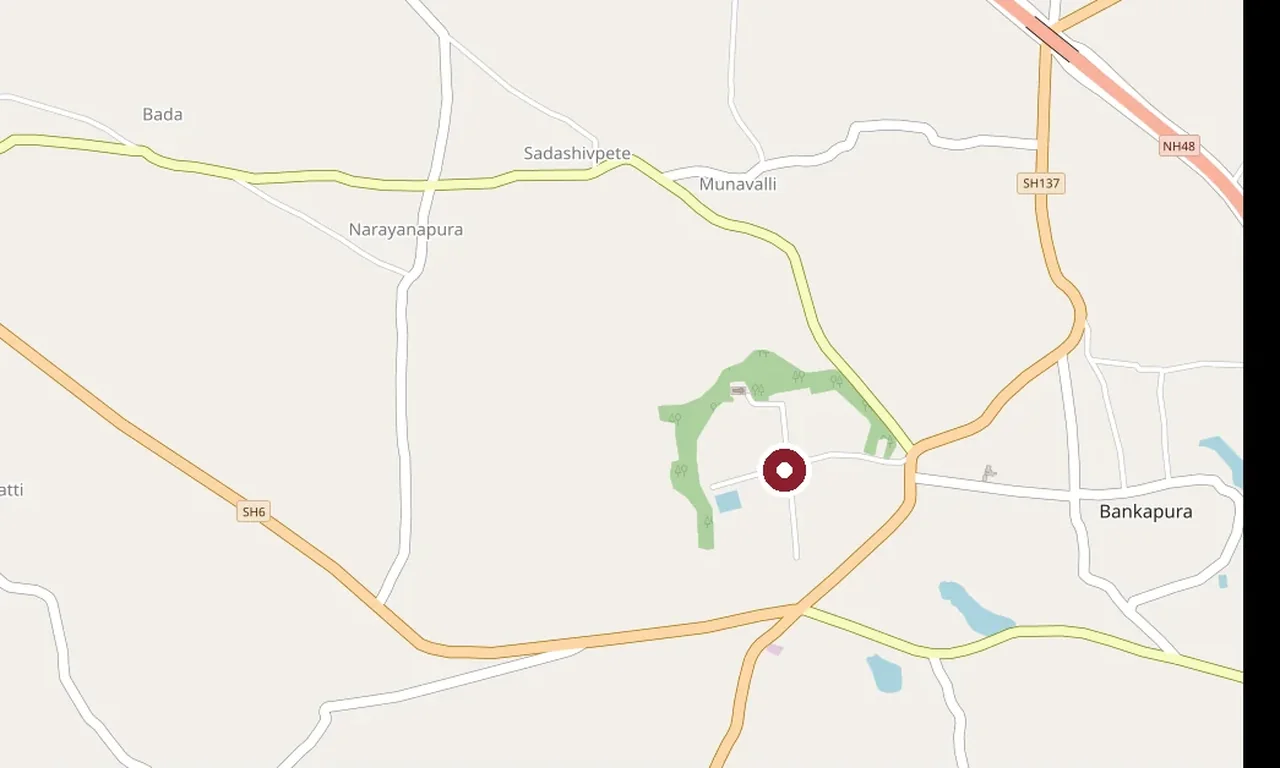
A multi-dynasty fort at Bankapura layered by the Kadambas, Rashtrakutas, Chalukyas, Hoysalas and Adil Shahis and sacked by Ali Adil Shah I around 1565 — its grounds now hold the peacock sanctuary.
43.9 km · ~73 min by cab · straight lineA 12th-century Western Chalukya temple at Bankapura known as the Aravattukambada Gudi, the "sixty-pillar temple", for its grey-stone hall of ornate lathe-turned columns; an ASI monument of national importance.
44.1 km · ~74 min by cab · straight line
The fort of the Hangal Kadambas, capital of their branch between 1068 and 1203 CE — surviving walls enclose a decorated Jain basadi and a Veerabhadra temple, the remnants of the old citadel of Panungal.
53.7 km · ~89 min by cab · straight lineOctober to February; morning light.
Entry: Free. Timings: Daylight hours.
At Chaudayyadanapura in Ranebennur taluk, near Guttal on the Tungabhadra; a car is best. Remove footwear at the shrine and keep back from the river edge.
30 to 45 minutes.
Nearby you can pair Ranebennur Blackbuck Sanctuary (16.9 km), Byadgi Chilli Market (17.2 km), Galageshwara Temple, Galaganatha (18.3 km), Siddheshwara Temple, Haveri (23.3 km).
We have not published a story about Mukteshwara Temple, Chaudayyadanapura itself yet. These cover Ranebennur and the wider district, with separate journeys between stops.
Route-level itineraries and practical guides for the rest of Karnataka.


Photographs: Manjunath nikt at English Wikipedia, Public domain, via Wikimedia Commons (Public domain), Manjunath nikt at English Wikipedia (Public domain), Manjunath Doddamani, Gajendragad /Manjunath nikt at en.wikipedia (Public domain). Wikimedia Commons.