What to expect
Highlights
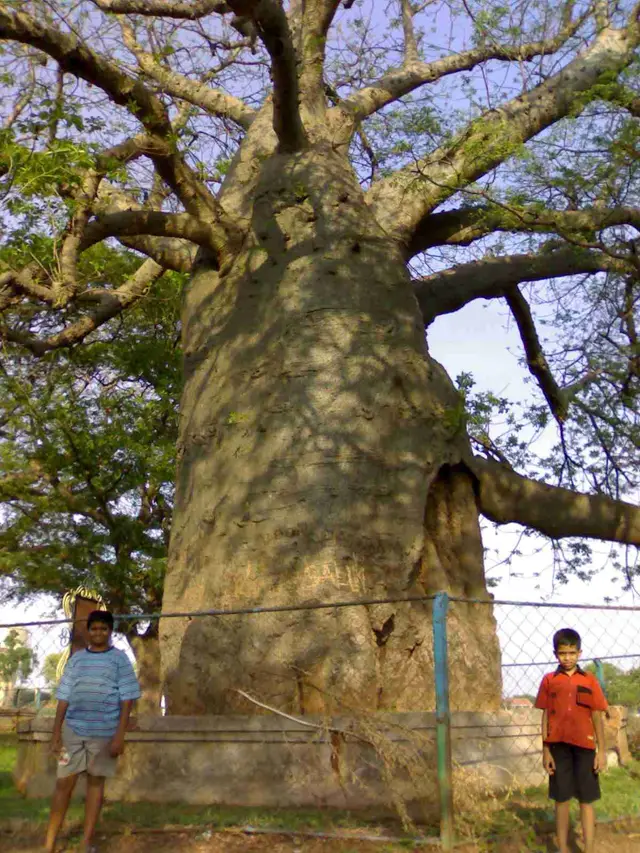
- Savanur — The former princely seat of the Savanur Nawabs, with surviving fort gates and walls — and, at the Doddahunase Matha nearby, ancient baobab trees of enormous girth, a rare botanical heritage of the town.
The former princely town of the Savanur Nawabs — surviving fort fragments and the ancient baobab trees at the Doddahunase Matha.

Road distances measured on real routed roads to Savanur itself, not to the district headquarters, on 24 August 2026. Driving time is deliberately not published: free-flow routing badly understates a Deccan single-carriageway highway, so allow more than the distance suggests.
Live forecast loads in your browser.
Sunset is in about 2 hours.
Sun and moon are calculated for this location and shown in IST. Photography windows are the hour around sunrise and sunset; the sunset bearing is degrees clockwise from true north. Moon phase is accurate to about half a day.
Savanur is a former Nawab and princely-state town in Haveri district whose strongest visitor story joins surviving fort fragments with three exceptional African baobabs protected at the Doddahunase Matha.
Treat Savanur as a town walk with two distinct subjects. The old political centre preserves traces of gates and walls from the Nawabs’ capital, while the baobabs are living botanical heritage in a matha’s care. Neither subject is a complete museum precinct.
Savanur State began in the late seventeenth century and its last ruler acceded to India in 1948. That history survives in the town plan and memory as much as in intact palace architecture; do not enter a residence or enclosed plot because it resembles a fort remnant.
The three baobabs, locally called Dodda Hunise Mara, stand close together and are fenced for protection. Their African species is certain; the route and date by which they reached Savanur are not. Karnataka Tourism says their exact origin and age are unknown while reporting a traditional belief that they are around two thousand years old.
That uncertainty is part of the place. A useful visit distinguishes measured girth, visible condition and living care from legends of Krishna bringing seed from Africa or unsupported claims of a precise age.
A local story says Krishna brought baobab seeds from Africa. Present it as a story that expresses the trees’ perceived antiquity, not as botanical history.
The Kannada name Dodda Hunise Mara means “big tamarind tree,” a visual comparison rather than a scientific identification.
Claims that the trees are exactly 2,000 or 5,000 years old exceed the available evidence. Use “ancient” or “traditionally believed to be around 2,000 years old.”
Savanur was the capital of a princely state ruled by Nawabs from 1680 until accession to India in 1948.
The town retains fragments of its old fortification, but public visitor sources do not define a single complete ticketed fort circuit.
The baobabs are Adansonia digitata, a species native to Africa; their presence in Savanur is documented, while their planting date and route remain unresolved.
The trees are protected by fencing and associated with the Doddahunase Matha, so living stewardship is part of their modern history.
Encounter one of India’s most unusual groups of mature baobabs.
Understand a former princely capital beyond a checklist of monuments.
See how a religious institution and protective fence preserve living heritage.
Build a north Karnataka day around Savanur and nearby Bankapura.
 Featured: Tarakeshwara Temple, Hangal
The old Kadamba capital of Panungal — the marquee Tarakeshwara temple with its carved domed ceiling and the fort with its Jain basadi and Veerabhadra shrine.
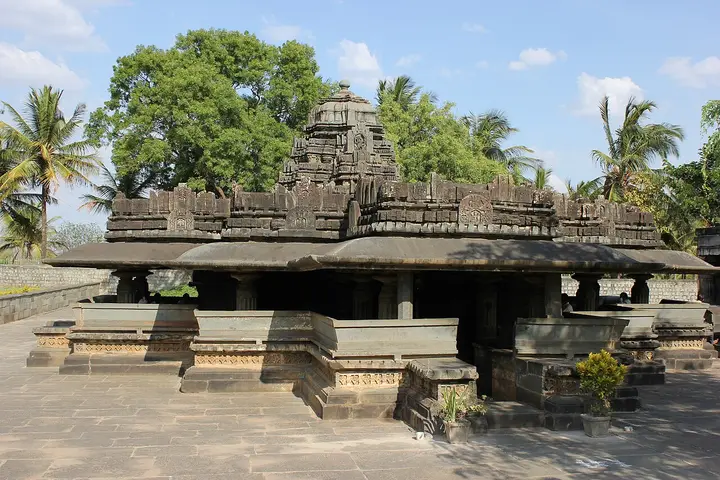 Featured: Siddheshwara Temple, Haveri
The district town and the riverside temple belt of Haveri taluk — the west-facing Siddheshwara temple in town and the Chalukya Galageshwara temple at Galaganatha on the Tungabhadra.
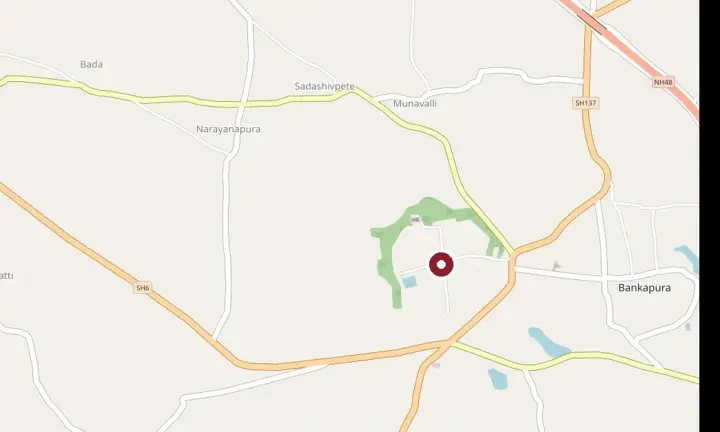 Featured: Nagareshwara Temple, Bankapura
The Shiggaon belt — the sixty-pillar Nagareshwara temple and multi-dynasty fort of Bankapura with its peacock sanctuary, and the Utsav Rock Garden sculpture park at Gotagodi.
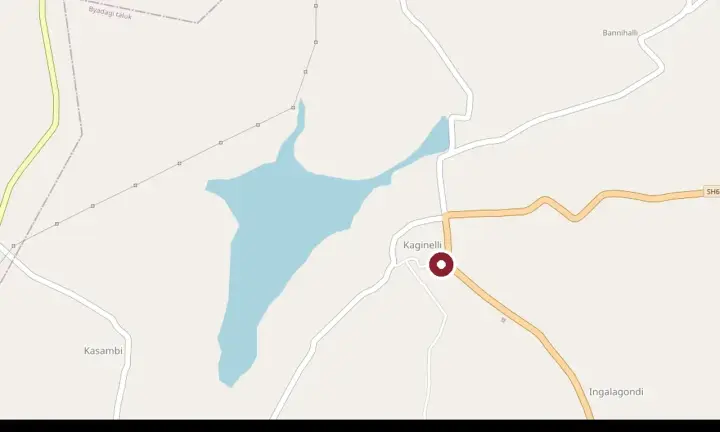 Featured: Kaginele Kanaka Guru Peetha
The Byadgi belt — the Kanakadasa pilgrimage peetha at Kaginele and the town famous for its GI-tagged Byadgi red-chilli market.
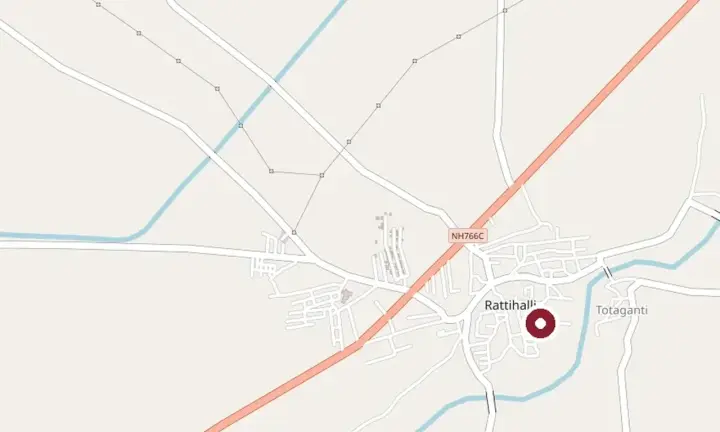 Featured: Kadambeshwara Temple, Rattihalli
The Hirekerur belt — the trikuta Kadambeshwara temple of Rattihalli and the Ekantada-Ramayya temples of Abalur.
 Featured: Ranebennur Blackbuck Sanctuary
The Ranebennur plains — the blackbuck sanctuary of open scrub and the riverside Mukteshwara temple at Chaudayyadanapura on the Tungabhadra.
Haveri district is known for: The Tarakeshwara temple and Kadamba fort of Hangal, the Siddheshwara temple of Haveri town, the sixty-pillar Nagareshwara temple and peacock sanctuary of Bankapura, the Utsav Rock Garden sculpture park, the blackbuck sanctuary of Ranebennur and the GI-tagged Byadgi chilli.
Every verified place in Savanur — filter by what you’re after.
It is listed as a practical local reference; confirm the service required on arrival.
Book with the place itself. India’s cyber-crime coordination centre warned in April 2025 that convincing copies of hotel and pilgrimage booking sites are being pushed through sponsored search and social ads, taking payment for rooms the property never hears about. Every listing here links to the business’s own contact details and its own Google or Bing profile — we take no commission and sit in nobody’s payment path. If a booking page reached you through an ad, check the address bar against the property’s own site before you pay. Fraud can be reported on cybercrime.gov.in or on 1930.
The best tourist places to visit in Savanur — temples, viewpoints, lakes, heritage and nature, each with a full guide, how to reach it and what to see nearby.
Roampedia is commission-free. Travellers discover your business, book directly and contact you through official details. Basic listings are free, while Gold and Platinum package upgrades can be requested from the owner dashboard after approval.
Written about Savanur itself — its history, its legends and the arguments about them.

How the town’s political history survives through memory, street fabric and incomplete fort remains.

What is known about the African trees, why their precise age is unresolved and how local stories fill the gap.

A practical visit built around the matha, root protection, photography, local transport and honest interpretation.
Wider reading from Haveri. The stories about Savanur itself are above.

How Panungal’s political history survives in an earthen enclosure, temples and a modern town.

What an 1885 archaeological photograph reveals—and what it cannot prove about the site today.

How to combine the fragmentary fort with Hangal’s finest temple while respecting two different kinds of access.
Savanur is a former Nawab and princely-state town in Haveri district whose strongest visitor story joins surviving fort fragments with three exceptional African baobabs protected at the Doddahunase Matha.
Approach Savanur town by the public road network. Use the town point around 14.97424, 75.33608 for orientation and ask locally for Doddahunase Matha; do not navigate to a tree or fort polygon as a gate. Buses connect Savanur with Haveri and Hubballi. Confirm the last return at the stand before beginning the walk or continuing to Bankapura.
October to February is most comfortable for a daylight town walk. Morning gives cooler conditions and time for a separate Bankapura outing.
No general town or baobab admission tariff is published. A donation to a religious institution is separate and should never be described as a mandatory government ticket without a posted notice.
Allow 1.5–2 hours for the baobabs and a careful public-street heritage walk; add half a day for Bankapura.
A continuous step-free route through the matha grounds and old fort area is not documented. Ask about the nearest drop-off, firm viewing surface, thresholds and accessible toilet before travel.
Top places to visit in Savanur include Savanur — each has a full guide with how to reach it and what to see nearby on this page.
October to February is the coolest, most comfortable season to visit Savanur and the rest of Karnataka. March to May is hot on the plains, and the June–September southwest monsoon brings the main rains, heaviest along the coast and Western Ghats.